MercoPress. South Atlantic News Agency



Venezuela’s draft hydrocarbons reform faces extensive legislative scrutiny
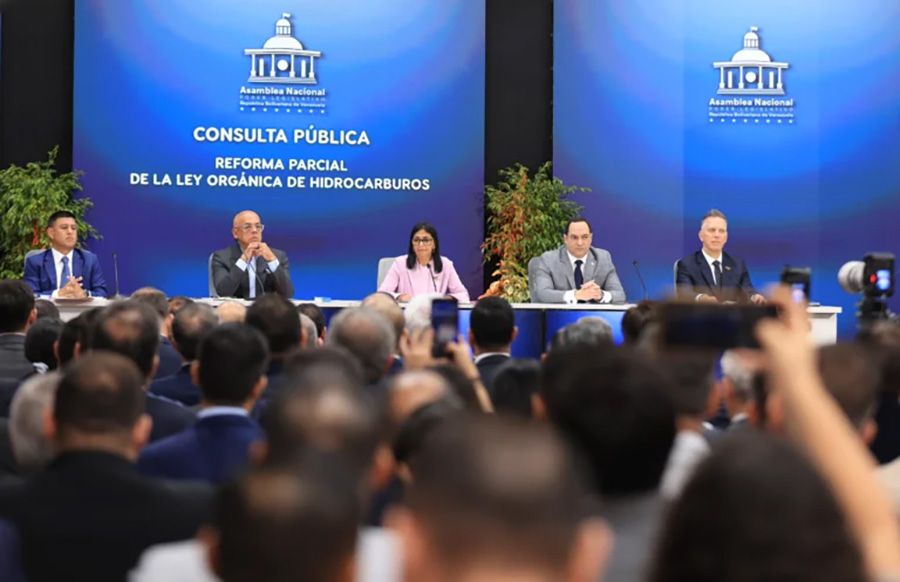 Critics argue that the draft contains ambiguous language, legal contradictions, and tight timelines, potentially undermining its effectiveness and credibility with international investors
 Venezuela’s proposed hydrocarbons law overhaul is under intense legislative scrutiny, with more than 80 amendments submitted by lawmakers, legal experts and energy sector associations ahead of a planned final vote, Reuters reported Tuesday.
The reform — championed by interim President Delcy Rodríguez after the capture of Nicolás Maduro — aims to draw foreign investment and boost oil output that has languished for years under state control and sanctions. The draft bill initially introduced production sharing contracts with tax incentives and operational flexibility.
Critics argue that the draft contains ambiguous language, legal contradictions, and tight timelines, potentially undermining its effectiveness and credibility with international investors. Some lawmakers have even argued that portions could be declared unconstitutional without clearer definitions of obligations, dispute resolution and international arbitration mechanisms.
Members of the National Assembly’s energy commission are tasked with integrating suggested changes into a revised draft before a final plenary vote scheduled for next week. While the reform’s overall goals are supported by many who see sector opening as essential to economic revival, the volume and content of amendments reveal deep disagreements over the scope and direction of Venezuela’s oil sector transformation.
International context plays a significant role. U.S. officials have signaled that clearer, more investor friendly regulations could pave the way for North American investment and energy services after an initial phase of special licenses. However, actual licences have been slow to materialize amid legal and political uncertainties that have kept many energy companies cautious.
Legal experts tell international outlets that the reform’s success hinges on legal certainty, transparent fiscal terms and regulatory stability. “Without clear arbitration frameworks and robust dispute settlement mechanisms, large scale foreign capital won’t flow into Venezuela,” said a Houston based energy analyst.
Venezuela’s oil production remains well below potential, emphasizing the urgency of effective reform. The overhaul is also viewed as critical to diplomatic efforts to normalize relations with multilateral institutions and to ease the country’s debt restructuring pressures, which continue to weigh heavily on the broader economy.


Top Comments
Disclaimer & comment rulesCommenting for this story is now closed.
If you have a Facebook account, become a fan and comment on our Facebook Page!