MercoPress. South Atlantic News Agency


Uruguay’s Orsi heads to China with large delegation to deepen trade and strategic ties
 Uruguay’s Orsi heads to China with large delegation to deepen trade and strategic ties
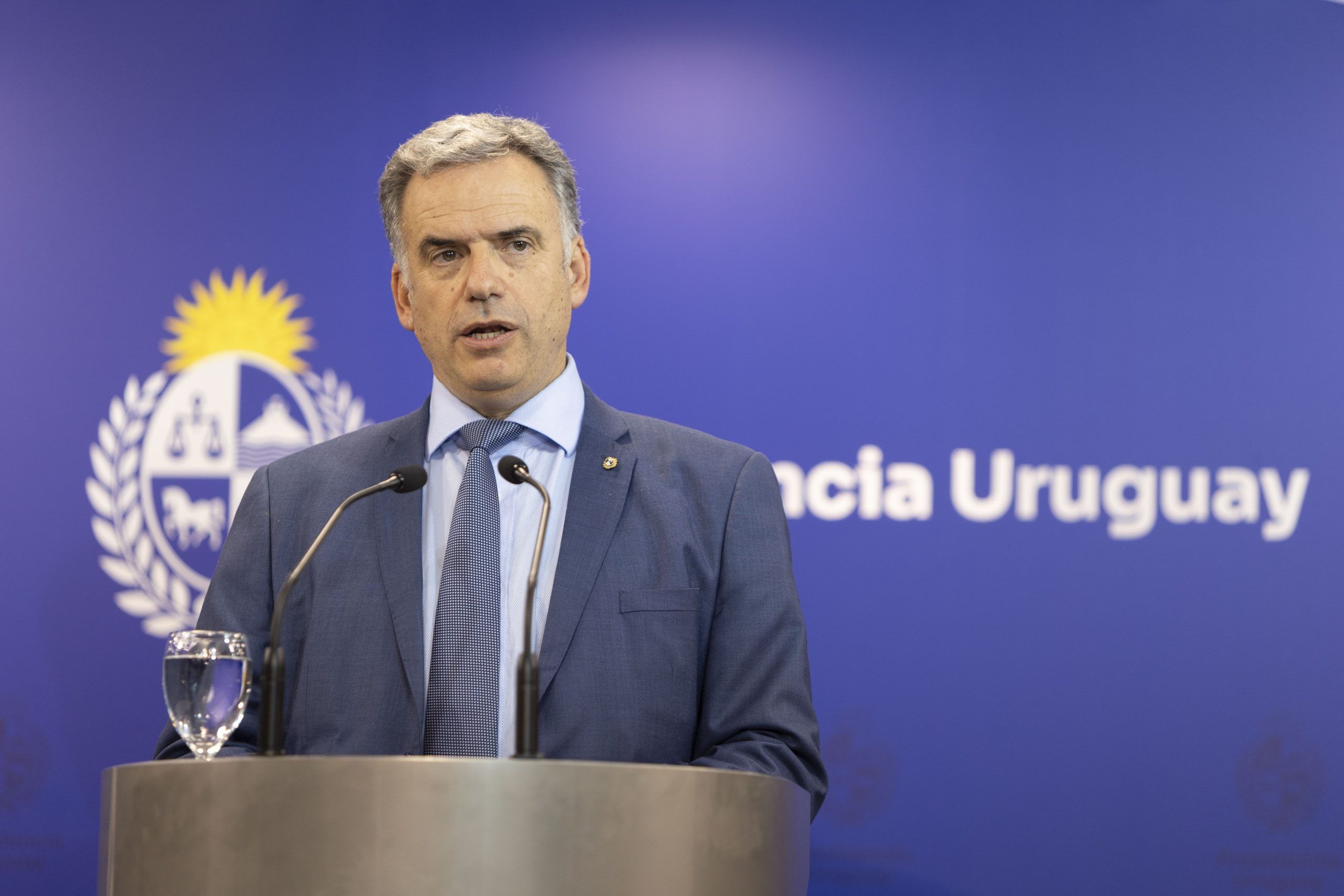
 Uruguayan President Yamandú Orsi has departed for China at the head of a roughly 150-strong delegation, framing the trip as a bid to “increase commercial and economic development” with Uruguay’s top trading partner. Before leaving, Orsi formally handed executive authority to Vice President Carolina Cosse, while the mission’s schedule in Beijing and Shanghai blends top-level political meetings with trade promotion and academic cooperation.
The trip’s centrepiece is Orsi’s meeting with President Xi Jinping on Tuesday, 3 February—timed to mark the 38th anniversary of diplomatic relations between Uruguay and China, according to the official programme cited by EFE. A signing ceremony is expected to follow, covering areas such as trade, agriculture, innovation, science and logistics.
Foreign Minister Mario Lubetkin emphasised the size and composition of the delegation as a deliberate signal to both Beijing and domestic stakeholders, noting that more than a hundred participants are private-sector business leaders. The itinerary also includes high-visibility cultural and protocol stops—the Museum of the Communist Party of China’s History, the Great Wall and the Forbidden City—before shifting to Shanghai for meetings with local authorities, a port visit and a trade-and-investment promotion seminar.
A major strand of the visit involves university and technology partnerships. Uruguay’s flagship public university, the Universidad de la República (Udelar), said it will sign agreements and memorandums with Chinese universities, Huawei, and a Chinese research institute focused on water resources and hydropower. The projects range from student and academic exchanges to joint labs and applied artificial intelligence in health-related fields.
The economic rationale is straightforward. China has become Uruguay’s leading export destination and accounted for roughly a quarter of Uruguay’s goods exports in 2025, according to figures cited by EFE and Uruguay XXI. Uruguay’s shipments to China are concentrated in agro-industrial staples—wood pulp, beef and soybeans—key sources of foreign currency and rural employment.
But the trip also lands in a more complex trade environment. Reuters has reported that China moved to apply safeguard-style measures from 2026, including additional tariffs on beef imports above quota levels—policy changes closely watched by major South American suppliers. AFP also reported on the tightening framework affecting beef trade at the start of 2026. For Uruguay, where China absorbs a significant share of beef exports, shifts in Chinese import rules or demand can quickly translate into price and volume volatility.
Geopolitically, Montevideo is trying to deepen ties with Beijing while preserving room to manoeuvre in an increasingly polarised landscape. Reuters has described China’s broader push in Latin America through financing and cooperation packages discussed at regional forums, running alongside renewed strategic competition with Washington. Orsi’s delegation is designed to convert that macro trend into concrete deals—trade-led diplomacy, backed by business, universities and a state-to-state message of continuity.


Top Comments
Disclaimer & comment rulesCommenting for this story is now closed.
If you have a Facebook account, become a fan and comment on our Facebook Page!