MercoPress. South Atlantic News Agency

Petro sends ministers to Caracas after meeting with Delcy Rodríguez is called off
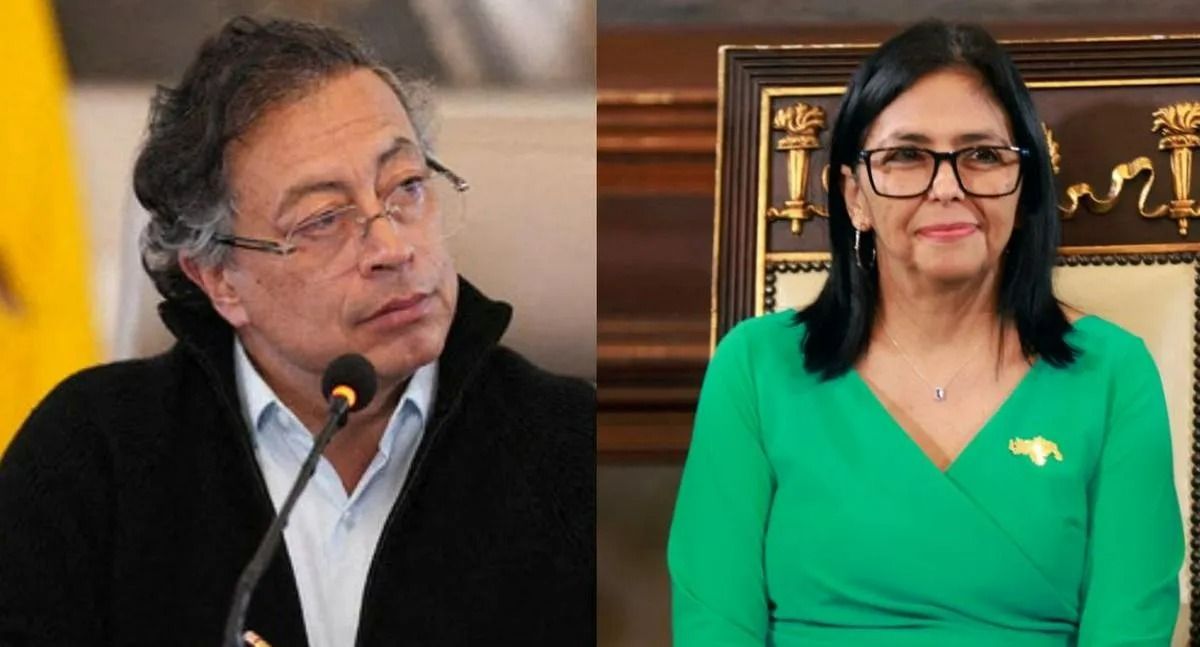 The failed meeting carried particular political significance because it would have been Rodríguez’s first international engagement as Venezuela’s acting president
 Colombia and Venezuela shifted their planned bilateral contact to the ministerial level on Friday after a presidential meeting announced for the border was abruptly canceled under the formula of “force majeure.” Instead of the face-to-face encounter scheduled between Gustavo Petro and Delcy Rodríguez at the Atanasio Girardot bridge, Bogotá sent a delegation to Caracas led by Foreign Minister Rosa Villavicencio and including the ministers of defense, trade, and mines and energy.
The last-minute reversal produced a chaotic scene in Cúcuta, where staging, air-conditioning units and press accreditation points had already been set up before workers began dismantling the event. Neither Bogotá nor Caracas offered a detailed explanation beyond a joint statement saying the meeting had been postponed for reasons of force majeure and that both sides remained committed to setting a new date for a presidential encounter.
The failed meeting carried particular political significance because it would have been Rodríguez’s first international engagement as Venezuela’s acting president. Both governments still intend to discuss an agenda focused on border security, armed groups, drug trafficking, energy cooperation and the recovery of bilateral trade, issues that will now move to a preparatory phase in Caracas ahead of any future leaders’ summit.
The cancellation also coincided with a roughly 30-minute phone call between Petro and Donald Trump. Colombia’s presidency said on social media that the two discussed energy, hydrocarbons, security, illicit crops, anti-narcotics cooperation and economic reactivation along the border, adding that Trump wished Petro success in his planned meeting with Venezuela. The timing of that conversation fueled speculation in Colombian and Spanish media that it may have unsettled the Venezuelan side, although official sources cited by El País denied any direct connection.
Beyond the diplomatic episode, the bilateral agenda remains substantial. Since Petro restored ties in 2022, Colombia and Venezuela have tried to rebuild relations across a 2,200-kilometer border marked by irregular migration, smuggling, armed dissident groups and illegal economies. On top of that sits an energy agenda involving possible gas-for-electricity swaps, use of Colombian infrastructure for Venezuelan exports and broader integration under the region’s transition strategy.
Trade is also one reason both sides are under pressure to keep talking. Bilateral commerce, which had exceeded $7 billion in 2008, fell to just $222 million in 2022 after the diplomatic rupture between Iván Duque and Nicolás Maduro, and then recovered to $1.17 billion last year after relations were restored.
Still, the decision to lower the level of the meeting leaves a sign of political fragility in a relationship Petro has tried to rebuild as a key part of his regional policy. For now, the presidential summit has been postponed with no new date announced.


Top Comments
Disclaimer & comment rulesCommenting for this story is now closed.
If you have a Facebook account, become a fan and comment on our Facebook Page!