MercoPress. South Atlantic News Agency



Petro accuses Ecuador of bombing Colombian territory, deepening rift with Noboa
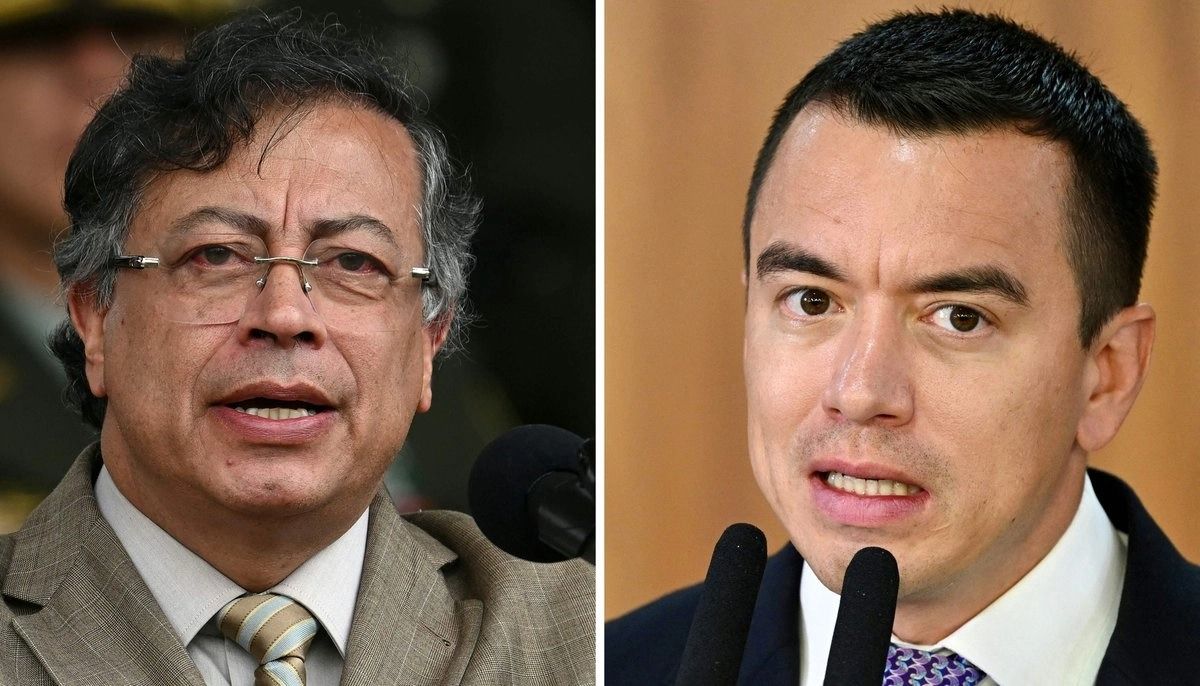 Noboa responded quickly. Ecuador’s president called Petro’s statements “false” and said Ecuador was “acting in our territory, not in yours.”
 The crisis between Colombia and Ecuador escalated sharply on Tuesday after Colombian President Gustavo Petro said his country was being bombed from Ecuadorian territory, while his counterpart Daniel Noboa rejected the allegation and insisted military operations were taking place only on Ecuador’s side of the border.
Petro first made the accusation during a televised cabinet meeting and later repeated it on X, where he said there were “27 charred bodies” linked to the attacks and that Quito’s explanation was “not credible.” The Colombian leader also argued that the bombings did not appear to have been carried out either by illegal armed groups — “they do not have planes” — or by Colombia’s own security forces, because, he said, he had given no such order.
Noboa responded quickly. Ecuador’s president called Petro’s statements “false” and said Ecuador was “acting in our territory, not in yours.” He also defended strikes against hideouts used by “narco-terrorist” groups, which he said were largely Colombian.
Los bombardeos en la frontera de Colombia y Ecuador no parecen ser ni de los grupos armados, no tiene aviones, ni del la fuerza pública de Colombia. Yo no he dado esa orden.
— Gustavo Petro (@petrogustavo) March 17, 2026
Hay 27 cuerpos calcinados y la explicación no es creíble. Las bombas están en el piso cerca a familias,… pic.twitter.com/XStGFXhI2t
So far, however, there has been no public independent verification of any Ecuadorian military incursion into Colombian territory. What is documented is that Ecuador recently carried out air and drone operations near the border with U.S. support. Reuters reported on March 6 that Ecuadorian and U.S. forces bombed a drug traffickers’ camp in northeastern Ecuador, near the Colombian border, in an operation targeting Comandos de la Frontera, a Colombian criminal group made up of FARC dissidents.
Petro’s claim is also tied to the discovery of an explosive device in Colombia’s border area. Defense Minister Pedro Sánchez said he had ordered authorities to “confirm or rule out” the origin of a bomb “generally used by military aircraft” and to destroy it, while urging residents to stay away until the technical inspection is completed. The Colombian government had not yet issued a final determination on where the device came from.
Desde el primer día hemos combatido al narcoterrorismo en todas sus formas: a los que operan en las calles y a los que, desde la política o incluso desde la función judicial, se prestan para proteger a los delincuentes.
— Daniel Noboa Azin (@DanielNoboaOk) March 17, 2026
Hoy, junto a la cooperación internacional, continuamos en…
The episode comes on top of an already damaged bilateral relationship shaped by a trade and security dispute. Ecuador imposed a 30% tariff on Colombian goods in early February and later said it would raise the levy to 50% from March 1, arguing that Bogota had failed to do enough against drug trafficking along the shared border. Colombia responded with 30% tariffs on dozens of Ecuadorian goods and halted electricity sales to its neighbor.
The Andean Community stepped in as early as January in an effort to contain the escalation. Its General Secretariat called on both governments to postpone the trade measures and offered to facilitate dialogue. According to reporting published on Tuesday by El País, Colombian and Ecuadorian delegations are due to meet in Quito on March 24-25 under Andean Community mediation.
For now, the crisis remains defined by three unresolved tracks at once: cross-border bombing accusations, an open investigation into the explosive device found in the frontier area, and a tariff war that is already straining ties between two of the Andean bloc’s main trading partners.


Top Comments
Disclaimer & comment rulesCommenting for this story is now closed.
If you have a Facebook account, become a fan and comment on our Facebook Page!