MercoPress. South Atlantic News Agency


US bolsters military presence in the Gulf with thousands of Marines and amphibious ships
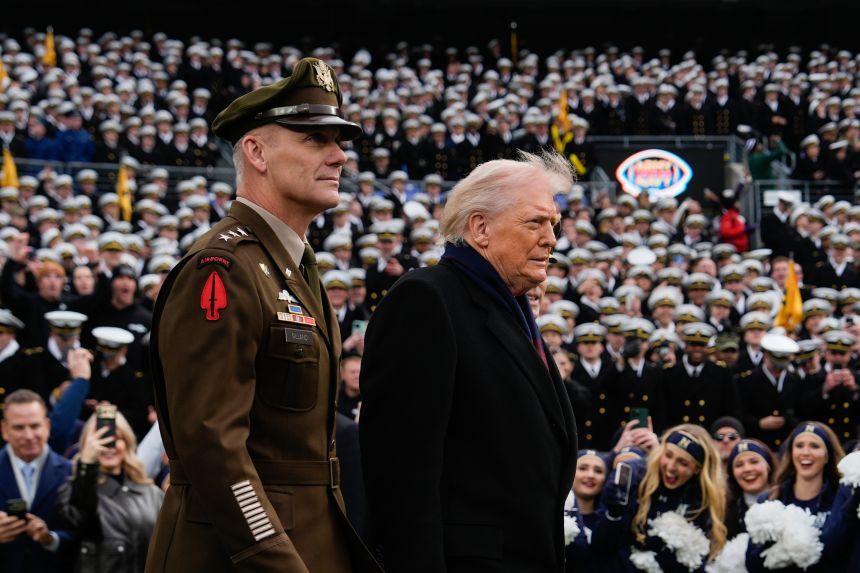 Trump, for his part, said Thursday he was not considering sending troops “anywhere,” though he added that if he did, he would not announce it.
 The United States is deploying roughly 5,000 Marines and half a dozen warships toward the Persian Gulf in the largest force expansion since the war against Iran began on February 28. The buildup comes as American aircraft intensify strikes against Iranian positions along the coastline and islands of the Strait of Hormuz, the maritime chokepoint through which approximately 20% of global oil transits and which Iran has effectively closed since the start of the conflict.
The amphibious group led by the USS Tripoli, along with the 31st Marine Expeditionary Unit, is already en route from the Pacific. A second group led by the USS Boxer, carrying the 11th Marine Expeditionary Unit, will deploy from California. Each expeditionary unit comprises approximately 2,200 to 2,500 personnel, along with helicopters, tiltrotor aircraft and amphibious assault capability.
The precise mission for these forces has not been disclosed. Defense Secretary Pete Hegseth confirmed that US Central Command (CENTCOM) requested the reinforcements to expand operational options against Iran. According to Reuters, two officials said no decision has been made on whether to deploy ground troops into Iranian territory.
However, Israeli Prime Minister Benjamin Netanyahu suggested on Thursday at a press conference in Jerusalem that some form of ground operation will be necessary. “You can't do revolutions from the air — that is true,” he said. “There has to be a ground component as well. There are many possibilities for this ground component, and I take the liberty of not sharing with you all those possibilities.” Netanyahu argued the Iranian people must “rise to the moment,” while Iran is at its “weakest point.”
Trump, for his part, said Thursday he was not considering sending troops “anywhere,” though he added that if he did, he would not announce it.
Among the options being weighed by military planners are amphibious assaults on Iranian islands in the Strait of Hormuz to neutralize missile launchers, and the seizure of Kharg Island, Iran's main oil export terminal, where the US already struck nearly a hundred military targets on March 13. The US military command reported on Tuesday the use of 5,000-pound GBU-72 bunker-buster bombs against hardened missile sites along the Iranian coast.
Mick Mulroy, a former deputy assistant secretary of defense for the Middle East, said the forces would be used operationally. “You don't bring them from the Pacific, leaving that region more exposed, just to show them off,” he told the Middle East Institute.
Iran is sustaining the pressure. The Islamic Republic launched eight salvos of missiles at Israel on Friday and retains an estimated arsenal of over one thousand ballistic missiles, according to Israeli military assessments. Analysts warn that even with diminished capabilities, Tehran retains asymmetric advantages through its geography, its network of regional partners, and the potential to activate secondary maritime chokepoints such as the Bab el-Mandeb Strait.


Top Comments
Disclaimer & comment rulesCommenting for this story is now closed.
If you have a Facebook account, become a fan and comment on our Facebook Page!