MercoPress. South Atlantic News Agency
Tag: Iran
-
Thursday, October 1st 2026 - 22:26 UTC
British-Iranian man arrested over the RAF Fairford incident
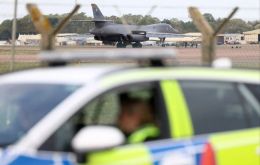
British counter-terrorism police on Thursday arrested a 25-year-old man with dual British and Iranian nationality in London on suspicion of preparing terrorist acts, in connection with Sunday's incident near RAF Fairford, an airbase in western England used by the United States Air Force.
-
Wednesday, September 9th 2026 - 08:51 UTC
Brent climbs back above US$100 to its highest level since late July
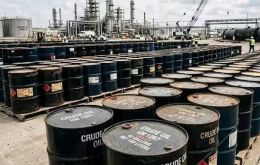
Brent crude for November delivery rose above US$100 a barrel on Wednesday for the first time since late July, in a session shaped by escalating attacks between the United States and Iran and by fears of further supply disruptions in the Middle East.
-
Monday, August 31st 2026 - 08:35 UTC
Ukraine and Iran Wars Expose the Flaws in Nuclear Deterrence
By Melissa Parke (*)
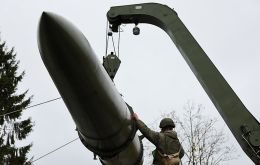
In recent weeks, Ukraine has been striking targets deep inside Russia with large-scale drone attacks and long-range missiles. Some commentators in Western media have hailed Ukraine for beginning to turn the tide. Whether that turns out to be correct, we can only wait and see. The momentum in wars can swing back and forth. -
Monday, August 17th 2026 - 23:07 UTC
The Washington-Tehran memorandum expires without talks ever having opened
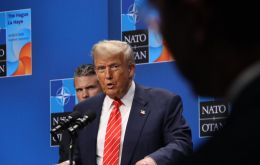
The memorandum of understanding signed on June 17 by the United States and Iran expired on Monday at the end of its sixty-day term, without the peace talks it envisaged ever taking place and without either side announcing an extension.
-
Sunday, August 2nd 2026 - 20:00 UTC
Trump halts strikes on Iran as Tehran denies any deal exists
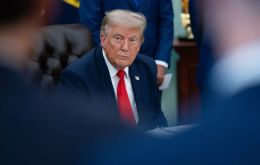
US President Donald Trump announced on Saturday that he was suspending further strikes on Iran, saying the broad terms of an understanding had been agreed, an account Iranian authorities rejected hours later.
-
Saturday, July 11th 2026 - 07:19 UTC
Trump threatens Iran with '1,000 missiles' over alleged assassination plot
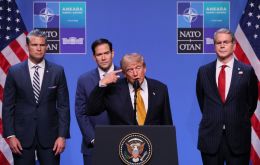
US President Donald Trump warned that “1,000 missiles” are armed and aimed at Iran, ready to strike the country should Tehran attempt to assassinate him, in a message posted on his social network that raises tension with the Islamic Republic amid an already ongoing military escalation.
-
Wednesday, July 8th 2026 - 21:20 UTC
US launches fresh strikes on Iran after Trump declares ceasefire over
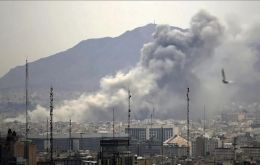
United States forces launched new strikes on Wednesday against Iranian targets near the Strait of Hormuz, after President Donald Trump declared the provisional ceasefire with Tehran “over.” US Central Command confirmed the operation and said it aimed to degrade Iran's ability to threaten freedom of navigation through the waterway, which carries close to a fifth of the world's oil.
-
Wednesday, June 17th 2026 - 19:21 UTC
US-Iran memorandum sets Hormuz reopening, $300 billion reconstruction and sanctions relief
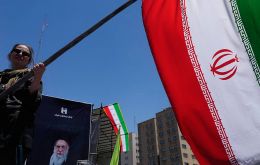
The United States government on Wednesday released the official text of the agreement reached with Iran to end the war, a 14-point document called the “Islamabad Memorandum of Understanding” that provides for the reopening of the Strait of Hormuz, a reconstruction plan of at least $300 billion and the lifting of sanctions. The text, read by a senior official of Donald Trump's administration, will be signed on Friday in Switzerland and will open a 60-day period to negotiate the definitive agreement.
-
Tuesday, June 16th 2026 - 08:24 UTC
Some Iranian Americans wave protest flags, others cheer as Iran open the World Cup
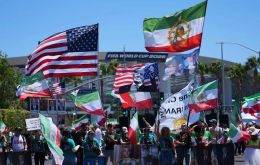
Iran began their World Cup campaign in Los Angeles on Monday with a 2-2 draw against New Zealand, before a crowd that mixed fans cheering the team and Iranian Americans waving symbols of protest against the government in Tehran. The match was played barely 24 hours after the announcement of a preliminary agreement to end the war that the United States and Israel launched against Iran in February.
-
Monday, June 15th 2026 - 21:50 UTC
Brazilian stocks slip as the US-Iran deal sinks oil prices and hits Petrobras

São Paulo's stock exchange closed on Monday down 0.42%, dragged by the plunge of the state oil company Petrobras after the international crude price fell, linked to the preliminary agreement between the United States and Iran. The Ibovespa, the benchmark index of Latin America's main exchange, ended the session at 170,415 points.