MercoPress. South Atlantic News Agency
Tag: Iran
-
Monday, March 23rd 2026 - 05:40 UTC
Republican operative's proposal for US support on Malvinas electrifies Argentine media

A social media post by Republican operative Marc Zell urging the Trump administration to reconsider its position on the Falklands/Malvinas and support Argentina's sovereignty claim triggered a wave of coverage across Argentine media over the past week, despite being based on a false premise and carrying no official backing from Washington.
-
Monday, March 23rd 2026 - 02:38 UTC
Iran threatens to destroy regional energy infrastructure after Trump's Hormuz ultimatum
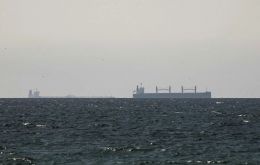
Iran warned on Sunday that it will treat energy and oil infrastructure across the Middle East as “legitimate targets” if the United States attacks its power plants, responding to President Donald Trump's ultimatum issued late Saturday.
-
Saturday, March 21st 2026 - 22:08 UTC
US bolsters military presence in the Gulf with thousands of Marines and amphibious ships

The United States is deploying roughly 5,000 Marines and half a dozen warships toward the Persian Gulf in the largest force expansion since the war against Iran began on February 28. The buildup comes as American aircraft intensify strikes against Iranian positions along the coastline and islands of the Strait of Hormuz, the maritime chokepoint through which approximately 20% of global oil transits and which Iran has effectively closed since the start of the conflict.
-
Saturday, March 21st 2026 - 10:54 UTC
London condemns Iranian attack on Diego Garcia, confirms RAF defending the base
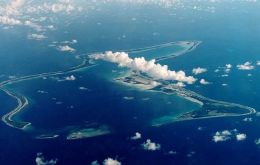
Britain's Ministry of Defence condemned on Saturday the launch of two Iranian intermediate-range ballistic missiles at the joint US-UK military base on Diego Garcia, in the Chagos Archipelago in the Indian Ocean. Neither projectile struck the installation.
-
Friday, March 20th 2026 - 16:16 UTC
Trump brands NATO allies “cowards” for refusing to help reopen the Strait of Hormuz
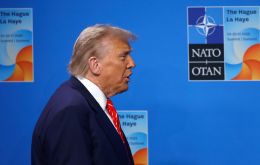
US President Donald Trump escalated his rhetoric against NATO allies on Friday, lambasting them as “cowards” for refusing to help reopen the Strait of Hormuz, the strategic waterway that has remained effectively closed since the start of the war with Iran. In a post on his Truth Social platform, Trump declared that without the US military, NATO amounts to nothing more than “a paper tiger,” and warned that Washington would not forget the alliance's stance.
-
Thursday, March 19th 2026 - 22:43 UTC
Netanyahu hints a ground phase may be needed as Iran war hits Gulf energy infrastructure
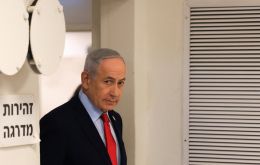
Israeli Prime Minister Benjamin Netanyahu suggested on Thursday that an air campaign alone would not be enough to bring down Iran’s regime, as the conflict entered a new phase marked by strikes on Gulf energy facilities and renewed warnings over the Strait of Hormuz.
-
Wednesday, March 18th 2026 - 22:21 UTC
Attack on world’s largest gas field raises tensions and jolts markets
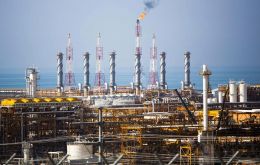
The war involving Iran, Israel and the United States escalated sharply on Wednesday with a strike on South Pars, the Iranian side of the world’s largest natural gas field, which it shares with Qatar. Reuters reported that the hit on the site marked a new phase in the conflict by targeting major Iranian energy infrastructure for the first time in this war, and was followed by Iranian threats and attacks against energy targets across the Gulf.
-
Tuesday, March 17th 2026 - 22:31 UTC
US counterterrorism chief resigns over Iran war

Joe Kent, director of the U.S. National Counterterrorism Center, resigned on Tuesday with immediate effect, saying he could not support Washington’s war against Iran in what became the first high-level public break inside Donald Trump’s national security apparatus since the offensive began. Kent said Tehran had posed no “imminent threat” to the United States.
-
Tuesday, March 17th 2026 - 10:00 UTC
Saudi Arabia diverts more crude to the Red Sea to bypass Hormuz, but alternative capacity remains limited
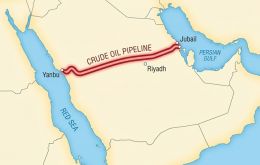
Saudi Arabia is stepping up the use of its pipeline network to the Red Sea to keep crude exports moving while the Strait of Hormuz remains heavily disrupted by the war with Iran. The key route is the Abqaiq-Yanbu system, also known as the East-West Pipeline or Petroline, which links Gulf oil fields with the Yanbu terminal on the Red Sea. That infrastructure has become the kingdom’s main escape route around Hormuz, the chokepoint that normally carries about a fifth of global oil and liquefied natural gas supply.
-
Monday, March 16th 2026 - 16:14 UTC
Germany rejects sending ships to Hormuz as the EU seeks a diplomatic and logistical way forward
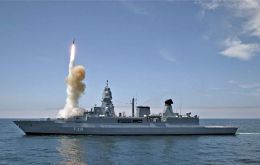
Germany on Monday rejected U.S. President Donald Trump’s request for allies to send warships to the Strait of Hormuz to help reopen the shipping route. Defence Minister Boris Pistorius questioned what “a handful” of European frigates could do that the U.S. Navy could not already do, and summed up Berlin’s position bluntly: “This is not our war.” Chancellor Friedrich Merz’s spokesperson added that the conflict “is not NATO’s war” and that Germany had no plans to be drawn into it.