MercoPress. South Atlantic News Agency
Tag: Iran
-
Tuesday, March 17th 2026 - 22:31 UTC
US counterterrorism chief resigns over Iran war

Joe Kent, director of the U.S. National Counterterrorism Center, resigned on Tuesday with immediate effect, saying he could not support Washington’s war against Iran in what became the first high-level public break inside Donald Trump’s national security apparatus since the offensive began. Kent said Tehran had posed no “imminent threat” to the United States.
-
Tuesday, March 17th 2026 - 10:00 UTC
Saudi Arabia diverts more crude to the Red Sea to bypass Hormuz, but alternative capacity remains limited
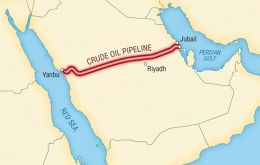
Saudi Arabia is stepping up the use of its pipeline network to the Red Sea to keep crude exports moving while the Strait of Hormuz remains heavily disrupted by the war with Iran. The key route is the Abqaiq-Yanbu system, also known as the East-West Pipeline or Petroline, which links Gulf oil fields with the Yanbu terminal on the Red Sea. That infrastructure has become the kingdom’s main escape route around Hormuz, the chokepoint that normally carries about a fifth of global oil and liquefied natural gas supply.
-
Monday, March 16th 2026 - 16:14 UTC
Germany rejects sending ships to Hormuz as the EU seeks a diplomatic and logistical way forward
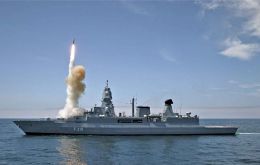
Germany on Monday rejected U.S. President Donald Trump’s request for allies to send warships to the Strait of Hormuz to help reopen the shipping route. Defence Minister Boris Pistorius questioned what “a handful” of European frigates could do that the U.S. Navy could not already do, and summed up Berlin’s position bluntly: “This is not our war.” Chancellor Friedrich Merz’s spokesperson added that the conflict “is not NATO’s war” and that Germany had no plans to be drawn into it.
-
Monday, March 16th 2026 - 01:10 UTC
Oil tops US$100 a barrel as Middle East war and Hormuz disruption rattle markets
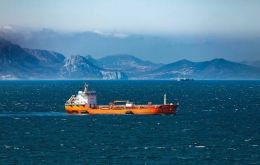
Oil prices moved back above US$100 a barrel on Monday as the conflict involving the United States, Israel and Iran intensified and shipping disruption in the Strait of Hormuz hit one of the world’s most critical energy chokepoints. Brent crude rose to US$105.15 a barrel and U.S. West Texas Intermediate climbed to US$100.32 in early Asian trading, according to market data.
-
Friday, March 13th 2026 - 11:24 UTC
Iran exploits its asymmetric edge in Hormuz, narrowing the U.S. Navy’s room to act
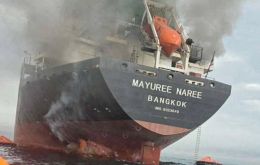
Iran is shifting a key part of the war to the sea, where its conventional naval power is far weaker than that of the United States but where it still retains enough tools to disrupt global energy traffic. In the Strait of Hormuz, a corridor that carries roughly a fifth of the world’s oil, attacks on merchant shipping, the threat of mines and the use of fast boats and coastal missiles have raised the cost and complexity of any escort operation.
-
Thursday, March 12th 2026 - 10:42 UTC
Iran broadens regional attacks as Israel launches new strikes on regime targets
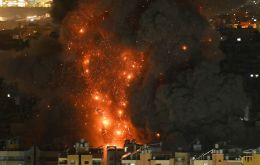
The war involving Iran, Israel and the United States entered a broader regional phase on Thursday, with fresh Iranian attacks on energy infrastructure, shipping routes and military positions across Gulf states, while Israel responded with a new wave of strikes on Iranian territory. The escalation again tightened pressure on the Strait of Hormuz and pushed oil prices back above $100 a barrel.
-
Wednesday, March 11th 2026 - 03:07 UTC
US steps up strikes on Iran, destroys 16 mine-laying vessels and raises pressure in Hormuz
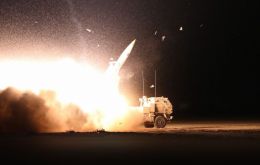
The United States and Israel launched what the Pentagon and witnesses in Iran described on Tuesday as the heaviest day of bombing since the war began, while Washington widened operations around the Strait of Hormuz and said it had destroyed 16 Iranian mine-laying vessels. The move further increased risks around the world’s most critical energy chokepoint, through which about a fifth of global oil and liquefied natural gas normally passes.
-
Tuesday, March 10th 2026 - 15:43 UTC
Milei: “I am the most Zionist president in the world”

Argentine President Javier Milei said in New York that he is “the most Zionist president in the world,” reaffirming his alignment with the United States and Israel during an appearance at Yeshiva University, one of the main stops on a U.S. trip that also included investor meetings as part of “Argentina Week.” The university said the event was part of a three-day visit focused on economic leadership and support for Washington and Israel in the war against Iran.
-
Monday, March 9th 2026 - 17:55 UTC
U.S. kept deporting migrants to Venezuela and Iran despite plans for military action

The United States continued deporting migrants to Iran and Venezuela while increasing military and diplomatic pressure on both countries, according to official records, agency reports and data from organizations tracking removal flights. In Iran’s case, Washington resumed deportation flights to Tehran in September 2025 after decades without carrying out such transfers, in a shift that coincided with a sharp deterioration in bilateral relations.
-
Monday, March 9th 2026 - 00:30 UTC
Iran names Mojtaba Khamenei supreme leader as war widens to oil and water infrastructure

Iran on Sunday named Mojtaba Khamenei as its new supreme leader, cementing hardline continuity as the war with Israel and the United States deepens and cross-border strikes increasingly hit fuel depots, energy routes and desalination facilities across the region. The Assembly of Experts, the 88-member clerical body tasked with choosing the successor, said he had been appointed by a “decisive vote,” giving him ultimate authority over all matters of state.