MercoPress. South Atlantic News Agency



Saudi Arabia diverts more crude to the Red Sea to bypass Hormuz, but alternative capacity remains limited
 The bottleneck is not only the pipeline itself, but also the port and shipping logistics
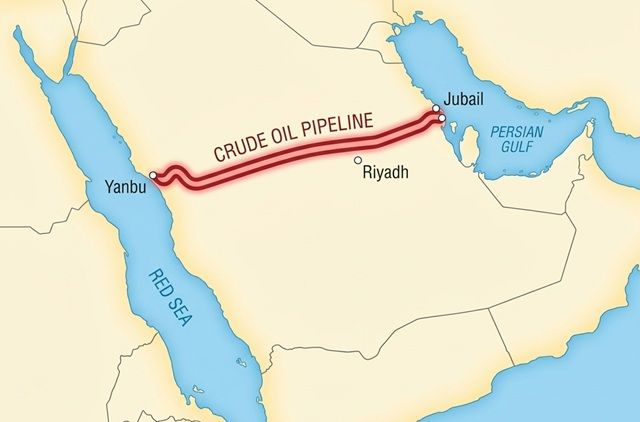
 Saudi Arabia is stepping up the use of its pipeline network to the Red Sea to keep crude exports moving while the Strait of Hormuz remains heavily disrupted by the war with Iran. The key route is the Abqaiq-Yanbu system, also known as the East-West Pipeline or Petroline, which links Gulf oil fields with the Yanbu terminal on the Red Sea. That infrastructure has become the kingdom’s main escape route around Hormuz, the chokepoint that normally carries about a fifth of global oil and liquefied natural gas supply.
The shift is already sharply increasing activity at Yanbu. Loadings averaged 2.2 million barrels per day in the first nine days of March, up from 1.1 million in February, and shipping data point to a record month. Aramco said last week that its pipeline network can move up to 7 million barrels per day to the Red Sea, of which 5 million bpd would be available for exports, with the rest feeding refineries on Saudi Arabia’s western coast.
Even so, the real margin remains tight. The International Energy Agency estimates that in early 2026 the Saudi system was using about 2 million bpd, leaving between 3 million and 5 million bpd of spare capacity depending on operating conditions and available export capacity on the Red Sea coast. The IEA also warns that these alternative routes have not been robustly tested at large scale and that only Saudi Arabia and the United Arab Emirates currently have operational crude pipelines capable of rerouting part of the flows that would normally pass through Hormuz.
The bottleneck is not only the pipeline itself, but also the port and shipping logistics. Yanbu could exceed 4 million bpd this month, with 37 to 40 tankers expected to load there, close to a handling capacity traders put at above 4.5 million bpd. But Reuters reported that the terminal has rarely loaded more than 2.5 million bpd, and charter rates to Yanbu doubled in early March, while some fixtures failed because part of the tanker fleet is avoiding the region altogether.
The Saudi workaround also faces geographic and security limits. Aramco has asked Asian buyers to prepare plans to receive April cargoes from Yanbu, but that option applies mainly to Arab Light crude and does not replace the full volumes the kingdom had been shipping through Hormuz, around 6 million bpd before the war. In addition, the Red Sea route still requires passage through Bab el-Mandeb, a corridor exposed to persistent threats even though no attacks there have been reported since the Iran war began.
In practical terms, Saudi Arabia has found a pressure valve, not a full solution. The East-West system allows it to preserve a significant share of its sales and reduce the immediate shock to the market, but it cannot on its own compensate for the massive loss of Gulf flows or remove the structural vulnerability created by the disruption of Hormuz.


Top Comments
Disclaimer & comment rulesCommenting for this story is now closed.
If you have a Facebook account, become a fan and comment on our Facebook Page!