MercoPress. South Atlantic News Agency
Tag: oil price
-
Wednesday, September 9th 2026 - 08:51 UTC
Brent climbs back above US$100 to its highest level since late July
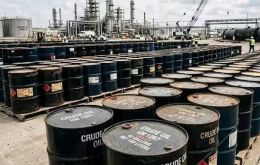
Brent crude for November delivery rose above US$100 a barrel on Wednesday for the first time since late July, in a session shaped by escalating attacks between the United States and Iran and by fears of further supply disruptions in the Middle East.
-
Monday, June 15th 2026 - 21:50 UTC
Brazilian stocks slip as the US-Iran deal sinks oil prices and hits Petrobras

São Paulo's stock exchange closed on Monday down 0.42%, dragged by the plunge of the state oil company Petrobras after the international crude price fell, linked to the preliminary agreement between the United States and Iran. The Ibovespa, the benchmark index of Latin America's main exchange, ended the session at 170,415 points.
-
Friday, May 1st 2026 - 07:44 UTC
Brent touches $126 amid US military plan for 'short and powerful' strikes on Iran

Brent crude touched $126.41 a barrel on Thursday, its highest level since Russia's invasion of Ukraine in 2022, after Axios reported that the US Central Command (CENTCOM) was preparing a military plan contemplating a wave of “short and powerful” strikes on Iranian infrastructure to force Tehran back to the negotiating table. The price subsequently moderated to close near $114, a decline partly attributed to the expiration of the June futures contract, but the European benchmark has gained more than 60% since the start of the war against Iran on February 28.
-
Friday, April 24th 2026 - 19:40 UTC
Hormuz closure keeps Brent above $105 with outlook uncertain

Brent crude closed on Friday at $105.33 a barrel, accumulating a gain of nearly ten dollars from the start of the week, in a market dominated by uncertainty over the US-Iran conflict and the prolonged closure of the Strait of Hormuz. The European benchmark crude touched $107.40 on Thursday — its weekly peak — before moderating its advance.
-
Thursday, April 23rd 2026 - 03:25 UTC
European airlines cut flights and raise fares as Iran conflict fuels jet fuel crisis

Lufthansa Group announced on Tuesday the cancellation of 20,000 short-haul flights from its summer schedule through October, the most significant measure taken so far by a European airline in response to soaring jet fuel prices driven by the conflict in Iran. The decision is part of a broader trend reshaping European aviation ahead of the peak travel season.
-
Monday, April 13th 2026 - 21:52 UTC
Tankers turn back at Hormuz as crude jumps over 4% on US blockade
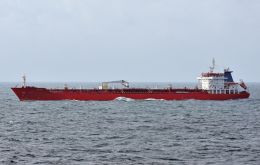
Two oil tankers reversed course as they approached the Strait of Hormuz on Monday, just hours after the US naval blockade against Iranian ports took effect, according to maritime tracking platform MarineTraffic. Brent crude for June delivery closed up 4.4% at $99.36 per barrel, while US benchmark WTI rose 2.6% to $99.08, according to Bloomberg.
-
Wednesday, April 1st 2026 - 10:12 UTC
Trump running out of options in Iran, a US victory is possible?

By Gwynne Dyer - The Iranians know they have won, but President Trump doesn’t get it yet. He’s still at the stage of counting up the US and Israeli air-strikes and assuming that those numbers mean a US victory is possible. But five gets you ten that the Iranians are already thinking about nuclear weapons. Not their own, which don’t exist. America’s.
-
Wednesday, April 1st 2026 - 09:01 UTC
Another front for Trump, “pain in the pump”, gasoline above US$ 4 a gallon
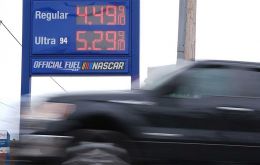
”If the (Iran) conflict is contained soon, the hit to confidence may be temporary, but a prolonged crisis could prompt more precautionary saving and further discretionary spending cuts,” warned Moody’s in a report on the current war in the Middle East, and the impact for US households.
-
Tuesday, March 31st 2026 - 03:58 UTC
Oil tops $114 a barrel as Iran conflict drives record monthly surge
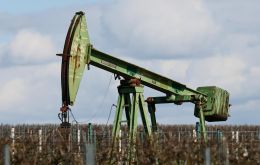
Brent crude, the European benchmark, closed Monday at $112.78 per barrel and continued climbing in the futures market past $114, its highest level since July 2022. Oil has surged roughly 55% in March, the largest monthly gain since the contract's inception in 1988.
-
Sunday, March 29th 2026 - 22:04 UTC
Sharp fuel price hike in Chile triggers first protests against Kast government

Chilean President José Antonio Kast's government faced its first street protests since taking office on March 11 this week, after a historic fuel price increase hit consumers and rapidly eroded public support for the far-right leader.