MercoPress. South Atlantic News Agency
Tag: oil price
-
Friday, March 27th 2026 - 23:04 UTC
Uruguay raises fuel prices 7% over Middle East war and shifts to monthly price-setting
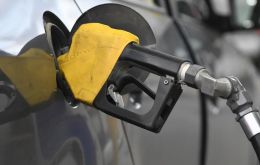
Uruguay's government announced on Friday a 7% fuel price increase effective April 1, as a direct consequence of rising oil prices driven by the U.S.-Israeli war against Iran and the effective closure of the Strait of Hormuz, through which approximately 20% of the world's crude oil supply transits.
-
Wednesday, March 25th 2026 - 20:22 UTC
Iran rejects Trump's 15-point proposal and asserts sovereignty over the Strait of Hormuz

Iran rejected on Wednesday the 15-point proposal put forward by the Trump administration to end the war, calling its terms “excessive and detached from reality,” while international mediators scramble to arrange a direct meeting between representatives of both countries that could be, they warn, the last chance to prevent a broader escalation.
-
Tuesday, March 24th 2026 - 05:55 UTC
Analysts warn $200 oil is no longer a far-fetched scenario

Oil prices could surpass $150 per barrel and approach $200 if the Strait of Hormuz blockade persists, according to energy industry analysts — a level that would make a global recession virtually inevitable.
-
Tuesday, March 17th 2026 - 10:00 UTC
Saudi Arabia diverts more crude to the Red Sea to bypass Hormuz, but alternative capacity remains limited
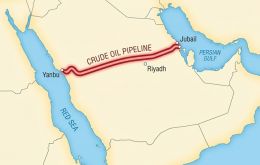
Saudi Arabia is stepping up the use of its pipeline network to the Red Sea to keep crude exports moving while the Strait of Hormuz remains heavily disrupted by the war with Iran. The key route is the Abqaiq-Yanbu system, also known as the East-West Pipeline or Petroline, which links Gulf oil fields with the Yanbu terminal on the Red Sea. That infrastructure has become the kingdom’s main escape route around Hormuz, the chokepoint that normally carries about a fifth of global oil and liquefied natural gas supply.
-
Monday, March 16th 2026 - 16:00 UTC
Fed and ECB face a pivotal week as the oil shock revives inflation risk
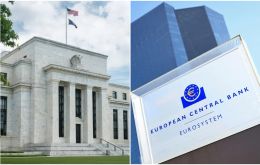
The U.S. Federal Reserve and the European Central Bank head into this week’s policy meetings in a far more uncertain environment than they faced just two weeks ago. The Fed meets on March 17-18, and the ECB on March 18-19, just after the Middle East war pushed oil prices above US$100 a barrel and forced markets to rethink the expected path of interest rates. Even so, neither institution is expected to change borrowing costs at these meetings.
-
Monday, March 16th 2026 - 01:10 UTC
Oil tops US$100 a barrel as Middle East war and Hormuz disruption rattle markets
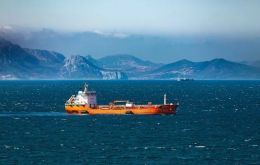
Oil prices moved back above US$100 a barrel on Monday as the conflict involving the United States, Israel and Iran intensified and shipping disruption in the Strait of Hormuz hit one of the world’s most critical energy chokepoints. Brent crude rose to US$105.15 a barrel and U.S. West Texas Intermediate climbed to US$100.32 in early Asian trading, according to market data.
-
Friday, March 13th 2026 - 04:34 UTC
U.S. temporarily allows sales of Russian oil already loaded on tankers to ease energy pressure

The United States has temporarily authorized the sale of Russian oil and petroleum products already loaded on tankers, in a limited easing of sanctions adopted as global energy prices rise because of the Middle East war. The measure was announced by the Treasury Department and will remain in force until April 11.
-
Thursday, March 12th 2026 - 03:00 UTC
Trump releases 172 million barrels from strategic reserve to curb fuel price surge
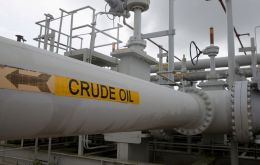
U.S. President Donald Trump has authorized the release of 172 million barrels of crude from the Strategic Petroleum Reserve as part of a coordinated action with the International Energy Agency, in a bid to contain rising fuel prices after market disruption caused by the war with Iran. The Department of Energy said deliveries will begin next week and will take about 120 days to complete.
-
Monday, March 9th 2026 - 10:59 UTC
Oil rises above US$100 a barrel as Middle East war and Hormuz disruption hit supply
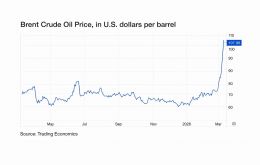
Oil prices climbed above US$100 a barrel on Sunday in futures trading, reaching their highest levels since 2022 as the war in the Middle East, the effective closure of the Strait of Hormuz and fresh production cuts among Gulf producers tightened supply expectations. Reuters reported Brent rose as high as US$111.04 a barrel while West Texas Intermediate (WTI) touched US$111.24 in early trading. AP later put Brent at US$107.97 and WTI at US$106.22, both more than 16% above the previous close.
-
Friday, March 6th 2026 - 15:41 UTC
Oil posts its biggest weekly jump since 2020 as the Iran war disrupts Hormuz

Oil became this week’s clearest barometer of the Middle East crisis, with Brent hovering near US$90 a barrel and WTI around US$87.5, putting both contracts on track for their biggest weekly advance since 2020. The same factor sits behind the surge: the de facto blockage of the Strait of Hormuz, through which roughly one-fifth of the world’s oil normally passes.