MercoPress. South Atlantic News Agency
Tag: Iran
-
Friday, April 17th 2026 - 00:03 UTC
Trump says US “very close” to Iran deal and announces Israel-Lebanon ceasefire
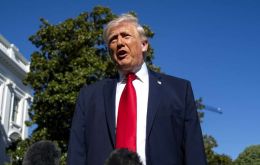
US President Donald Trump said on Thursday that Washington is “very close” to reaching a deal with Iran and announced that Israel and Lebanon have agreed to a 10-day ceasefire, in a day that combined diplomatic overtures with explicit threats to resume hostilities if Tehran does not accept American terms.
-
Monday, April 13th 2026 - 21:52 UTC
Tankers turn back at Hormuz as crude jumps over 4% on US blockade
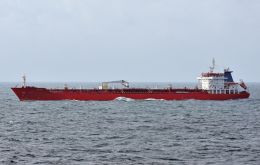
Two oil tankers reversed course as they approached the Strait of Hormuz on Monday, just hours after the US naval blockade against Iranian ports took effect, according to maritime tracking platform MarineTraffic. Brent crude for June delivery closed up 4.4% at $99.36 per barrel, while US benchmark WTI rose 2.6% to $99.08, according to Bloomberg.
-
Sunday, April 12th 2026 - 13:30 UTC
Trump escalates Gulf crisis with order for total blockade of Strait of Hormuz
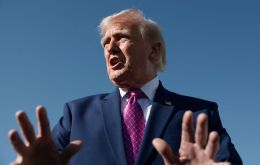
US President Donald Trump announced on Sunday that the Navy would immediately begin blocking all maritime traffic attempting to enter or leave the Strait of Hormuz, and ordered the interception on the high seas of any vessel that has paid a toll to Iran.
-
Thursday, April 9th 2026 - 01:13 UTC
Latin America faces fertilizer vulnerability; IICA and TFI agree joint plan amid Hormuz crisis

The Inter-American Institute for Cooperation on Agriculture (IICA) and the U.S.-based Fertilizer Institute (TFI) announced a partnership to secure fertilizer supply across the Americas, amid logistical disruptions and price volatility worsened by the closure of the Strait of Hormuz due to the war between the United States, Israel and Iran.
-
Wednesday, April 8th 2026 - 20:55 UTC
Iran re-closes Strait of Hormuz after Israeli strikes in Lebanon, putting ceasefire at risk

Iran suspended tanker traffic through the Strait of Hormuz just hours after its ceasefire with the United States took effect, in response to continued Israeli strikes against Hezbollah in Lebanon. The move jeopardizes a truce that had barely begun to ease the worst global energy crisis in decades.
-
Wednesday, April 8th 2026 - 10:27 UTC
US and Iran reach ceasefire deal with both sides claiming victory
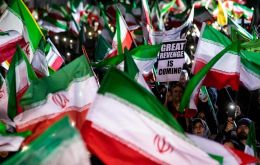
The United States and Iran agreed to a two-week ceasefire on Tuesday night, just 90 minutes before a deadline President Donald Trump had set to launch massive strikes against Iranian civilian infrastructure. The deal, brokered by Pakistan, pauses a six-week conflict that has killed thousands and triggered a global energy crisis.
-
Tuesday, April 7th 2026 - 20:59 UTC
São Paulo stock exchange reverses losses and closes higher on US-Iran negotiation signals

The São Paulo stock exchange reversed its losses in the final minutes of trading and closed Tuesday with a slight gain of 0.05%, lifted by President Donald Trump's statement that he is in “heated negotiations” with Iran just hours before his ultimatum for the reopening of the Strait of Hormuz expired.
-
Tuesday, April 7th 2026 - 20:57 UTC
Trump says he is in “heated negotiations” with Iran hours before Hormuz ultimatum expires
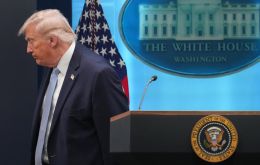
US President Donald Trump said Tuesday he is in “heated negotiations” with Iran just hours before his ultimatum for Tehran to reopen the Strait of Hormuz or face massive attacks on its civilian infrastructure expires.
-
Tuesday, April 7th 2026 - 12:36 UTC
Fresh strikes hit Kharg Island as Trump threatens to kill “a whole civilization” tonight
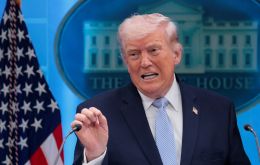
The United States and Israel struck Iran's Kharg Island, the country's main oil export terminal, on Tuesday, hours before President Donald Trump's ultimatum for Tehran to reopen the Strait of Hormuz or face massive attacks on its power plants and bridges expires.
-
Monday, April 6th 2026 - 01:00 UTC
Trump threatens to destroy Iran's power plants and bridges over Hormuz Strait closure
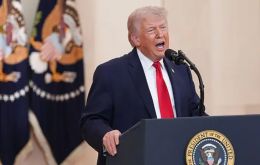
US President Donald Trump threatened Sunday to bomb Iran's power plants and bridges if Tehran fails to reopen the Strait of Hormuz to international shipping by Tuesday at 8:00 PM Eastern Time.