MercoPress. South Atlantic News Agency

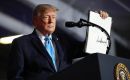

Milei willing to send troops to the Middle East if requested by Trump
 Milei himself has described Iran as “our enemy,” citing the 1992 and 1994 attacks on the Israeli Embassy and the AMIA Jewish community centre in Buenos Aires
 Argentine President Javier Milei's willingness to send troops to the Middle East if requested by the United States has fuelled growing concern in Argentina, a country that has historically maintained an equidistant stance on international conflicts and where fears of possible reprisals are emerging.
Communications Secretary Javier Lanari confirmed to the Spanish newspaper El Mundo that the Argentine government would provide “whatever help” Washington deems necessary. “If the United States requested it, yes. Whatever help they consider, it will be given,” he said, though he noted no formal request has been made. Foreign Minister Pablo Quirno avoided specifics on troop deployment but indicated the government's position is clear: “To the extent they need our support, it's clear where we will stand.”
Milei himself has described Iran as “our enemy,” citing the 1992 and 1994 attacks on the Israeli Embassy and the AMIA Jewish community centre in Buenos Aires, for which Argentine courts hold Tehran responsible. “They planted two bombs on us. They are our enemies,” he said during a trip to New York, where he also declared: “We are going to win the war.” Argentina is, along with Canada, one of the few countries to have explicitly supported the US-Israeli offensive, according to CNN.
The rhetoric drew a direct response from Tehran. The state-affiliated Tehran Times published an editorial warning that Milei had crossed “an unforgivable red line” and that his stance compels Iranian authorities to devise “a proportionate response.” The head of the Americas Department at Iran's Foreign Ministry also issued a warning.
On Tuesday, Milei attended a ceremony marking the 34th anniversary of the Israeli Embassy bombing in Buenos Aires, where he said the world is living through “a historic moment” and that the United States and Israel “have decided to put an end to the Iranian regime.” Members of the Jewish community present approved of the president's support but expressed concern about possible reprisals, according to EFE.
In the opposition, Buenos Aires Governor Axel Kicillof urged Milei not to involve Argentina in a foreign war. Two legislative proposals were introduced in Congress to halt the government's “belligerent statements,” noting that any participation in an armed conflict requires parliamentary approval.
Cabinet Chief Manuel Adorni tempered the presidential rhetoric: “Argentina is not participating in the war, but it does share a philosophy and alignment with the United States and Israel against a regime that threatens international stability.” The closest precedent for Argentine involvement in a Middle Eastern conflict is the deployment of warships to the Persian Gulf during the 1990–1991 Gulf War under President Carlos Menem. Analysts note, however, that deployment took place within a UN-backed multilateral coalition — a legal framework absent from the current conflict.


Top Comments
Disclaimer & comment rules-

-

Read all commentsUnless the rations are better than the US had during the Vietnam war I can see the Argentina troops defecting to Iran. Well you don't expect Milei to feed them while away do you?
Mar 24th, 2026 - 12:54 pm 0Great picture! Really sends a message!
Mar 28th, 2026 - 08:21 pm 0Commenting for this story is now closed.
If you have a Facebook account, become a fan and comment on our Facebook Page!