MercoPress. South Atlantic News Agency
US lifts sanctions on Delcy Rodríguez, clearing the way for her visit to Washington
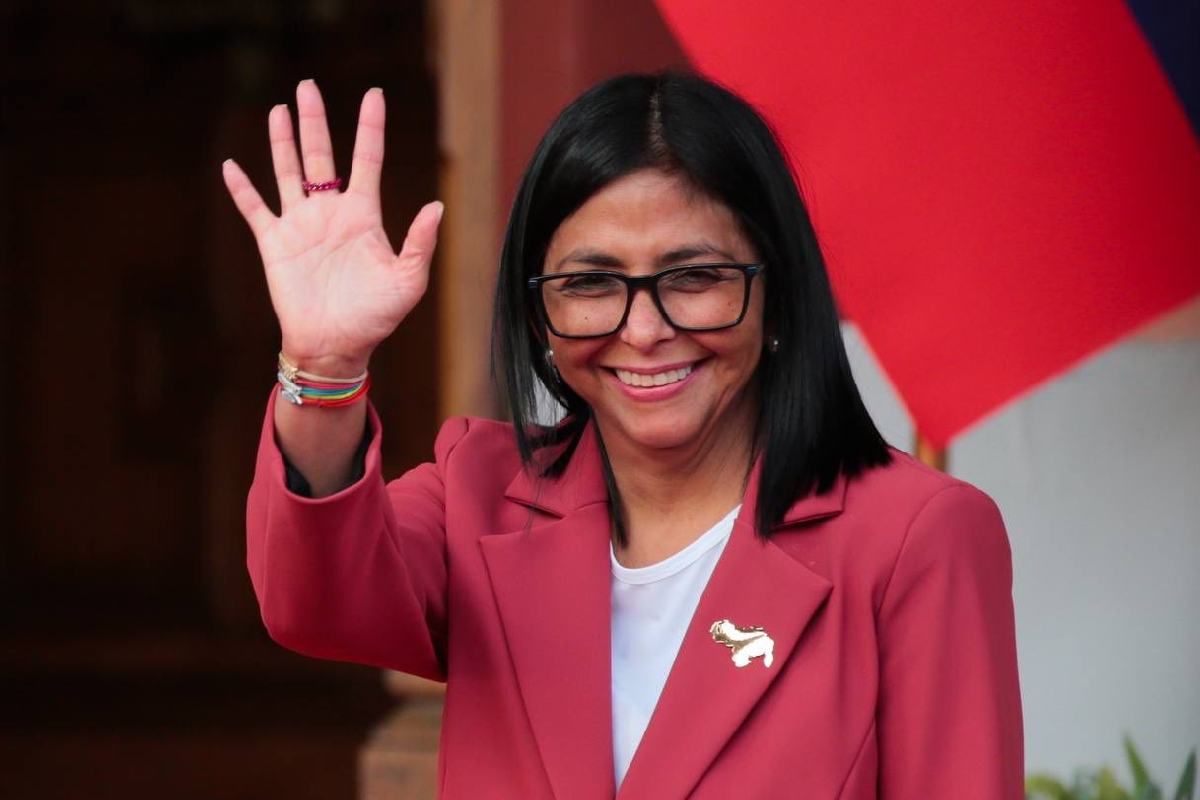 “We value this decision as a step toward normalizing and strengthening relations between our countries,” she wrote
 The U.S. Treasury Department on Wednesday removed Venezuela's interim president, Delcy Rodríguez, from the Specially Designated Nationals (SDN) list, the country's main financial sanctions registry managed by the Office of Foreign Assets Control (OFAC). The move allows her to access blocked assets, conduct transactions with U.S. entities, and travel to American territory.
Rodríguez had been added to the list on September 25, 2018, during Donald Trump's first term, along with other members of Nicolás Maduro's inner circle. At the time, Treasury argued that Maduro had given her senior positions “to help him maintain power and solidify his authoritarian rule.” Her brother, Jorge Rodríguez, president of the National Assembly, remains on the list.
The interim president responded on social media. “We value this decision as a step toward normalizing and strengthening relations between our countries,” she wrote. “We trust that this progress will lead to the lifting of the sanctions still in force on our country, enabling us to build and guarantee an effective bilateral cooperation agenda,” she added.
A Trump administration official told CBS News that the move “signals our support for a more constructive U.S.–Venezuela relationship and for expanded private sector engagement that can help advance Venezuela's economic recovery and democratic transition.”
The sanctions relief is the latest step in a rapid rapprochement between Washington and Caracas since the January 3 military operation in which U.S. forces captured Maduro and his wife, Cilia Flores, in the Venezuelan capital. Both were taken to New York, where they face drug trafficking charges and have pleaded not guilty, AP reported. Following the capture, Venezuela's Supreme Court declared Maduro's absence “temporary” and ordered Rodríguez to assume the interim presidency for 90 days — a period that expires this Friday — with a possible six-month extension subject to National Assembly approval.
The Trump administration recognized Rodríguez as head of state, ruling out opposition leader María Corina Machado to lead the transition. Both governments reestablished diplomatic ties in March, and on Monday the United States officially reopened its embassy in Caracas, which had been closed since 2019.
In parallel, Treasury has issued licenses for U.S. and European energy companies — including Spain's Repsol — to resume operations in Venezuela, which holds the world's largest oil reserves but whose industry has deteriorated after years of sanctions, mismanagement, and corruption.
On Tuesday, Secretary of State Marco Rubio called for “patience” from those demanding elections. “There will have to be free and fair elections in Venezuela. And that moment will have to come,” he said in a Fox interview. “We have to be patient, but without becoming complacent,” he added.


Top Comments
Disclaimer & comment rulesCommenting for this story is now closed.
If you have a Facebook account, become a fan and comment on our Facebook Page!