MercoPress. South Atlantic News Agency


Peru reaches 72% of vote count with Fujimori ahead and second place disputed among three candidates
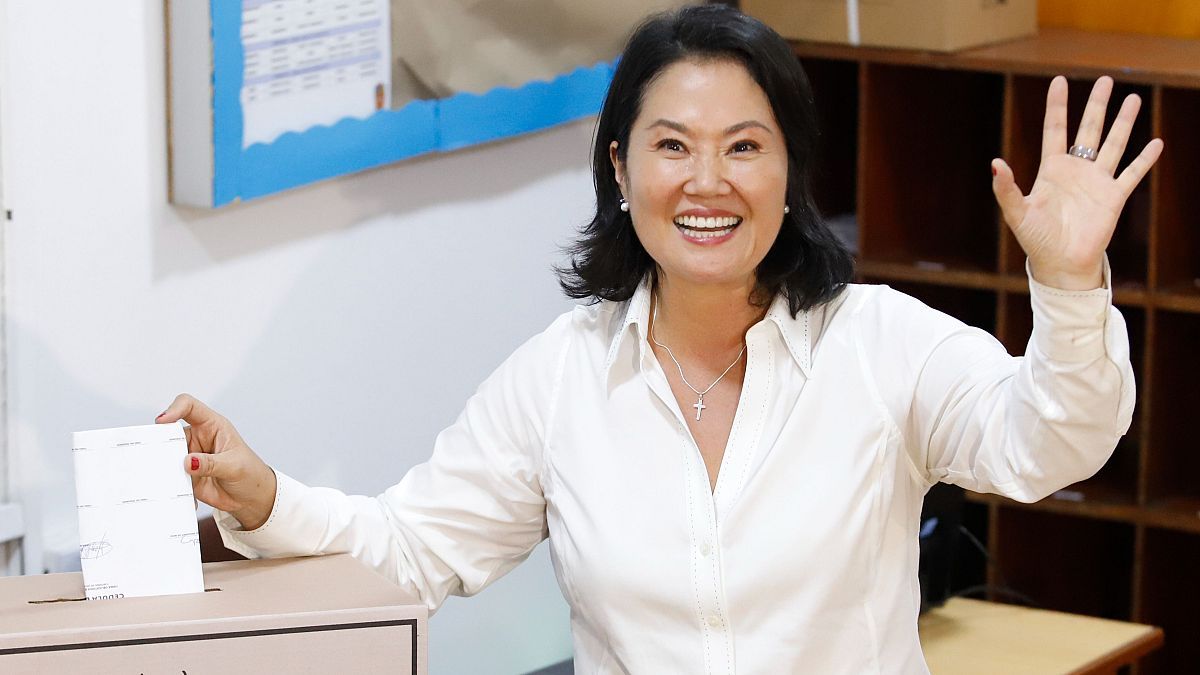 The quick count, based on 95.7% of the vote tallies, revealed an even closer race: Fujimori with 17.1% and a three-way tie between Sánchez (12.4%), López Aliaga (11.3%), and Nieto (10.7%)
 The count in Peru's presidential election is advancing slowly and without resolution. With 72% of ballots processed by the National Office of Electoral Processes (ONPE) early Tuesday morning, Keiko Fujimori (Fuerza Popular) holds first place with 16.94% of the vote. Second place, which grants entry to the June 7 runoff, remains open: Rafael López Aliaga (Renovación Popular) stands at 13.0%, Jorge Nieto (Buen Gobierno) at 12.0% and leftist Roberto Sánchez (Juntos por el Perú) at 9.73%, with the gap narrowing as ballots from the country's interior are added.
The comprehensive quick count by Ipsos and the Transparencia civic association, based on 95.7% of sampled ballots, revealed an even tighter picture: Fujimori at 17.1% and a three-way statistical tie among Sánchez (12.4%), López Aliaga (11.3%) and Nieto (10.7%). “It is not possible to determine which of these candidacies would occupy second place,” warned Álvaro Henzler, president of Transparencia, who called for “waiting calmly for the official results.”
Alfredo Torres, president of Ipsos Peru, explained the discrepancy between ONPE data and the quick count. López Aliaga concentrates his vote in Lima, where he would have placed first, but reaches only 7% in the rest of the country. Sánchez, conversely, registers just 3% in Lima but reaches 17.1% in the regions, whose ballots are the last to enter the ONPE system.
The processing delay is not unprecedented: in 2016, ONPE took ten days to process 100% of ballots; in 2021, five days. In 2026, the complexity deepened due to the scale of the process: five simultaneous elections — president, national senator, regional senator, lower-house representative and Andean parliamentarian — on a five-section ballot, with 35 presidential candidates. As of two days before the vote, only 55% of the 460,000 poll workers had been trained, according to ONPE. Peru also did not implement digital voting despite its rugged geography spanning coast, highlands and jungle.
The logistical failures have had judicial consequences. The National Elections Jury (JNE) filed a criminal complaint against ONPE chief Piero Corvetto for alleged offenses against the right to vote, delay of official functions and obstruction of the electoral process. The complaint extends to three other officials and the legal representative of contractor Servicios Generales Galaga, responsible for distributing materials that failed to arrive on time. Additionally, ONPE's Electoral Management director, José Samané Blas, was detained by the National Police on suspicion of collusion in the hiring of the contractor, AP reported.
On Monday, more than 52,000 voters who had been unable to cast ballots on Sunday went to the polls in Lima and in the overseas jurisdictions of Orlando and Paterson in the United States. Several voters told CNN en Español they had changed their vote after seeing preliminary results published before voting had concluded.


Top Comments
Disclaimer & comment rulesCommenting for this story is now closed.
If you have a Facebook account, become a fan and comment on our Facebook Page!