MercoPress. South Atlantic News Agency

Just one day after its launch, Trump halts Hormuz reopening operation and turns to negotiations with Iran
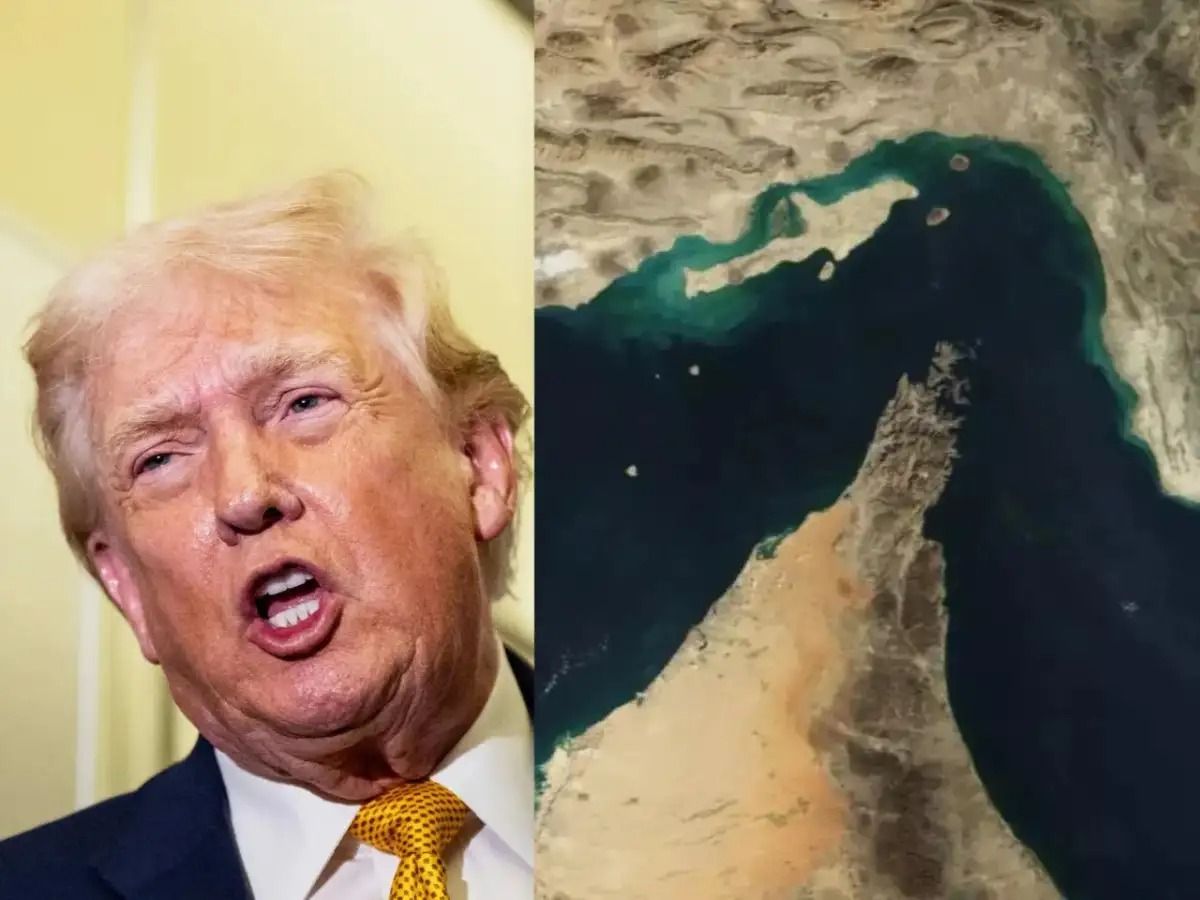 The announcement came hours after Rubio told reporters at the White House that Operation Epic Fury had concluded after achieving its objectives
 US President Donald Trump on Tuesday night announced the suspension of “Project Freedom,” the military operation launched barely 24 hours earlier to escort stranded vessels through the Strait of Hormuz, citing significant progress toward a peace agreement with Iran. The announcement, posted on his Truth Social platform, contradicted the messaging sustained throughout the day by Secretary of State Marco Rubio, Secretary of Defense Pete Hegseth, and Joint Chiefs chairman General Dan Caine, all of whom had framed the operation as a non-negotiable humanitarian rescue mission for stranded sailors.
“Based on the request of Pakistan and other countries, the tremendous military success that we have had during the campaign against Iran and, additionally, the fact that great progress has been made toward a complete and final agreement with representatives of Iran, we have mutually agreed that Project Freedom will be paused for a short period of time to see whether or not the agreement can be finalized and signed,” Trump wrote. The president specified that the US naval blockade of Iranian ports would remain fully in effect during the pause.
The announcement came hours after Rubio told reporters at the White House that Operation Epic Fury — the joint US-Israeli air offensive launched on February 28 — had concluded after achieving its objectives and that the US had shifted to a defensive posture. “We would prefer the path of peace. What the president would prefer is a deal,” Rubio said. He also warned, however, that Iran had not yet chosen that path and that “what that may lead to in the future is speculative.” Iran's parliamentary speaker Mohammad Ghalibaf, Tehran's lead negotiator at the April talks in Pakistan, had hardened his tone hours earlier: “We know well that the continuation of the status quo is intolerable for America, while we are just getting started.”
Project Freedom mobilised more than 100 aircraft, 15,000 military personnel, and a fleet of destroyers during its single operational day. On Monday, US forces destroyed six Iranian Revolutionary Guard fast boats and neutralised missiles and drones, while Iran struck a UAE oil tanker at the port of Fujairah — leaving three injured — and fired on a South Korean vessel. Late on Tuesday, the UK Maritime Trade Operations (UKMTO) said a verified source had told it that a cargo vessel had been struck “by an unknown projectile” in the strait. Hegseth said the ceasefire was “not over” but acknowledged that Iran had attacked US forces ten times since the truce began, though “below the threshold” of resuming operations.
The pause opens a new diplomatic phase in a conflict that, according to US Central Command, has left nearly 23,000 sailors from 87 countries stranded in the Persian Gulf, with at least 10 deaths attributed to the Iranian blockade. Pakistani Prime Minister Shehbaz Sharif, whose country is acting as mediator between Washington and Tehran, urged both sides to ensure the ceasefire “be upheld and respected, to allow necessary diplomatic space for dialogue.” Trump also announced he would discuss the strait's reopening with Chinese President Xi Jinping during a planned visit to China next week.


Top Comments
Disclaimer & comment rules-

-

-

Read all commentsIt's TACO Tuesday again !
May 06th, 2026 - 03:03 am +2Actually, the Saudis denied him access to their territory land, sea, and airspace, making it impossible for him to continue. It has nothing to do with patience, just hard reality. Watch for the next lie... ;)
May 07th, 2026 - 09:41 pm +2The use of the term “below the threshold” for resumption of hostilities made me remember a first-class, intelligent and thinking U.S. General who led troops in Afghanistan. General Stanley Mchrystal devised a strategy of “courageous restraint” which effectively meant taking fire, without over the top or indeed any response. This was to minimise civilian casualties,by avoiding use of indirect fire weapons, dumb bombs etc in civilian areas.
May 06th, 2026 - 11:50 am +1It had mixed support from the troops on the ground as they favoured overwhelming kinetic response (sound familiar?); but there is evidence it brought the civilian populace back toward a form of neutrality toward KFOR troops. With an eye on post-conflict relationships and a possible reset, then I cannot help but think, that an apology by those/the country that perpetrated the killing of 160 plus Iranian schoolchildren on the early days of the war, might make the general populace less supportive of their regime. The silence on this matter is deafening to my ears.
Early days as yet but small steps.
Commenting for this story is now closed.
If you have a Facebook account, become a fan and comment on our Facebook Page!