MercoPress. South Atlantic News Agency


Delcy Rodríguez defends Essequibo claim at The Hague under temporary EU sanctions waiver
 For Venezuela, the Essequibo appears on its official maps as a “zone of reclamation.” For Guyana, the Venezuelan claim represents an existential threat to its territorial integrity
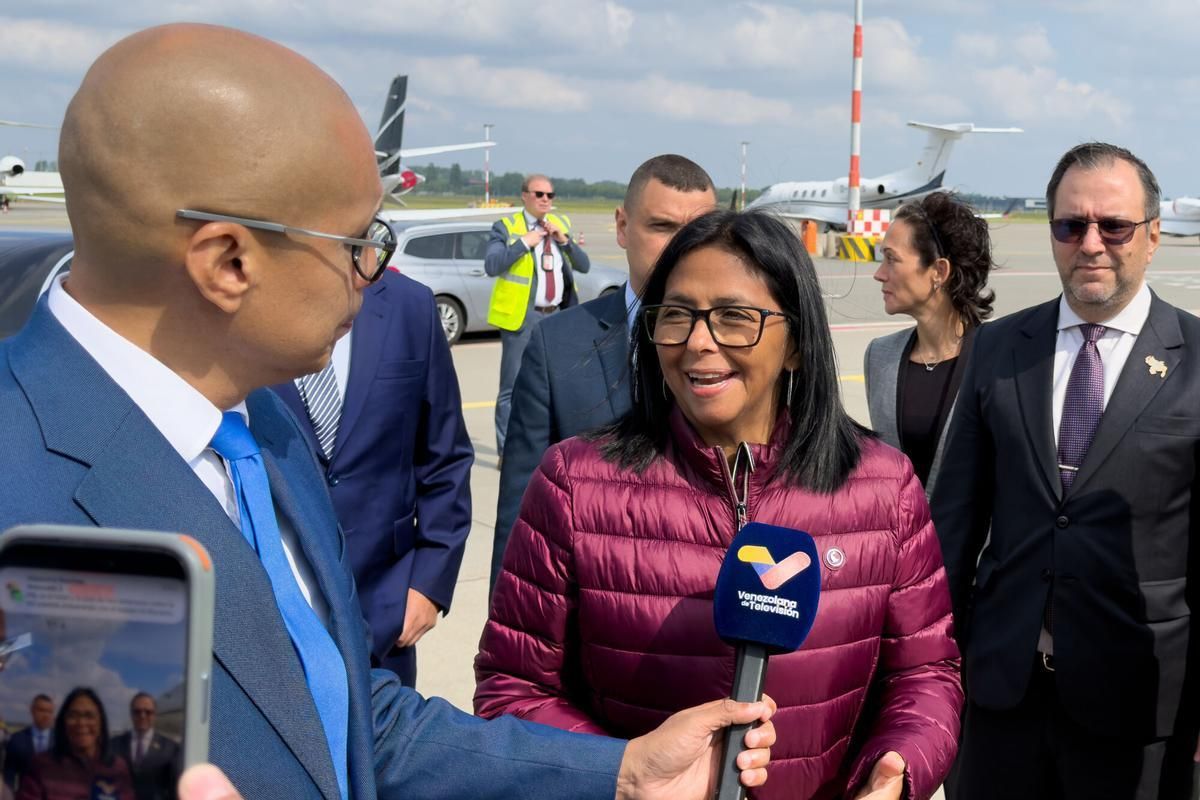
 Venezuela's acting President Delcy Rodríguez arrived in the Netherlands on Sunday to defend her country's claim to the Essequibo, the border region disputed with Guyana, before the International Court of Justice (ICJ). The trip, authorized under a specific waiver to the European Union sanctions imposed on her, marks her first major international journey outside the Caribbean since the capture of President Nicolás Maduro by US forces in January, which paved the way for her to assume office as interim leader.
“It has been made very clear that the only one with title over the Essequibo territory is Venezuela, ever since we were born as a Republic and before that, when we were an administrative unit of the colonial powers,” she said on arrival at Amsterdam airport. Rodríguez also invoked “the majesty and force of the 1966 Geneva Agreement,” the treaty she regards as the true framework for resolving the dispute.
The ICJ on Monday holds the final session of the substantive hearings that opened on 4 May under the presidency of Japanese judge Yuji Iwasawa. The case was brought to the court by Guyana in 2018, with the aim of confirming the validity of the 1899 arbitral award that drew the border with the then British Guiana and assigned the region to London. Venezuela declared that ruling null in 1962, deeming it procedurally flawed, and in 1966 signed the Geneva Agreement with the United Kingdom, which called for a peaceful settlement just before Guyanese independence. Caracas does not recognize the court's jurisdiction in this matter but has appeared without that participation implying acceptance.
Guyana's Foreign Minister, Hugh Hilton Todd, told the court at the opening of proceedings that the dispute “has been a blight on our existence as a sovereign state from the beginning” and warned that nearly 70% of Guyana's territory is at stake. The Essequibo covers some 160,000 square kilometers —roughly two-thirds of Guyana— and contains six of the country's ten administrative regions. The area is rich in gold, diamonds, timber and other resources. The massive offshore oil reserves discovered on the adjacent shelf by ExxonMobil since 2015 have turned Guyana, with fewer than a million inhabitants, into the country with the world's largest per-capita crude reserves, according to figures released by the company.
For Venezuela, the Essequibo appears on its official maps as a “zone of reclamation.” For Guyana, the Venezuelan claim represents an existential threat to its territorial integrity. The court's ruling, awaited with anticipation in both countries, will be binding, although its enforcement will depend on the parties' willingness and on any eventual backing from the United Nations Security Council.


Top Comments
Disclaimer & comment rulesCommenting for this story is now closed.
If you have a Facebook account, become a fan and comment on our Facebook Page!