MercoPress. South Atlantic News Agency


Peru's runoff to pit Fujimori's daughter against Castillo's political heir
 An Ipsos poll released in late April places both candidates in a technical tie at 38%, with 17% reporting they would cast blank or spoiled ballots
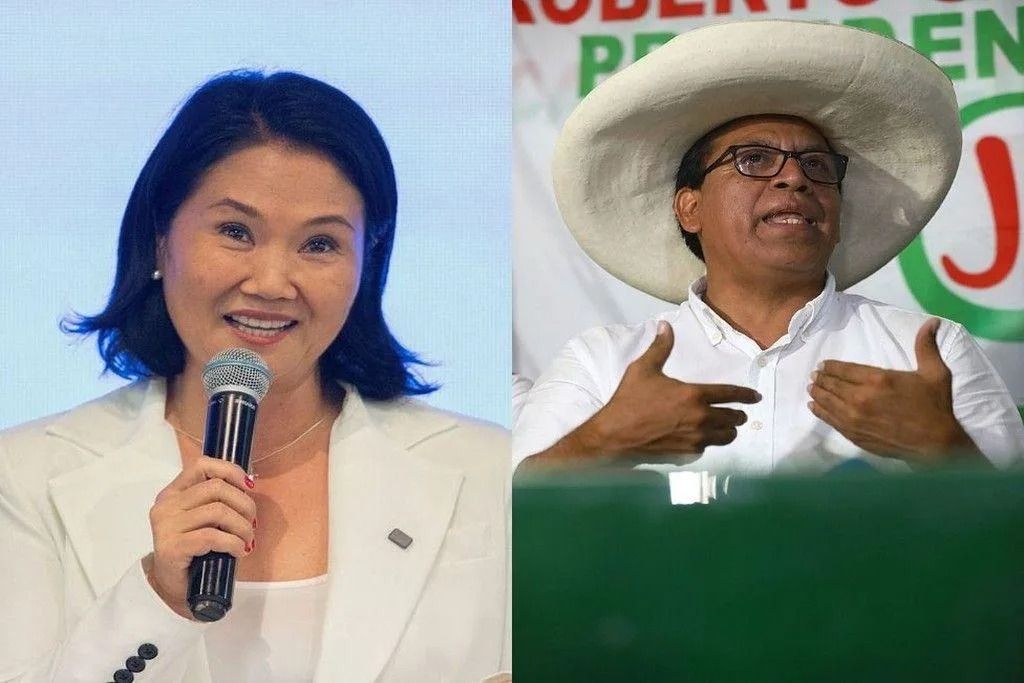
 Peru will hold a presidential runoff on 7 June pitting Keiko Fujimori, daughter of former President Alberto Fujimori (1990-2000), against Roberto Sánchez, a congressman and self-proclaimed political heir of Pedro Castillo, the rural schoolteacher who reached the presidency in 2021 and is now serving an eleven-year, five-month sentence for the failed self-coup he attempted on 7 December 2022.
With 99.66% of ballots processed a month after the first round on 12 April, the National Office of Electoral Processes (ONPE) confirms Fujimori, of the Fuerza Popular party, in first place with 17.17% of valid votes —her lowest starting share in four consecutive bids for the presidency. Sánchez, of Juntos por el Perú, took 12% and is ahead of Lima's former mayor, Rafael López Aliaga, of Renovación Popular, by some 14,500 votes. López Aliaga alleges fraud, though no actor has produced supporting evidence; the National Election Jury has ordered a comprehensive computer audit of the first round. The resignation of ONPE chief Piero Corvetto, after delays at polling stations in Lima, has deepened the climate of mistrust.
Fujimori, 50, arrives at her fourth runoff with a new strategy. After losing in 2011, 2016 and 2021, the Fuerza Popular leader has openly embraced the memory of her father, who was convicted of corruption, crimes against humanity and espionage, and died in 2024. “I want to be president so I can govern as my father did,” she said days before the vote. On election day she visited the family tomb.
Sánchez, a psychologist and former minister of Foreign Trade and Tourism under Castillo, entered his closing campaign rally on horseback wearing a wide-brimmed hat —gestures copied from his mentor. He was joined by José Castillo, the former president's brother, and Yenifer Paredes, his niece. His central pledge is to pardon the former president if he reaches power. His vote is concentrated in the southern Andes and rural Peru, while Fujimori retains her stronghold in Lima.
An Ipsos poll released in late April places both candidates in a technical tie at 38%, with 17% reporting they would cast blank or spoiled ballots. Political scientist José Alejandro Godoy warns that the scenario is “the best Keiko Fujimori has had in fifteen years” —anti-fujimorismo has weakened, and her father is no longer a source of internal friction— but recalls that she “carries her own anti-vote” after a decade of leading her bloc in Congress, a period associated with institutional instability. Alonso Cárdenas, a political scientist at Antonio Ruiz de Montoya University, argues that Alberto Fujimori's 1992 self-coup gave rise to “one of the most corrupt governments in world history,” while Castillo's 2022 attempt was “a botched effort that ended in farce.”


Top Comments
Disclaimer & comment rulesCommenting for this story is now closed.
If you have a Facebook account, become a fan and comment on our Facebook Page!