MercoPress. South Atlantic News Agency
The Trump-Xi summit in Beijing turns on five fronts: Iran, Taiwan, tariffs, rare earths, and AI
 Foreign Ministry spokesperson Lin Jian last week described the issue as “the core of China's fundamental interests and the political foundation” of the relationship
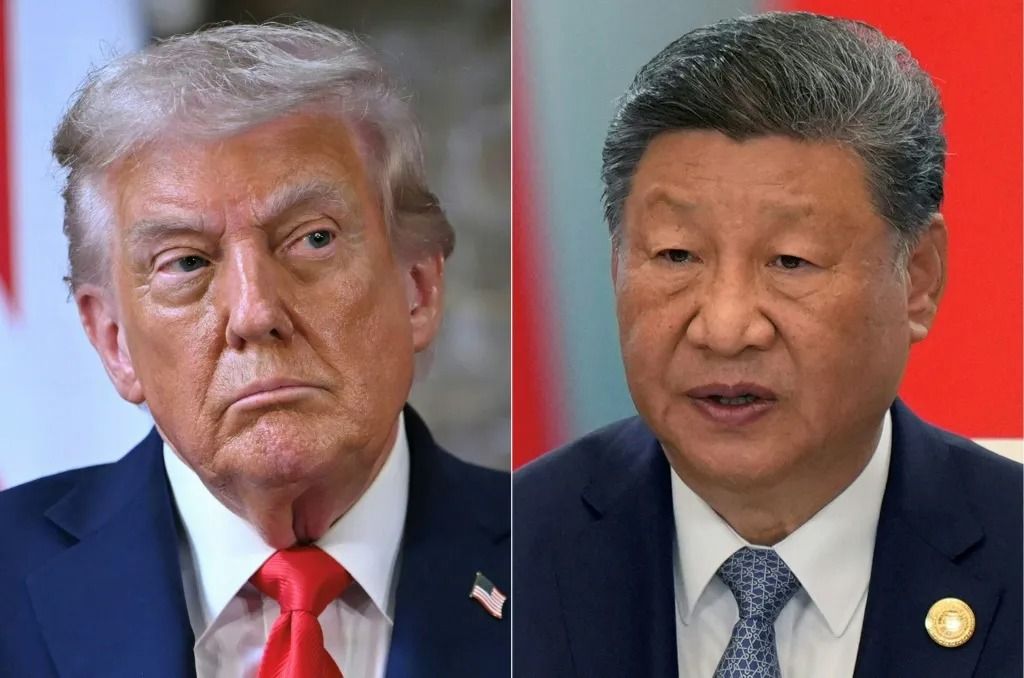
 The summit between US President Donald Trump and his Chinese counterpart Xi Jinping that begins on Wednesday in Beijing will unfold around an agenda concentrated on five main fronts: the US war against Iran, the Taiwan question, bilateral tariffs, Chinese exports of rare earths, and, according to The Wall Street Journal, an initial approach to managing the risks of artificial intelligence. It will be the first visit by a US president to the Chinese capital in nearly nine years and comes three days after China's Foreign Ministry released a propaganda video that revived the Soviet-era concept of “peaceful coexistence” to describe the bilateral relationship.
The war in the Middle East is the factor weighing most on the meeting. The conflict forced the postponement of the summit, originally scheduled for mid-April, and arrives in Beijing as an open wound for Washington: rising fuel prices and public discontent threaten, according to polls, Republican control of both chambers of Congress in November's midterm elections. Trump may require Xi's mediation to nudge Tehran toward an agreement, halt Iranian arms transfers, and secure a reduction in Chinese purchases of Iranian crude. Beijing, the country most affected by the closure of the Strait of Hormuz, received last week Iranian Foreign Minister Abbas Araghchi, who thanked the Chinese government for its “tireless efforts.”
Taiwan stands as Beijing's strategic priority. Foreign Ministry spokesperson Lin Jian last week described the issue as “the core of China's fundamental interests and the political foundation” of the relationship. Analysts such as Melanie Hart, of the Atlantic Council and a former State Department adviser, expect Xi to press Trump to adopt language more favorable to the Chinese position, delay weapons sales to Taipei, or speak out against the island's independence. Asked on Monday about continued defense support for Taiwan, Trump said he would have “that conversation with President Xi” and acknowledged that the Chinese leader “would not like” Washington to continue down that path.
The trade front runs beneath the entire summit. US Trade Representative Scott Bessent and Chinese Vice Premier He Lifeng will hold a fresh technical round in South Korea on Wednesday aimed at consolidating the truce reached in Busan last October. Washington seeks a Chinese commitment to purchase more than 500 Boeing aircraft and agricultural products, as well as cooperation on rare earths and the fight against fentanyl. Trump will travel accompanied by a business delegation led by Tim Cook (Apple) and Elon Musk (Tesla). For Beijing, where a sense of tactical victory in the tariff dispute prevails, the objective is to buy time and ease US pressure before the next round of frictions, according to Jon Czin, former China director at the National Security Council. Artificial intelligence would round out the agenda with an initial attempt to set safeguards around unpredictable models and autonomous military systems, although the consultancy Trivium China considers a meaningful dialogue unlikely.


Top Comments
Disclaimer & comment rulesNo comments for this story
Please log in or register (it’s free!) to comment. Login with Facebook