MercoPress. South Atlantic News Agency



Crypto Wallets Are Replacing Bank Accounts Across the Americas — And Reshaping Cross-Border Payments
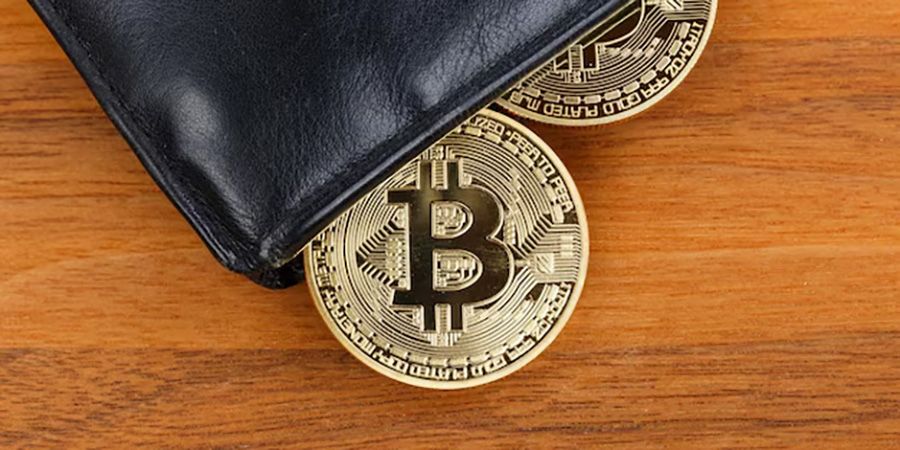 Photo: Freepik
 A growing share of households across the Americas no longer treat a bank account as the default starting point for moving money. From Buenos Aires to Brooklyn, a quiet substitution is underway: self-custody crypto wallets and stablecoin balances are absorbing functions that, until recently, belonged to commercial banks alone. Cross-border payments — the most expensive and friction-heavy corner of consumer finance — are at the centre of the shift.
The data is no longer fringe. Blockchain analytics firm Chainalysis estimates that Latin America received roughly US$415 billion in cryptocurrency between July 2023 and June 2024, with year-on-year growth of about 42.5%. Argentina led the region with US$91.9 billion in received value, narrowly ahead of Brazil at US$90.3 billion — figures broadly comparable to the GDP of small European economies. According to the same research, the dominant use case is no longer speculation; it is stablecoins such as USDT and USDC functioning as everyday transaction money (Chainalysis 2024 Geography of Cryptocurrency report).
The pattern is showing up first in consumer-facing sectors that compete on settlement speed, where every minute of delay translates into measurable user drop-off.
Where the substitution shows up first: no-verification gambling platforms
Online gambling has become the most visible early indicator of how far wallet-based finance has displaced the traditional banking stack. A category of operators known as no-verification casinos — also referred to as no-KYC sites — has expanded rapidly across markets where crypto adoption is highest, including the United States and several Latin American economies.
The model dispenses with the document-based identity check that traditional online operators require at signup or withdrawal. In its place, players authenticate via a connected crypto wallet such as MetaMask or Trust Wallet, deposit in Bitcoin or stablecoins, and receive winnings back to the same wallet address. The blockchain itself becomes the audit trail. Gambling writer Bryan Bauer, who tracks the segment for Pokertube, notes that the fastest-paying sites in this category now process withdrawals in under fifteen minutes — settlement speed that the legacy banking-and-card infrastructure cannot match, regardless of the operator's intent.
Two structural factors explain the segment's growth. The first is licensing geography: most no-verification platforms operate under offshore regimes such as the Curaçao Gaming Control Board or the Anjouan licence, which permit lighter onboarding requirements than the UK Gambling Commission or the Malta Gaming Authority. The second is the underlying payment rail itself — a wallet-to-wallet stablecoin transfer simply does not need the intermediary checks that a Visa or ACH transaction does. The casinos are not engineering a loophole; they are reflecting the capabilities of the infrastructure their players are already using for everything else.
The regulatory ceiling is real, however. Even no-KYC operators typically retain the right to request verification on unusually large withdrawals to satisfy anti-money-laundering obligations, and US-facing platforms in particular continue to navigate a shifting Treasury enforcement posture. The segment is therefore best understood not as a permanent regulatory escape hatch, but as a leading indicator of where mainstream payments behaviour is heading.
The unbanked premium
The economic logic is straightforward once the cost structure of the legacy system is examined. The World Bank's most recent Global Findex survey found that roughly 1.4 billion adults worldwide remain unbanked, with Latin America and parts of the United States overrepresented in that figure. For these households, a smartphone with a non-custodial wallet — MetaMask, Trust Wallet, or a stablecoin-native app — is functionally a current account: it can receive payroll-equivalent transfers, store value, and settle purchases.
For the United States in particular, the remittance corridor to Latin America is the most acute pressure point. The World Bank estimated remittance flows to the region at over US$155 billion in 2024, with average transfer fees still hovering near 6% for traditional money-service operators. A stablecoin transfer between two self-custody wallets, by contrast, typically settles in under five minutes at a cost of well below 1%. For a sender wiring US$300 a month, the annualised saving is not academic.
This is not happening in a regulatory vacuum. The US Financial Crimes Enforcement Network (FinCEN) and the Federal Reserve have both signalled tighter oversight of stablecoin issuers, and the GENIUS Act framework — signed into law in 2025 — established the first federal stablecoin regime in the United States. The Brazilian central bank, meanwhile, is integrating crypto reporting requirements into its broader fintech supervision. The era of unregulated wallet activity is closing, but the underlying user behaviour appears too entrenched to reverse.
What this means for cross-border commerce
The implications for commercial actors extend well beyond consumer remittances. Two areas are seeing the most pronounced effects.
Merchant acceptance. US e-commerce platforms exporting to Latin American customers increasingly face requests for stablecoin checkout options. Card-decline rates on cross-border transactions remain stubbornly high — frequently above 30% in some corridors — and stablecoin rails eliminate the issuer-bank approval step entirely.
Payroll and freelance work. Latin American developers, designers, and remote workers contracted by US firms have, in significant numbers, moved to invoicing in USDT or USDC. The reason is dual: faster settlement and, in countries with capital controls or rapid currency depreciation, the ability to hold dollar-denominated value without a US bank account. MercoPress has previously examined the broader landscape in its overview of innovations in digital payments, which noted that crypto adoption in adjacent industries — travel, e-commerce, online gambling — is now a leading indicator of broader retail uptake.
The regulatory countercurrent
None of this proceeds without friction. The Argentine government, after the $LIBRA episode in early 2025, has tightened scrutiny of crypto promotion. The Brazilian Federal Revenue Service expanded reporting requirements on overseas wallet holdings. In the United States, the Treasury's sanctions enforcement arm continues to pressure mixers and non-compliant exchanges. The direction of travel is clear: regulators are not attempting to ban the rails, but to bring them inside the perimeter of existing financial supervision.
The harder question is whether traditional banks can compete on cost and speed once stablecoin infrastructure is fully integrated into mainstream payment networks. Visa and Mastercard have both launched stablecoin settlement pilots; PayPal has issued its own dollar-pegged token. The competitive pressure is now bidirectional.
Frequently asked questions
Are stablecoins legal for cross-border payments in the United States? Yes. Stablecoin transfers between private wallets are legal under US law, and the 2025 federal framework formally recognises and regulates dollar-pegged stablecoin issuers. Tax reporting obligations apply to gains, and money-transmitter rules apply to intermediaries — but peer-to-peer transfers themselves are not prohibited.
Why do crypto transfers settle faster than bank wires? Bank wires rely on correspondent banking networks that batch and reconcile transactions across multiple intermediaries, often pausing for compliance review. A stablecoin transfer settles directly on a public blockchain in a single step, typically within minutes, regardless of geography.
Do unbanked users really use crypto for everyday payments? In high-inflation economies — Argentina and Venezuela are the most studied cases — yes. Chainalysis data shows stablecoin volumes in these markets are driven heavily by retail-sized transactions, not institutional flows, which is the signature of everyday use rather than speculation.
Is the trend reversible if regulation tightens? History suggests not. Once a payment behaviour becomes habitual and cheaper than the alternative, regulation tends to absorb it rather than eliminate it. The likely outcome is a regulated stablecoin layer sitting alongside — not replacing — traditional banking.
The substitution of bank accounts by crypto wallets is not a uniform replacement; for most users it is additive, with a wallet handling cross-border functions and a traditional account handling local utility bills. But the directional pressure is unmistakable. The Americas — anchored by the world's largest remittance-sending economy on one end and one of its fastest-growing crypto-adoption regions on the other — are likely to be where the next phase of consumer payments is decided.


Top Comments
Disclaimer & comment rulesCommenting for this story is now closed.
If you have a Facebook account, become a fan and comment on our Facebook Page!