MercoPress. South Atlantic News Agency


Chilean former president defends “people-centered” multilateralism in Montevideo against authoritarian projects
 Bachelet linked the regional democratic erosion to the “profound disconnect between institutions and people”
 Former Chilean President Michelle Bachelet, currently a candidate for the United Nations Secretary General, defended on Thursday in Montevideo the need for “a more representative, inclusive, and people-centered multilateralism” in the face of advancing “authoritarian projects” in the international order, during the keynote of the seminar “Geopolitics, Multilateralism, and Risks to Gender-Parity Democracy in the New International Order.” The event, organized by IDEA Internacional, is taking place at Uruguay's Legislative Palace as part of the Latin American Women in Politics Meeting, which brings together regional political leaders until Friday.
The former UN High Commissioner for Human Rights described an international scenario that is “increasingly fragmented, polarized, competitive, and marked by profound uncertainty,” shaped by the “resurgence of armed conflicts,” the “disproportionate use of force,” and the “worrying setback in respect for international humanitarian law.” She also warned about the effects of climate change, the risks tied to the accelerated development of artificial intelligence —including deepfakes and the disinformation industry— and the structural challenges that persist in Latin America: inequality, violence, cross-border organized crime, impunity, and the weakening of judicial systems.
Bachelet linked the regional democratic erosion to the “profound disconnect between institutions and people,” a context that, she said, “has created the perfect breeding ground for the rise of populist actors, outsiders, and authoritarian projects.” The former president argued that, unlike in the region's past, today “there are leaders who are democratically elected, who come to power by vote, but once in office do everything possible to erode the rule of law, arguing that this is what they had promised.” The diagnosis was accompanied by a call to transform the power dynamics that have historically marginalized women's voices, particularly those of the Global South, indigenous peoples, Afro-descendants, and rural communities.
In Latin American terms, she cited data from the Economic Commission for Latin America and the Caribbean: 36% of parliamentary seats and 22.4% of cabinet positions in the region are held by women. She described Uruguay as “an example of struggle and a paradox,” noting that it was a pioneer in granting full political rights to women in 1932 yet maintains one of the region's lowest rates of female parliamentary representation, with fewer than one-third of legislators and a single female mayor among the country's 19 departments. Uruguayan Vice President Carolina Cosse opened the event with a complementary message: “leaving women behind would be the greatest political mistake the world's democracies can make.”
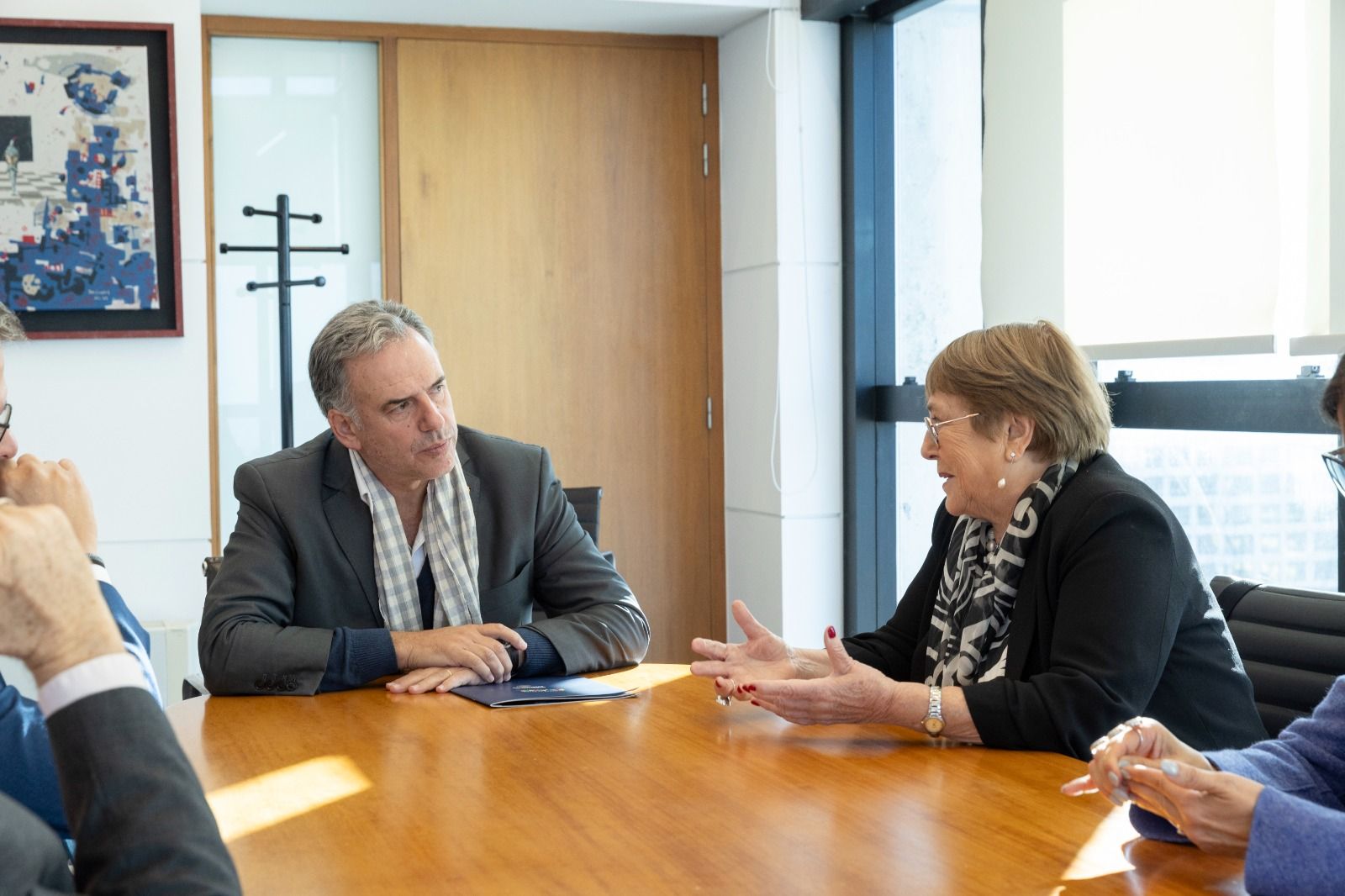
During her short visit, Bachelet also held a meeting with President Yamandú Orsi, Foreign Minister Mario Lubetkin, and Deputy Secretary of the Presidency Jorge Díaz, in addition to meetings with figures from the Colorado Party and former Foreign Minister Enrique Iglesias.


Top Comments
Disclaimer & comment rulesCommenting for this story is now closed.
If you have a Facebook account, become a fan and comment on our Facebook Page!