MercoPress. South Atlantic News Agency
Stories for June 4th 2026
-
Thursday, June 4th 2026 - 21:23 UTC
Lufthansa Boeing 787's nose gear collapses at Frankfurt gate, injuring four staff
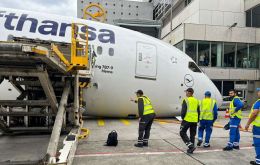
The nose landing gear of a Lufthansa Boeing 787-9 Dreamliner collapsed on Thursday while the aircraft was parked at a boarding gate at Frankfurt Airport in Germany, leaving four people slightly injured. The plane was being prepared to operate a flight to Los Angeles when, at around 12:45 p.m. local time, the nose gear gave way and the front of the fuselage came to rest on the tarmac, sustaining considerable damage.
-
Thursday, June 4th 2026 - 21:15 UTC
Colombian judge orders De la Espriella to stop using national team jersey in campaign

A Bogotá court ordered presidential candidate Abelardo de la Espriella and his party, Defensores de la Patria, to refrain from using the Colombian national football jersey at campaign events and in advertising, while it studies a constitutional protection action filed by a citizen. The provisional measure, issued on June 3 by the 120th Municipal Criminal Court, takes immediate effect and also covers social media and the press.
-
Thursday, June 4th 2026 - 15:32 UTC
Uruguay's anti-graft body faces Congress as opposition alleges 'political use' in Orsi case
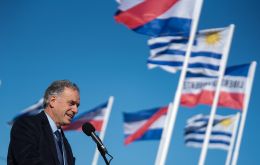
The directorate of Uruguay's Transparency and Public Ethics Board (Jutep) appeared on Thursday before the Chamber of Deputies' Security and Coexistence Commission, amid the controversy over President Yamandú Orsi's purchase of a Hyundai Santa Fe. National Party deputy Pablo Abdala, who requested the summons, accused the body of “political use.”
-
Thursday, June 4th 2026 - 15:28 UTC
Venezuela moves to open its power sector to private investment after years of blackouts

Venezuela's National Assembly gave initial approval to a reform of the electricity law that opens the sector to private investment through long-term concessions, in an effort to reverse the collapse of a service battered by blackouts for two decades. The measure ends the monopoly held for more than 15 years by the state-owned National Electric Corporation (Corpoelec), though it still requires a second debate and final ratification in the coming days.
-
Thursday, June 4th 2026 - 15:11 UTC
Petro drops constituent assembly bid 17 days before Colombia's presidential runoff
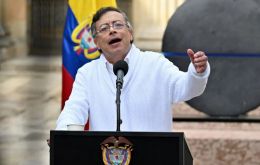
The committee that had promoted a National Constituent Assembly championed by Colombian President Gustavo Petro announced on Thursday that it was halting the collection of signatures and withdrawing the project to reform the 1991 Constitution. The decision, taken 17 days before the June 21 presidential runoff, seeks to clear the way for the governing bloc's candidate, Senator Iván Cepeda, in a move that reshapes the electoral landscape.
-
Thursday, June 4th 2026 - 10:55 UTC
Lula pushes back on US tariffs, says Brazil is the one running a trade deficit
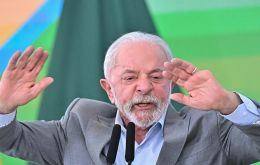
Brazilian President Luiz Inácio Lula da Silva on Tuesday rejected the US government's argument that Brazil engages in “unreasonable” practices in the bilateral relationship, arguing that it is Washington that runs a trade surplus with his country. If anyone should impose tariffs, he said, it would be Brazil.º
-
Thursday, June 4th 2026 - 10:40 UTC
US proposes forced-labor tariffs on 60 economies, with Brazil and China facing 12.5%
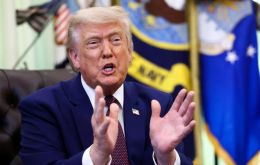
The US government proposed tariffs of up to 12.5% on 60 economies —59 countries and the 27-nation European Union— for failing to ban or effectively enforce the prohibition on imports of goods made with forced labor. The measure, announced Tuesday night by Trade Representative Jamieson Greer, relies on Section 301 of the 1974 Trade Act and is the White House's most ambitious step yet to rebuild its tariff policy.