MercoPress. South Atlantic News Agency

US proposes forced-labor tariffs on 60 economies, with Brazil and China facing 12.5%
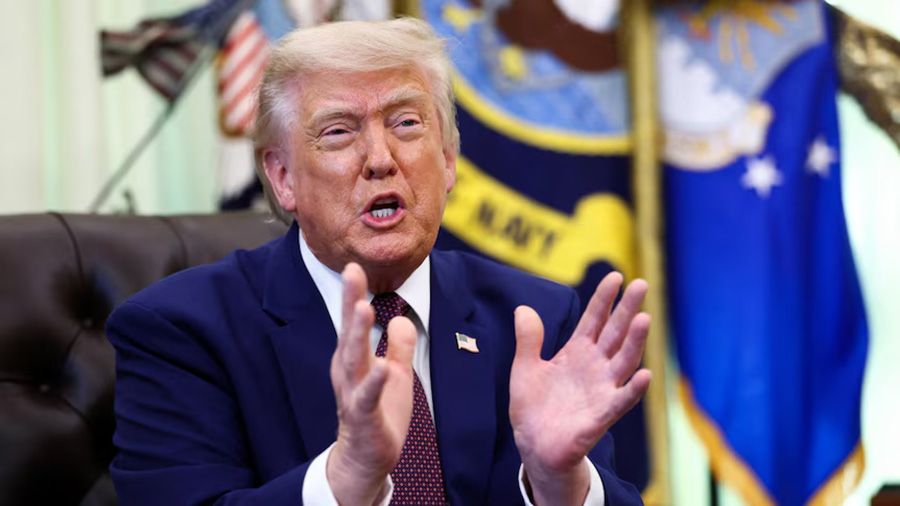 The initiative seeks to replace the tariffs the Supreme Court struck down in February, when it found that President Donald Trump had exceeded his authority by using an economic emergency law
 The US government proposed tariffs of up to 12.5% on 60 economies —59 countries and the 27-nation European Union— for failing to ban or effectively enforce the prohibition on imports of goods made with forced labor. The measure, announced Tuesday night by Trade Representative Jamieson Greer, relies on Section 301 of the 1974 Trade Act and is the White House's most ambitious step yet to rebuild its tariff policy.
Economies that already have a ban, a partial regime or a commitment to prohibit such imports would face an additional 10% tariff —among them Canada, Mexico, the European Union, Taiwan and the United Kingdom— while the rest, including China, Brazil, South Korea, Switzerland and Japan, would be subject to 12.5%.
The initiative seeks to replace the tariffs the Supreme Court struck down in February, when it found that President Donald Trump had exceeded his authority by using an economic emergency law. Unlike other mechanisms, Section 301 sets no limits on the level or duration of duties. The administration also appealed a ruling requiring it to repay about 166 billion dollars collected under the invalidated tariffs, and it has an open investigation into “excess manufacturing capacity” among 16 of its main partners.
“We will no longer tolerate this disparity,” Greer said, arguing that the importation of goods made with forced labor forces American workers to compete on unequal terms. A 98-page report accompanying the proposal pointed to forced labor involving Uyghurs and other minorities in the production of cotton and polysilicon in China's Xinjiang region. Beijing rejected the claim: foreign ministry spokeswoman Mao Ning said “there is no such thing as forced labor in China” and reiterated its opposition to unilateral tariffs.
Brazil would be exposed to this 12.5% rate in addition to the 25% proposed days earlier in a separate Section 301 investigation tied to its digital trade practices. The report cited a surge in Brazilian beef exports to China —after the trade conflict hit US beef— as a factor that “distorted competition,” although beef is among the exempted products. To justify the 10% on the EU, Washington argued that the bloc's prohibition will not take effect until the end of 2027. European Commission spokesman Olof Gill responded that the bloc is “fully committed” to removing forced labor from supply chains.
The proposal includes exemptions —energy, rare earths, coffee, pharmaceuticals and aircraft parts, among others— and will be subject to public comment and hearings in early July before taking effect.


Top Comments
Disclaimer & comment rulesNo comments for this story
Please log in or register (it’s free!) to comment. Login with Facebook