MercoPress. South Atlantic News Agency



Bolivia: miners' dynamite and peasants' siege reach the heart of power in La Paz
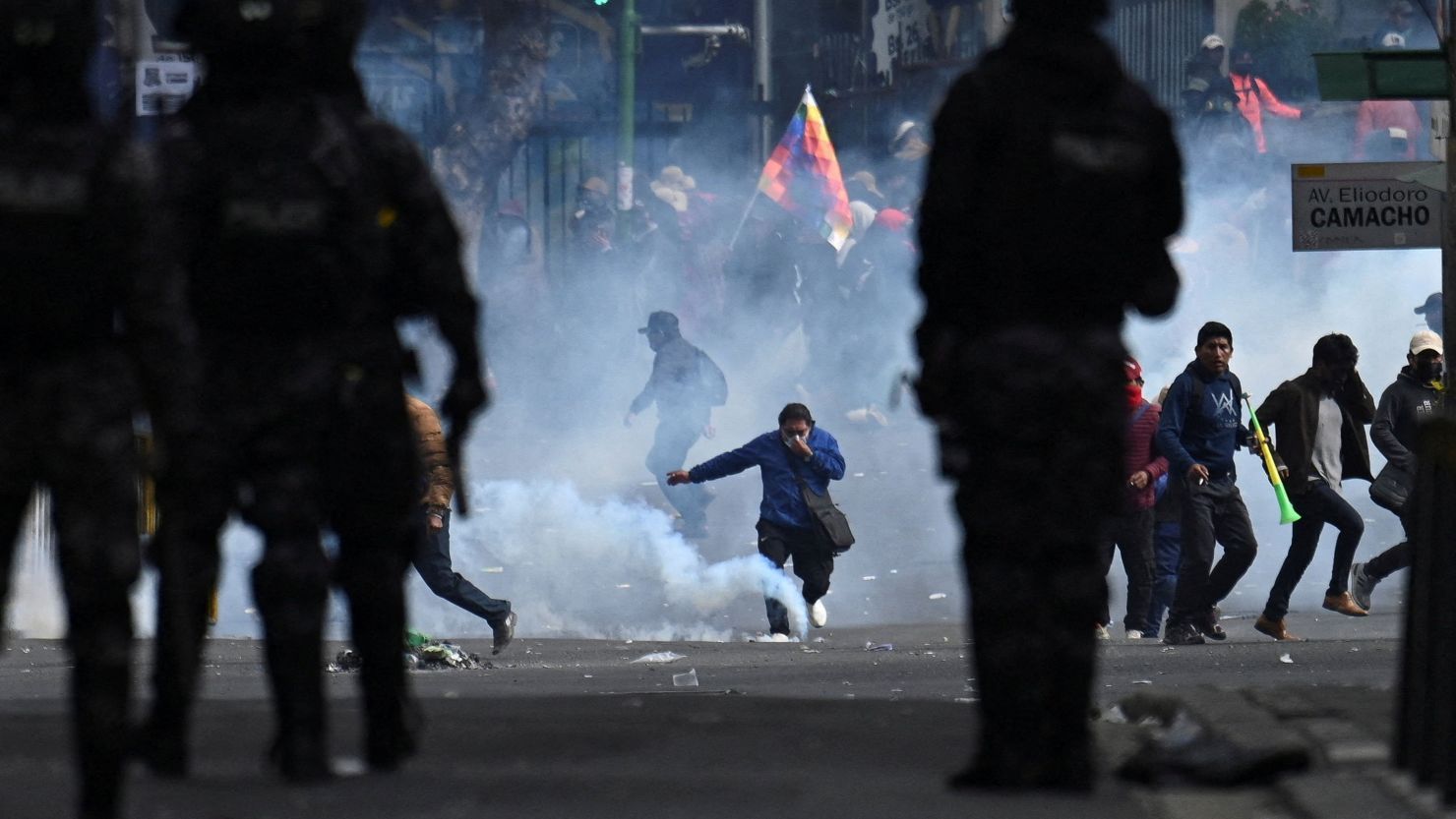 Photo: Claudia Morales/REUTERS
 The center of La Paz turned on Monday into the stage of a more than three-hour pitched battle in which thousands of salaried miners and peasants clashed with police forces trying to prevent their entry to Plaza Murillo, the seat of Bolivia's executive and legislative branches. The protesters threw dynamite charges at the police, who responded with tear gas. The cordons were not overrun, and the Army, deployed around the square as the last line of defense, did not intervene directly. The mobilization is the largest challenge President Rodrigo Paz has faced since taking office six months ago.
The protest brings together labor unions, miners, Aymara indigenous communities from the La Paz highlands, and neighborhood councils from El Alto, articulated around a “non-betrayal pact” that rejects dialogue with the government and demands the president's resignation. The protesters denounce the economic direction of the new administration and the composition of the cabinet with representatives of business and agro-industrial elites. The “march for life to save Bolivia,” called by former president Evo Morales (2006-2019) from the Chapare cocalero region of Cochabamba, reached the capital on Monday after a six-day walk from the highlands and joined the protests that have been sustained for three weeks.
Las calles del centro de La Paz, Bolivia, fueron escenario de violentos enfrentamientos entre la policía y manifestantes que exigieron la renuncia del presidente Rodrigo Paz.
— NMás (@nmas) May 19, 2026
Armados con petardos, piedras, palos y dinamita, los manifestantes intentaron romper un cerco policial… pic.twitter.com/0qcgiY9vjJ
Defense Minister Marco Antonio Oviedo directly attributed the coordination of the mobilization to the former president. “It is a march that has been organized, has been digitized, and is being directed from the Chapare, and from the Chapare by Evo,” he said at a press conference. Morales rejects the imputation and argues that the protests are a “natural reaction” to a projected annual inflation above 20%, the adulterated fuel crisis, and the “privatizing and neoliberal” character of the administration. The coca-grower leader remains entrenched in the Chapare to evade the arrest warrant in the alleged aggravated trafficking case in which he is accused of having maintained a relationship with a 15-year-old girl during his presidential term.
The immediate trigger of the crisis was the enactment of Law 1720, which allowed the voluntary conversion of small peasant lands into medium-sized holdings, enabling their use as bank collateral but eliminating their non-seizable status. Small farmers perceived a risk of land concentration in latifundista hands; the executive returned the bill to the legislature, which repealed it last week, in a decision that arrived after social movements had already demanded the president's resignation. The thirteen-day road blockade has kept La Paz isolated from the rest of the country, with shortages in markets and supply restrictions that led the government to request last week the dispatch of two Argentine Hercules aircraft, personally authorized by President Javier Milei, to reinforce a supply airlift.
According to International Monetary Fund forecasts, Bolivian Gross Domestic Product will contract this year by 3.3%, in what would be the largest decline in all of South America.


Top Comments
Disclaimer & comment rules-

Read all commentsSo when does Evo move back into the Presidential Palace?
May 19th, 2026 - 01:33 pm 0Commenting for this story is now closed.
If you have a Facebook account, become a fan and comment on our Facebook Page!