MercoPress. South Atlantic News Agency



Fujimori and Sánchez close campaigns in Lima before Peru's tight Sunday runoff
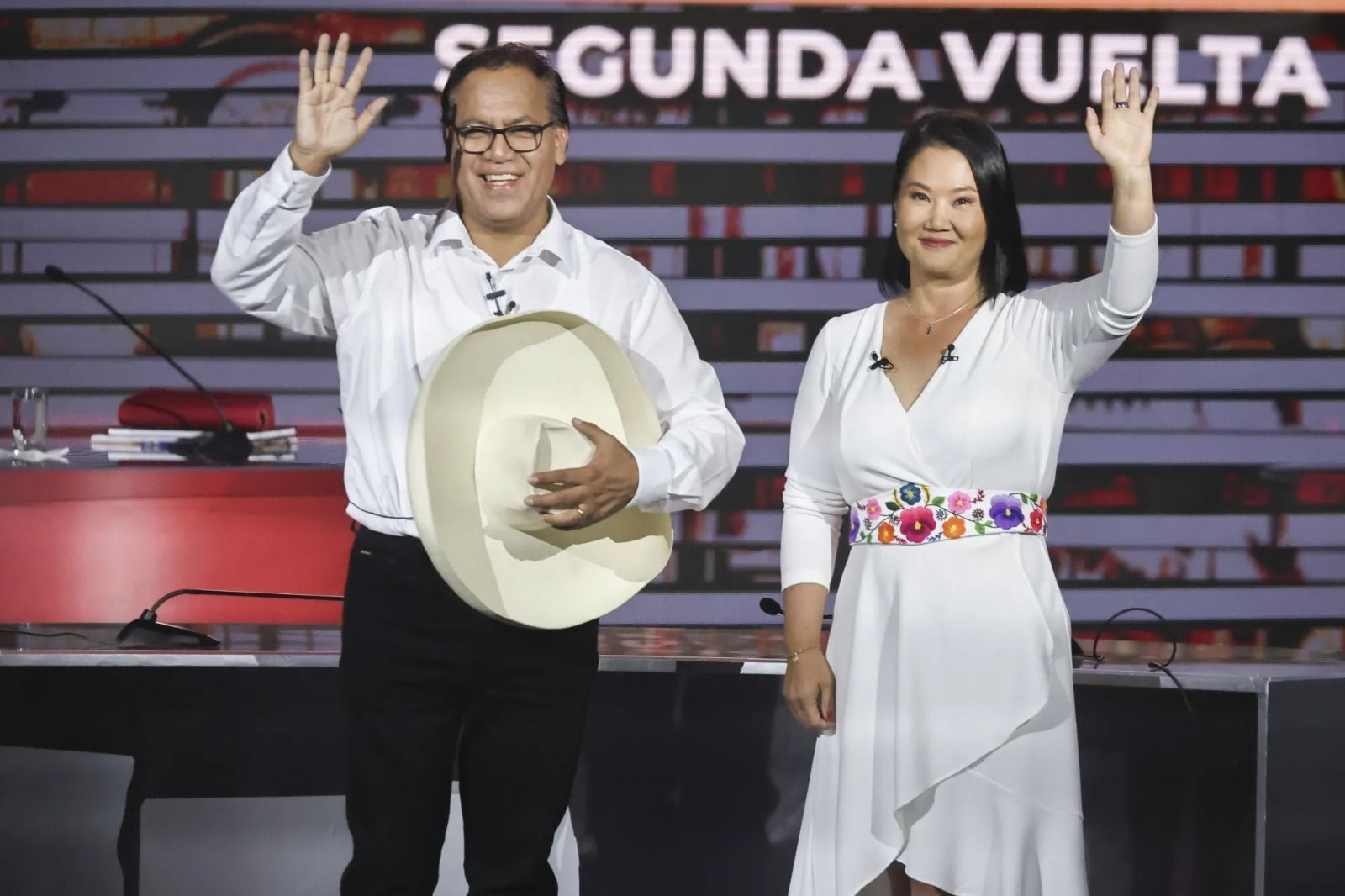 Fujimori said the country had become “trapped in its wounds” and stressed the need to “build bridges” toward dialogue. Sánchez aimed his message at his rival: “The chaos is over,” he said
 Peru's presidential candidates, conservative Keiko Fujimori and leftist Roberto Sánchez, closed their campaigns in Lima on Thursday before thousands of supporters, three days before a runoff that polls suggest will be very close. Fujimori appealed for the “unity and reconciliation” of Peruvians, while Sánchez promised to end the “chaos” and centered his speech on anti-fujimorismo.
Fujimori, leader of Fuerza Popular, said the country had become “trapped in its wounds” and stressed the need to “build bridges” toward dialogue. She said that, if she wins, her government would be “technocratic” and would complete the full five-year term —an allusion to the instability that has left Peru with eight presidents in a decade. Her platform rests on a hard line against crime —the main public concern— the provision of basic services, the defense of private investment, and central bank independence. At the closing event, held at the Monumental Stadium, she received the endorsement of Álvaro Vargas Llosa, son of the Nobel literature laureate.
Sánchez, of Juntos por el Perú, aimed his message at his rival: “The chaos is over,” he said, accusing her of embodying the disorder she claims to fight. A former foreign trade minister under ex-President Pedro Castillo —imprisoned after his 2022 self-coup— he has promised throughout the campaign to pardon him. His proposals include purging the National Police, applying “civil death” to officials convicted of corruption, increasing public investment in education and health, respecting the autonomy of the Central Bank, and promoting the country's industrialization. His rally, on Avenida de La Peruanidad, was marked by Andean symbolism and images of Castillo.
For Fujimori, it is the fourth consecutive time she has reached a runoff. She is the daughter of former President Alberto Fujimori (1990-2000), convicted of crimes against humanity and corruption, who died in 2024 after receiving a humanitarian pardon. Sánchez, by contrast, was not in the polls months ago: he emerged from among the 35 first-round candidates by capitalizing on the discontent of those who believe the elites brought down the government of Castillo, the first peasant to reach the presidency. The latest Ipsos poll, from June 3, showed a statistical tie, with Sánchez at 43.8% and Fujimori at 43.2%, and 13% undecided or planning to cast a blank ballot.
In the home stretch, both gained endorsements from former candidates. Far-right Rafael López Aliaga, who finished third in the first round, called for a vote for Fujimori, framing the choice as one between “freedom or communism.” Sánchez, in turn, won the backing of figures such as Ricardo Belmont, Alfonso López Chau and George Forsyth. The winner will take office on July 28, in a country battered by years of political instability.


Top Comments
Disclaimer & comment rulesCommenting for this story is now closed.
If you have a Facebook account, become a fan and comment on our Facebook Page!