MercoPress. South Atlantic News Agency



Colombia's runoff: a united right behind De la Espriella faces a divided left
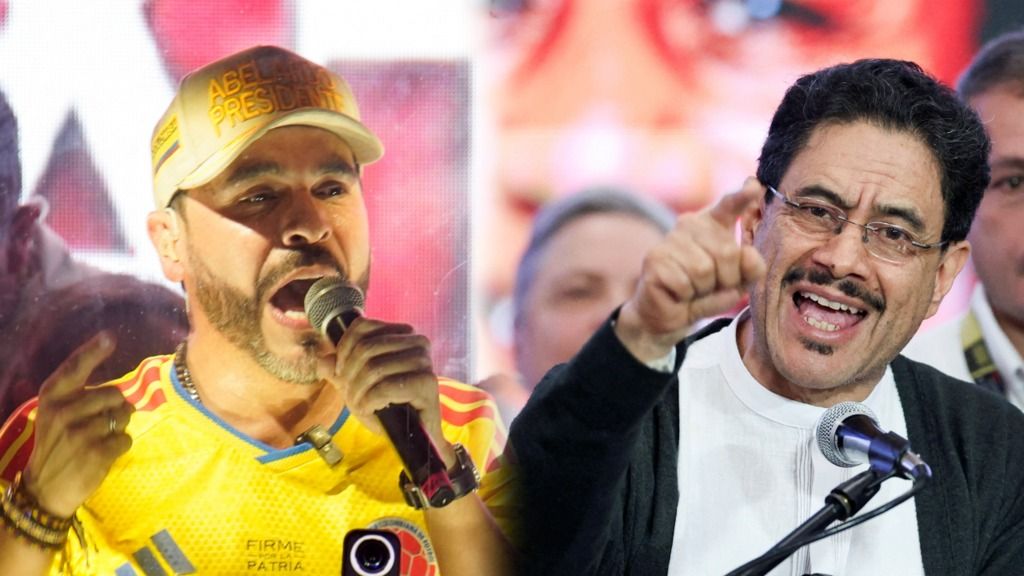 The left, which had made unity the axis of its campaign in 2025, went through the week with internal tensions
 The first of the three campaign weeks ahead of Colombia's presidential runoff, set for June 21, has been marked by a contrast: a right that had failed to unite for the first round ended up aligned behind far-right candidate Abelardo de la Espriella, while the left of Senator Iván Cepeda and President Gustavo Petro has struggled to coordinate its effort. De la Espriella was the most-voted candidate on May 31, with 43.74% against Cepeda's 40.90%.
The right's realignment was swift. De la Espriella, a criminal lawyer with no prior electoral career, prevailed even though months earlier former President Álvaro Uribe had shut him out of the Democratic Center, whose March internal process had been won by Senator Paloma Valencia. At the polls, however, Valencia drew only about 6%. After the vote, Valencia, several rivals from that consultation and Uribe himself backed De la Espriella. “We are keeping our word, we will vote for him and we ask people to vote for him and for Colombia,” Uribe wrote on X. The candidate also received the support of US President Donald Trump.
With that momentum, De la Espriella has doubled down on his digital, confrontational strategy, in which he labels left-wing leaders “bandits” and has warned he will prosecute them if he reaches the presidency. His vice-presidential running mate, former minister José Manuel Restrepo, handles the more measured settings and dialogue with businesspeople and economists, in a clear division of roles.
The left, which had made unity the axis of its campaign in 2025, went through the week with internal tensions. Cepeda, winner of the Historic Pact's October consultation, had focused his strategy on mobilizing his base with rallies in 155 public squares. But the May 31 result upended that bet and threw the candidate out of step with Petro, who in recent months had monopolized much of the media agenda.
The gap became evident that same night. Petro alleged fraud on X and rejected the preliminary count released by the National Civil Registry. Cepeda, by contrast, ended up recognizing the vote: “I recognize the results of the first round of the presidential election,” he said, without endorsing the president's claim.
In parallel, the two met privately. Petro went so far as to suggest resigning the presidency to lead the campaign, to which Cepeda replied that, if so, he would withdraw his own candidacy. In those meetings, the president agreed to set aside the constituent assembly he had been pushing since 2024. The lack of coordination, however, cost the left several days in a campaign of barely three weeks, in which Cepeda went from defending a lead to having to overcome one.


Top Comments
Disclaimer & comment rulesCommenting for this story is now closed.
If you have a Facebook account, become a fan and comment on our Facebook Page!