MercoPress. South Atlantic News Agency



Fujimori edges ahead of Sánchez in Peru as expat ballots flip a razor-thin count
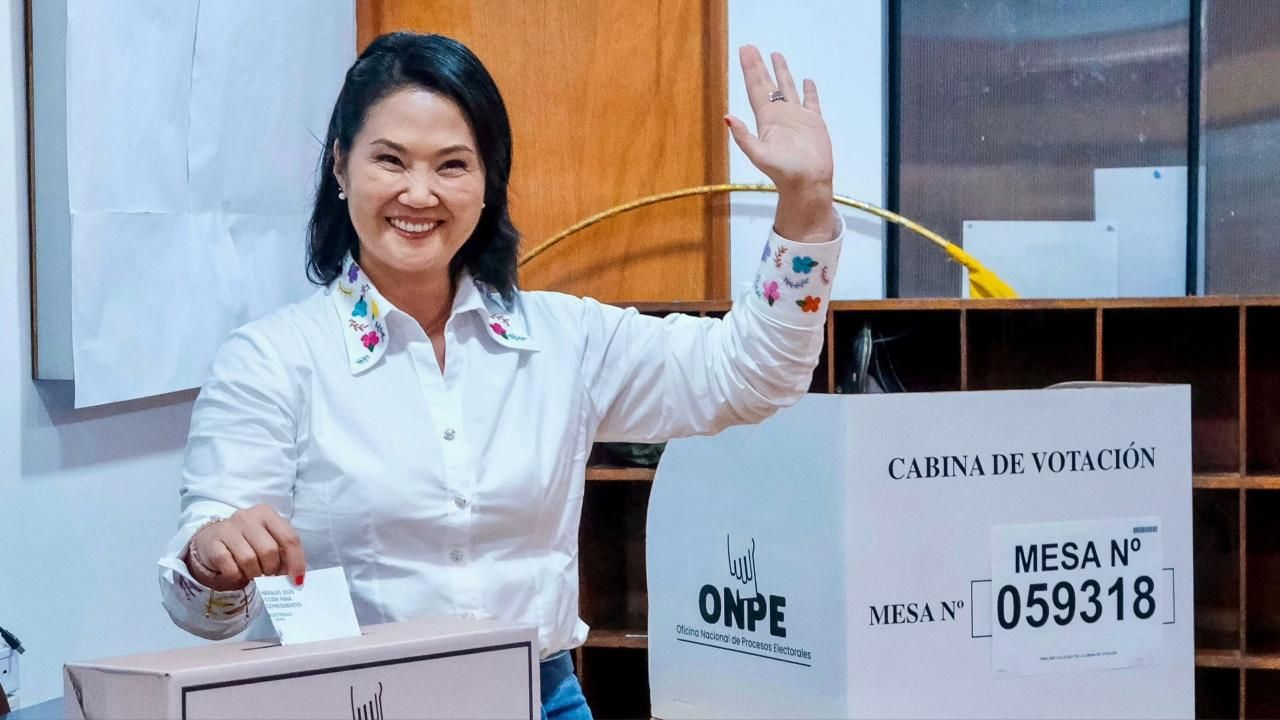 Fujimori reappeared at the door of her home to ask Sánchez to keep his commitment to respect the final result
 Conservative Keiko Fujimori reclaimed first place on Wednesday night in Peru's presidential runoff, in a count being decided vote by vote that took a decisive turn with the arrival of ballots from Peruvians abroad. With 98.2% of the tally sheets processed by the National Office of Electoral Processes (ONPE), Fujimori reached 50.002% against 49.999% for leftist Roberto Sánchez, a difference of fewer than a thousand votes. If the trend holds, the Fuerza Popular leader could become the country's first woman elected president at the polls.
In the early hours of Wednesday, Sánchez held a lead of about 30,000 votes, but the margin stalled and ultimately reversed. The decisive factor lay beyond the country's borders: the overseas vote, historically inclined toward the right, reshaped the board. In the United States, which accounts for about 30% of Peruvian emigrants, Fujimori took 76.5%; in Spain, 60.1%; and in Argentina, 61.3% so far.
One chapter still remains that could prolong the uncertainty: the observed tally sheets, 1,635 in all —1.7%— whose review authorities expect to be slow and complex, meaning the proclamation of the winner could be postponed until mid-July.
Fujimori reappeared at the door of her home to ask Sánchez to keep his commitment to respect the final result. “What matters is what the tally sheets say. Data beats narrative,” she said. Her words, however, revived the distrust surrounding Peruvian elections: the memory persists of the electoral fraud of 2000, under the regime of her father, Alberto Fujimori, and of the 2021 elections, when Fuerza Popular pursued a legal strategy to annul some 200,000 votes in Andean regions favorable to her rival at the time, Pedro Castillo.
Sánchez, for his part, raised the tension. After initially hinting he would drop any protest if the count went against him, he asserted his supporters' right to mobilize, and his party, Juntos por el Perú, called a national march for Friday that will end at Plaza San Martín, in Lima. “Democracy is defended,” he said, and denounced that supporters who had set up tents in front of the National Jury of Elections were forcibly removed. The historian José Ragas expressed doubts about the candidate's democratic disposition in an eventual term, a concern shared by anti-fujimorismo.
In parallel, the Presidential Pardons Commission rejected the sixth humanitarian pardon request submitted by Castillo's defense, jailed after his failed 2022 self-coup, finding it did not meet the admissibility requirements; his lawyers will have twenty days to remedy it. After three defeats and fifteen years of trying, for the daughter of Alberto Fujimori the fourth could be the decisive one.


Top Comments
Disclaimer & comment rulesCommenting for this story is now closed.
If you have a Facebook account, become a fan and comment on our Facebook Page!