MercoPress. South Atlantic News Agency



Argentina taps the local market to fund a $4.2 billion bondholder payment due July 9
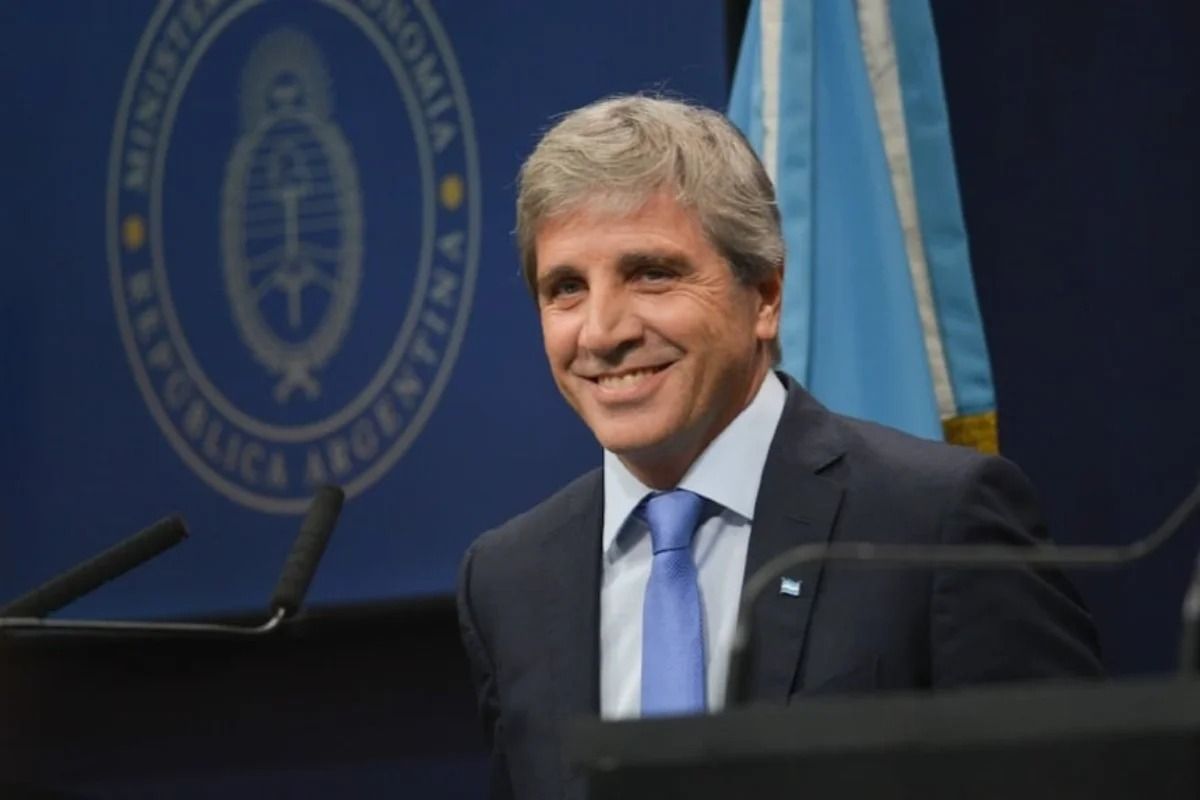 The strategy of Economy Minister Luis Caputo was aimed at obtaining foreign currency in the local market rather than turning to international credit markets, where rates for Argentina remain high
 Argentina's Economy Ministry on Monday completed the placement of the Bonar 2028 (AO28), a dollar-denominated bond under local law, raising most of the funds needed to face a maturity of around $4.2 billion with private debt holders due on July 9. In the second round of the auction, the Finance Secretariat awarded $100 million, thereby reaching the authorized cap of $2 billion for that instrument.
The operation added to the $266 million placed the previous Friday. According to official data, the ministry received offers worth some $668 million and agreed on a nominal annual rate of 7.56% and an effective rate of 7.83%. The funds will be transferred to the Treasury's account at the Central Bank and used for next week's payment to bondholders.
The strategy of Economy Minister Luis Caputo was aimed at obtaining foreign currency in the local market rather than turning to international credit markets, where rates for Argentina remain high. The Bonar 2028, along with the Bonar 2027, has in recent weeks become one of the Treasury's main tools for strengthening its position ahead of foreign-currency commitments. Market analysts read the reduction in the rate from previous placements —which two weeks earlier had exceeded 8%— as a sign of greater confidence in the country's ability to pay, though they warned that the government will have to keep carefully managing rates, the maturity schedule and exchange-rate expectations in the second half of the year.
With what it has raised, the Treasury covers most of the maturity; according to Economy Ministry sources, the remainder could be obtained by purchasing foreign currency from the Central Bank. The government confirmed that it will not use, for this payment, the guarantees granted by the World Bank and the Inter-American Development Bank (IDB), worth some $2 billion and $550 million respectively, which will be reserved to strengthen the financial strategy between the second half of 2026 and 2027, when larger commitments are concentrated.
The placement came after a peso debt auction in which the Treasury faced maturities of around 16 trillion pesos and rolled over 13.2 trillion, equivalent to an 81% refinancing rate. As a result, more than 3 trillion pesos were freed up and will return to the market in the coming days. July's is among the most demanding maturities on Argentina's 2026 financial calendar.


Top Comments
Disclaimer & comment rulesCommenting for this story is now closed.
If you have a Facebook account, become a fan and comment on our Facebook Page!