MercoPress. South Atlantic News Agency

Milei plans US-style government shutdown mechanism to cap Argentina's spending
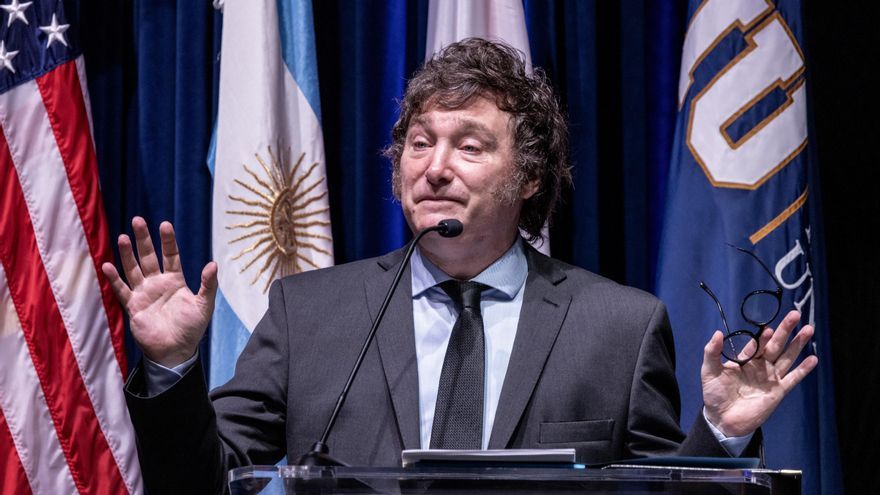 “We are working on setting up the shutdown of the executive branch, of politics really,” Milei said in a streaming interview
 Argentine President Javier Milei announced on Tuesday that he will send Congress a bill to introduce a government “shutdown” mechanism, modeled on the US system, that would bar the executive from continuing to spend once budget allocations run out. The measure is part of a package of economic reforms with which the president aims to relaunch his administration.
“We are working on setting up the shutdown of the executive branch, of politics really,” Milei said in a streaming interview. “When you exhaust the budget, you can't spend any more, and the state shuts down,” he explained. The goal, according to the government, is to reinforce fiscal discipline, a pillar of its economic program centered on achieving a surplus.
The package also includes a reform of the central bank's charter. Milei said the bill would explicitly prohibit, with criminal penalties, the bank from financing the Treasury through money printing, a practice he considers one of the structural causes of Argentine inflation. “Fraud and currency counterfeiting are criminal offenses,” he said. The initiative seeks to reverse a 2012 reform, approved under the government of Cristina Fernández de Kirchner, which broadened the bank's mandate from preserving the value of the currency toward multiple goals of employment and development. The president described the set as reforms meant to “repair 91 years of political fraud.”
To finalize the details, Milei met at the official Olivos residence with Economy Minister Luis Caputo, Deregulation Minister Federico Sturzenegger and central bank president Santiago Bausili. The package also covers changes to the capital markets law, a second stage of an asset-regularization scheme, deregulation of the insurance market and new fiscal rules.
In the United States, a government shutdown occurs when Congress fails to pass spending laws on time, forcing the suspension of non-essential state activities. The most recent one, in late 2025, was the longest in that country's history, at more than 40 days. Argentina's system does not currently provide for such a suspension: the absence of a budget law means the previous year's allocations are rolled over, and Milei governed his first two years without an approved budget. The reform's actual scope will become clear once the text is released.
The announcement comes as the government tries to move past months of political turmoil, deepened by the resignation of Cabinet Chief Manuel Adorni amid a corruption investigation. The opposition and some analysts argue that cuts already applied in areas such as health, science and public works amount to severe austerity, which the government defends as necessary to balance the books.


Top Comments
Disclaimer & comment rulesCommenting for this story is now closed.
If you have a Facebook account, become a fan and comment on our Facebook Page!