MercoPress. South Atlantic News Agency
Tag: Central Bank of Argentina
-
Sunday, August 23rd 2026 - 22:41 UTC
Argentina votes this week on the reform barring the central bank from funding the Treasury
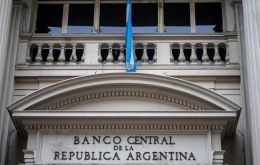
Argentina's Chamber of Deputies will on Wednesday debate the reform of the central bank's charter promoted by Javier Milei's government, which bars the monetary authority from financing the fiscal deficit through money creation and restores preservation of the value of the currency as its sole objective.
-
Friday, July 31st 2026 - 23:11 UTC
Argentina's central bank reform bill reaches the lower house: what would change

Argentina's executive branch sent the bill to overhaul the central bank's charter to the Chamber of Deputies on Friday, a day after President Javier Milei outlined it in a nationwide broadcast. The measure will formally enter the parliamentary record on Monday and be referred to committees; the government hopes to pass it in August.
-
Thursday, July 30th 2026 - 23:05 UTC
From closing the central bank to reforming it: Milei's shift on monetary authority

Argentine President Javier Milei presented on Thursday, in a nationwide broadcast, a bill to overhaul the central bank's charter, the statute governing the monetary authority, in an initiative the government considers central to its economic program and which it will send to the Chamber of Deputies in the coming days.
-
Wednesday, July 8th 2026 - 07:20 UTC
Milei plans US-style government shutdown mechanism to cap Argentina's spending

Argentine President Javier Milei announced on Tuesday that he will send Congress a bill to introduce a government “shutdown” mechanism, modeled on the US system, that would bar the executive from continuing to spend once budget allocations run out. The measure is part of a package of economic reforms with which the president aims to relaunch his administration.
-
Tuesday, April 14th 2026 - 01:39 UTC
Argentina awaits year's highest inflation reading as Caputo bets on “best 18 months”

Argentine Economy Minister Luis Caputo said on Monday that March inflation will exceed 3%, which would make it the highest monthly reading of 2026, hours before the national statistics agency INDEC is scheduled to release the Consumer Price Index on Tuesday, April 14, at 4:00 p.m.
-
Tuesday, December 23rd 2025 - 11:39 UTC
Argentine Appellate Court orders Central Bank to disclose details of gold shipments abroad

The Buenos Aires Federal Administrative Court of Appeals has dealt a significant legal blow to the Central Bank of the Argentine Republic (BCRA), ordering it to release detailed information regarding the shipment of national gold reserves overseas.
-
Wednesday, November 12th 2025 - 10:55 UTC
Argentina to lift all currency exchange restrictions “soon”

While Argentina's Central Bank (BCRA) announced the “imminent” removal of all remaining controls on foreign exchange transactions, the South American country's National Institute of Statistics and Census (Indec) is about to report October's inflation on Wednesday. Most experts predict it will be above 2%.
-
Wednesday, August 27th 2025 - 10:55 UTC
Argentina: Interest rates soar in response to new BCRA rules
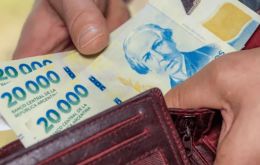
Argentina's financial system is experiencing significant tension as a new reserve requirement scheme from the Central Bank (BCRA) forces financial institutions to drastically raise interest rates on fixed-term deposits. The average rate for a 30-day fixed-term deposit has jumped to 51.3%, a substantial increase from just a few weeks prior.
-
Friday, December 6th 2024 - 10:23 UTC
Argentina's BCRA lowers basic interest rate again
Argentina's Central Bank (BCRA) announced Thursday a reduction in the basic interest rate (Nominal Annual Rate - TNA), from 35% to 32% while one for swaps will go down from 40% to 36%. The measure is effective as of Friday and impacts all fixed-term deposits.
-
Monday, October 14th 2024 - 08:15 UTC
Argentina's BCRA launching collector's AR$ 25 coins

Argentina's Central Bank (BCRA) announced a new AR$25 coin as a part of a joint venture with Spain, Portugal, and other countries in the region to highlight each nation's cultural diversity.

