MercoPress. South Atlantic News Agency


SAERI launches new research projects across the Falklands and South Atlantic
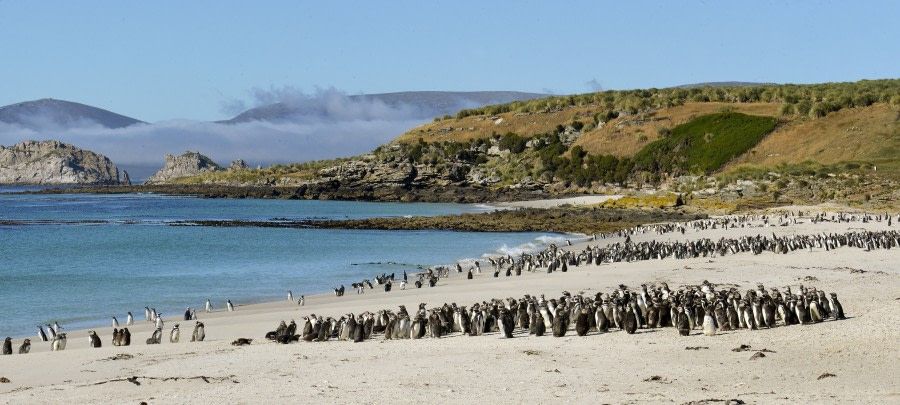 Among the projects is the first census of the Southern Rockhopper Penguin in more than fifteen years, to be carried out using drones and artificial intelligence
 The South Atlantic Environmental Research Institute (SAERI) has secured funding for a series of new scientific projects aimed at strengthening environmental monitoring, conservation science and evidence-based management across the Falklands and the wider South Atlantic.
The projects span terrestrial, freshwater and marine ecosystems, and seek to answer four questions that guide the institute's work: what biodiversity the territory holds, how it is changing, what threats it faces and what management actions can be taken. SAERI, based in Stanley and founded in 2012, said the initiatives combine local priorities with contributions to international research and conservation.
Among the projects is the first census of the Southern Rockhopper Penguin in more than fifteen years, to be carried out using drones and artificial intelligence. Other work includes tracking the movements of giant petrels, sooty shearwaters and the White-chinned Petrel — a globally threatened species — as well as monitoring feral goats to better understand their distribution and abundance, and using genomic techniques to assess the genetic health of Cobb's Wren, a bird endemic to the archipelago.
In the marine field, the institute will map seabed habitats within the proposed Falkland Islands Marine Managed Areas, in order to identify and protect vulnerable marine ecosystems. It will also assess freshwater and peatland ecosystems in the context of a changing climate, and develop advanced land-classification tools based on geographic information systems to support environmental planning.
Taken together, according to the institute, the projects will improve understanding of the Falklands' biodiversity, habitats and ecosystems, help detect emerging threats, measure environmental change and provide the evidence needed for conservation and the sustainable management of natural resources.
The initiatives are being carried out in partnership with organizations in the United Kingdom, Europe, Australia and the United States, and aim to strengthen long-term scientific capacity on the islands. SAERI also highlighted the role of the archipelago's farming community, whose provision of land access, local knowledge and support for fieldwork is, according to the institute, fundamental to the research.


Top Comments
Disclaimer & comment rulesCommenting for this story is now closed.
If you have a Facebook account, become a fan and comment on our Facebook Page!