MercoPress. South Atlantic News Agency


Conflicting accounts over whether Spanish intelligence warned of mass entry into Ceuta
 The newspaper The Objective reported that intelligence assessments had flagged a possible mass entry into Ceuta and Melilla coinciding with Morocco's Throne Day
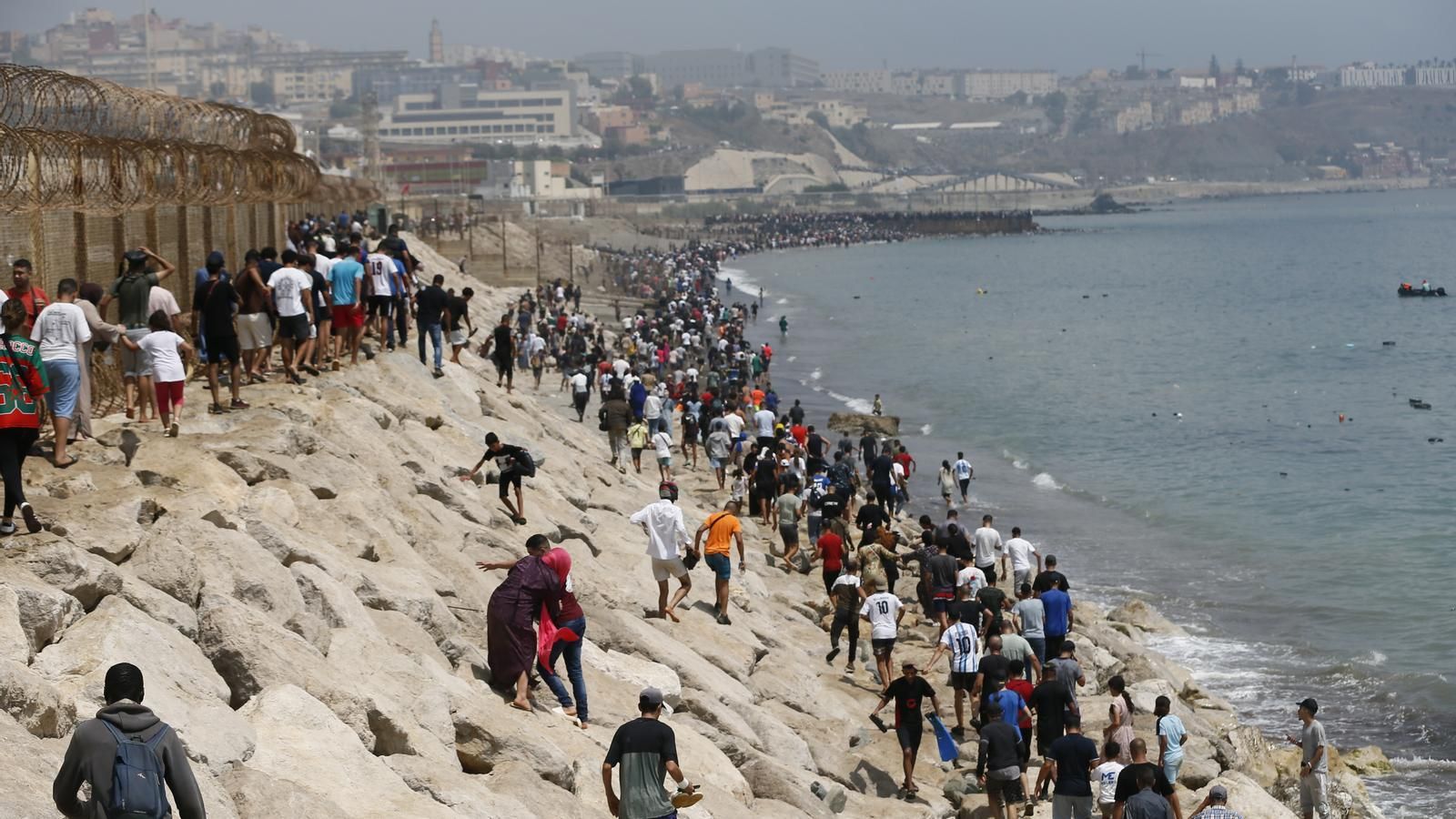
 Spanish intelligence services concluded that Morocco did not plan last Thursday's mass entry of people into Ceuta, although it allowed the crossings and drew political benefit from the international attention, according to sources cited by El País. Other reporting contradicts that account on a key point: whether the government was warned in advance.
The newspaper The Objective reported that intelligence assessments had flagged a possible mass entry into Ceuta and Melilla coinciding with Morocco's Throne Day. Interior Minister Fernando Grande-Marlaska said in Ceuta on Saturday, by contrast, that the intelligence services gave no warning of what was building on the other side of the border. Both versions rest on unidentified sources, and the Defense Ministry has neither confirmed nor denied them, citing the classified status of National Intelligence Center reports.
Morocco commented publicly for the first time on Monday, attributing the events to human trafficking networks, disinformation and misreadings of a Spanish Supreme Court ruling. Spain's Interior Ministry and Prime Minister Pedro Sánchez hold the same view of the trigger.
That ruling, issued by the administrative chamber, established that people reaching Ceuta and Melilla by swimming cannot be summarily returned without a formal procedure. It does not declare border returns illegal nor amend immigration law: it sets binding interpretation of an existing provision. A distorted reading circulated on social media and messaging groups spread the notion that Spain would not repatriate those who entered.
Maritime arrivals had been rising through July, with Civil Guard unions warning of inadequate resources. On Thursday, coinciding with the Moroccan holiday, border surveillance was scaled back and then withdrawn. The provisional toll on Monday stood at at least 72 dead, most of them drowned. A comparable episode occurred in 2021, involving between 8,000 and 10,000 people, amid a diplomatic crisis over Spain's hosting of the Polisario Front leader.
Sánchez sent a letter to European institutions criticizing the response of some member states, describing as selfish, polarizing and unlawful measures such as Italy's reintroduction of border checks and proposals from Finland and Denmark to exclude Spain from the Schengen area. A group of 22 countries favoring tighter migration controls requested a meeting of EU interior ministers, scheduled for Tuesday.
On Friday, Sánchez described the events as an attack and a violation of Spain's territorial integrity, though the government has not named Morocco as responsible and has not convened the National Security Council. The Defense Ministry placed some 1,600 troops at the Interior Ministry's disposal for surveillance duties. Ceuta and Melilla are Spanish territory; Morocco maintains a claim over both cities.


Top Comments
Disclaimer & comment rules-

Read all commentsSpain has Ceuta as one of its North African enclaves but wants Gibraltar returned...
Aug 03rd, 2026 - 09:08 am +1The Spanish want Gibraltar decolonized and returned under the terms of the Treaty of Utrecht. But there is a problem with this...
Treaty of Utrecht Return Clause:(1 pg)
https://www.academia.edu/37913231/Gibraltar_-Treaty_of_Utrecht_Return_Clause
Commenting for this story is now closed.
If you have a Facebook account, become a fan and comment on our Facebook Page!