MercoPress. South Atlantic News Agency


Lacalle Pou demands elections in Venezuela and reopens Uruguay's foreign policy debate
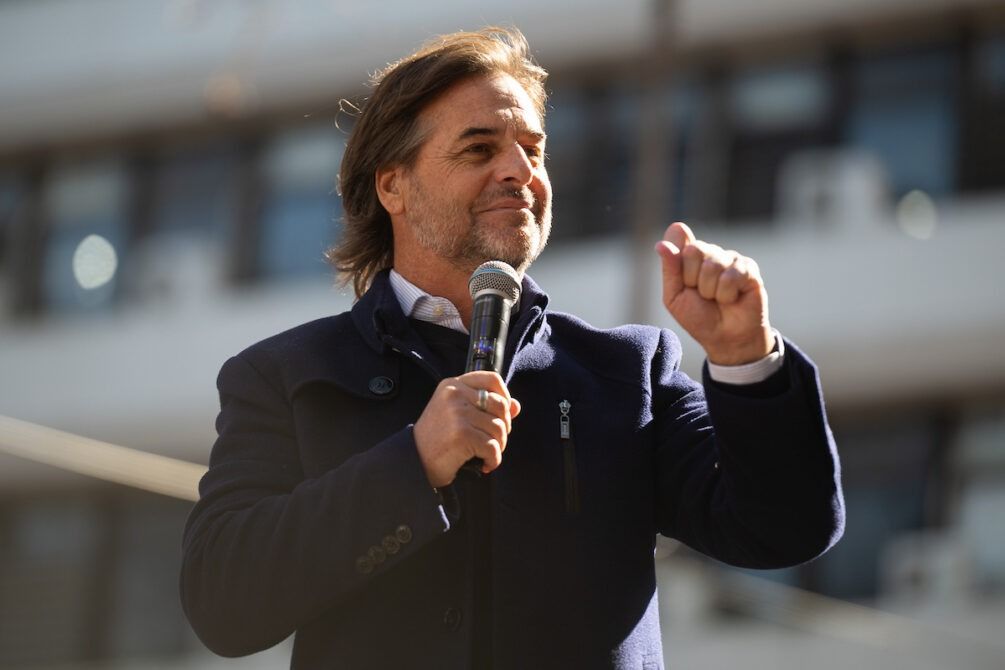
Former Uruguayan president Luis Lacalle Pou has called for a democratic transition in Venezuela and questioned the terms of the oil agreement reached between the United States and Delcy Rodríguez's government, in an intervention that has revived debate over Uruguay's international position.
“Democracy. Functioning institutions. Rulers legitimately elected by the citizenry. Sovereignty. Real transition. Neither business nor exploitation. That is what this is about and that is why we have always raised our voice,” the National Party leader wrote on Friday on X. He has carefully managed his public appearances since leaving office in March 2025.
The message came on the same day President Yamandú Orsi was holding meetings with opposition leaders ahead of his participation in the United Nations General Assembly. National Party senators Martín Lema and Javier García backed the position. “It fills a space Uruguay had left empty in international policy,” García said.
From the governing coalition, senator Daniel Caggiani called the remarks ill-timed. “Late and insufficient would be the word,” he said, noting that the US intervention in Venezuela took place on January 3, eight months ago, without elections having been called. He suggested the former president raise his views directly with the president rather than publicly.
The intervention follows the agreement under which the Venezuelan interim government granted North American Blue Energy Partners hundred-year exploitation rights over seventeen fields holding some 65 billion barrels of reserves, in partnership with the US government. Trump said this week that Venezuela is “not ready” to hold elections.
Venezuelan opposition leader María Corina Machado also questioned the process. “Venezuelans know there is no possible development without solid institutions and without a government elected by popular vote. That is the only true guarantee of success and stability for any large-scale investment,” she said.
The Colorado Party handed Orsi a document calling for Uruguay to reaffirm its commitment to democracy and free elections in the region “independently of circumstances and of circumstantial affinities”, and to support the holding of elections in Venezuela as soon as possible. According to sources cited by the newspaper El País of Montevideo, the matter was not discussed at the meeting.
Venezuela occupies a particular place in Uruguayan political debate. The Caribbean country took in exiles during Uruguay's 1973-1985 dictatorship and broke off diplomatic relations with Montevideo in July 1976, after teacher Elena Quinteros was abducted by soldiers while seeking asylum at its embassy. Since Hugo Chávez came to power in 1998, the traditional parties have repeatedly challenged the Frente Amplio's position on the country, a dispute that sharpened after Venezuela's 2024 elections, in which numerous governments alleged fraud.


Top Comments
Disclaimer & comment rulesCommenting for this story is now closed.
If you have a Facebook account, become a fan and comment on our Facebook Page!