MercoPress. South Atlantic News Agency


The Falklands claim, one of the few issues that cuts across Argentina's political divide
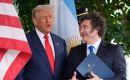
 President Javier Milei addressed the nation on Thursday following Donald Trump's remarks about a possible review of US neutrality
 The sovereignty claim over the Falklands is one of the few points of consensus that cuts across Argentina's political fracture, known locally as “la grieta”, a polarisation that splits the country into two opposing camps on almost every public question. That cross-cutting quality explains both its constant presence in popular culture and its recurrence in political discourse.
Political scientist Mariana Altieri, author of a comparative study of the archipelago and Gibraltar, links that centrality to Argentina's founding narrative. “When Argentina became independent from Spain, the islands were part of it and then they were taken from us, and that is associated with Argentina's trauma, with what could have been and is not,” she says. Anthropologist Rosana Guber, a researcher at Conicet and a specialist on the 1982 conflict, suggests understanding it as a symbol comparable to the flag or the anthem: “They speak to people who may hold different positions on everything else.”
The attachment is strongest in the far south. In Río Grande, less than 600 kilometres from the islands and almost 12,800 from British shores, the outline of the archipelago appears on school uniforms, sports kit and numerous murals. The anthem of Tierra del Fuego province is the March of the Malvinas, and the vigil held every April 1 draws up to 20,000 people, according to historian Esteban Rodríguez.
Concrete knowledge of the territory, by contrast, is limited. Journalist Nicolás Cassese, who has travelled to the archipelago three times, estimates that fewer than 1% of Argentines have visited it. “Of Messi and Maradona we have an enormous amount of information, and of the islands we know almost nothing,” he says. He recounts that when he published a novel set in Stanley some readers did not recognise the place name, and notes the settlement was founded in 1845, when the British already administered the islands, and that Argentines themselves used that name for decades.
That consensus has made political use easier. President Javier Milei addressed the nation on Thursday following Donald Trump's remarks about a possible review of US neutrality, announcing sanctions on companies operating in the area without Argentine authorisation and the construction of a military base in the south. The opposition noted that a 2011 law already provides for such sanctions and that construction of the base had begun before his own government halted it. The La Plata veterans' centre criticised his use of the claim as a “lifebelt”. In 2025 Milei had argued that islanders should decide: “We hope the islanders choose to vote for us with their feet.” Altieri describes Thursday's speech as “a 180-degree turn”.
The United Kingdom has administered the archipelago since 1833 and maintains that its status depends on the wishes of its inhabitants. In the 2013 referendum, 99.8% of voters chose to remain a British overseas territory, with three votes against.


Top Comments
Disclaimer & comment rules-

-

-

Read all commentsA sovereignty claim without any moral or legal basis can only be described as worthless; good for fools and indoctrinated minds.
Sep 07th, 2026 - 09:19 am +1Cuts across political divide ? you mean you indoctrinate your kids with a version of history that never happened, about a fake town, fake sovereignty, fake inheritance,
Sep 07th, 2026 - 12:13 pm +1how about you tell the truth of the real numbers of casualties.
Interesting to note that - “The attachment is strongest in the far south. In Río Grande, less than 600 kilometres from the islands….”, considering that the Argentinean part of Tierra del Fuego did not become National Territory until 1884, and did not become a fully recognised province until 1991.
Sep 07th, 2026 - 03:14 pm +1In 1833, when Argentina was supposedly usurped of the islands, the southern border of Argentina was around 1500km north of the Falklands, and the subsequent expansion to the South was by military conquest and killing of the original indigenous population.
Commenting for this story is now closed.
If you have a Facebook account, become a fan and comment on our Facebook Page!