MercoPress. South Atlantic News Agency



Milei reaches 166 judicial appointments in a year and announces a federal courts overhaul
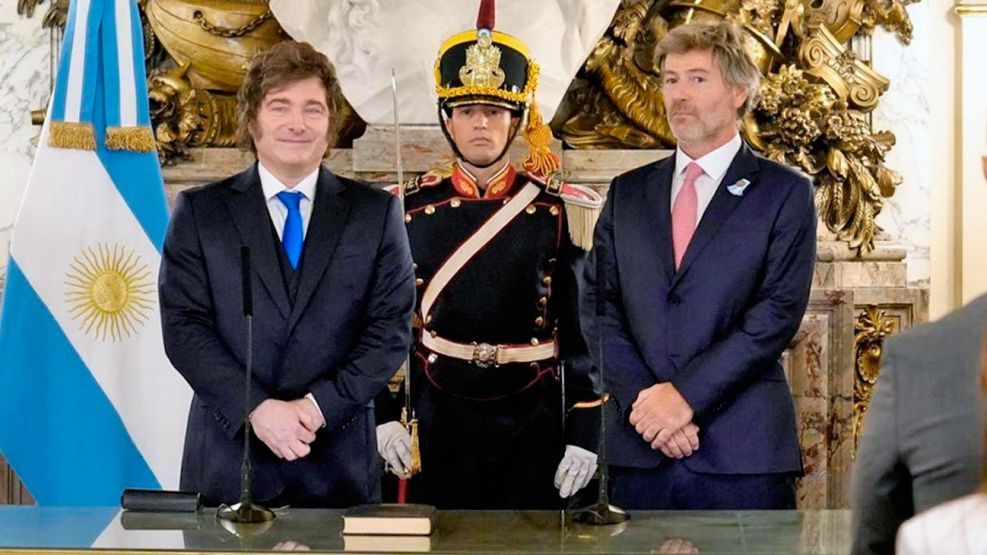 Appointing judges in Argentina follows a multi-stage process
 Argentine President Javier Milei signed a new round of judicial appointments last week bringing his government to 166 appointments of judges, prosecutors and public defenders in a year, according to a tally released by Justice Minister Juan Bautista Mahiques, who presented it as a record figure.
Decrees published on September 8 in the official gazette formalized 63 appointments: 42 judges, nine prosecutors and twelve public defenders, added to 103 earlier ones. The minister did not publish the full list or the historical series he is comparing against, nor did he specify whether the period covers the calendar year or twelve consecutive months, so the total and its status as a record are figures announced by the government, pending documentary verification.
Appointing judges in Argentina follows a multi-stage process. The Council of the Magistracy runs competitive examinations and draws up a binding shortlist of three; the executive selects from those three and sends the nomination to the Senate, which reviews it in a public hearing and votes; the president then formalizes the appointment by decree. The Senate approved 177 nominations in total, 67 of them on August 27, in the third round since Mahiques took office in March. Most passed unanimously, with opposition votes, prompting internal criticism within Peronism.
Mahiques said the accelerated filling of vacancies eases the burden on courts and speeds up procedural timelines, and mentioned the president and the general secretary of the presidency, Karina Milei, in his post.
Two civil society organizations specializing in the field questioned the procedure. Celeste Fernández, co-director of the Civil Association for Equality and Justice, said there was “a accumulation of irregularities” at every stage of selection, noting that in oral interviews some candidates with low written scores climbed many places. The group also objected to the executive combining members of different shortlists or selecting more than one from the same list, and filed a legal challenge covering fourteen appointments. Paula Litvachky, director of the Center for Legal and Social Studies, said this is the largest appointment process in recent times and warned of conflicts of interest and a lack of independence.
In recent days, several court rulings favored the government and allied figures. The Federal Court of Appeals in Buenos Aires removed the private complainants in the case over an alleged cryptocurrency fraud involving the president, upheld the closure of a file against Economy Minister Luis Caputo over dealings incompatible with public office, and confirmed the dismissal of another case against Macri, Caputo and Deregulation Minister Federico Sturzenegger over a 2018 International Monetary Fund loan. A judge also shelved the file on the entry of ten suitcases without customs checks aboard a private aircraft. None of those allegations was proven. It has not been established that the judges involved are among the recent appointees.
Mahiques announced he will push a federal judicial overhaul aimed at reducing the number of courts in Buenos Aires, where corruption cases involving national officials are concentrated. The government will also seek to fill the two remaining Supreme Court vacancies.


Top Comments
Disclaimer & comment rulesCommenting for this story is now closed.
If you have a Facebook account, become a fan and comment on our Facebook Page!