MercoPress. South Atlantic News Agency

Milei denies a recession and says indicators are “throwing out anything”
 Milei linked the economic difficulties to opposition initiatives in Congress and to security concerns
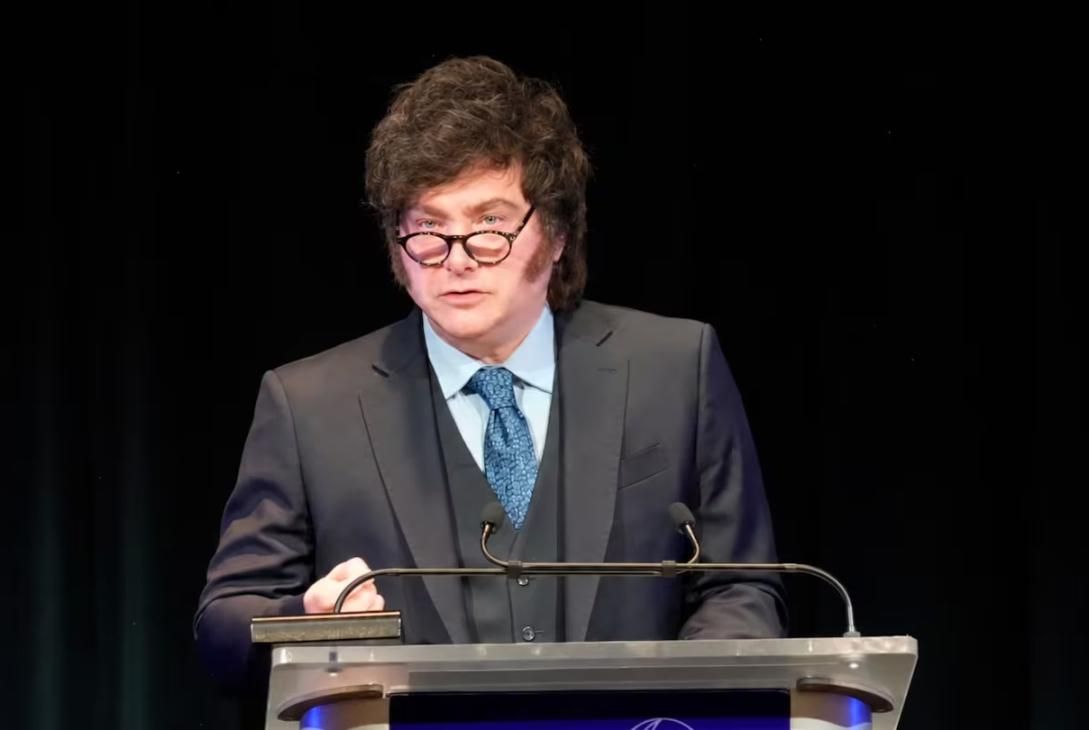
 Argentine President Javier Milei denied the country is in recession and questioned the reading of statistics showing rising poverty and falling economic activity. “The indicators are throwing out anything,” he said on Sunday in an interview with journalist Luis Majul on the programme La Cornisa, on the LN+ channel.
“There is no recession,” the president said, but rather “a slowdown in the pace of expansion”. He noted that a recession is technically defined as two consecutive quarters of contraction and took aim at the use of seasonally adjusted series, which he said “measure badly” amid “major structural changes” in which sectors previously protected by the state are shrinking while more productive ones expand. Economists responded that seasonal adjustment uses the historical series only to isolate effects that recur every year, such as holidays, harvests or festivities, not to measure shifts in the composition of the economy.
The president also said the country is at record levels of private consumption, exports and output, that his administration has created more than 500,000 jobs and that Argentina will string together four consecutive years of growth. He ruled out changing his economic programme.
The figures that prompted his remarks were released last week by the National Institute of Statistics and Census. Economic activity fell 2.9% in July compared with June, the largest monthly decline in six years, and 1.4% year-on-year. Poverty rose to 32.3% in the first half, 4.1 points higher than in the previous half, and unemployment reached 7.9%, the highest level under the current administration. Milei described the poverty figure as “an old snapshot” because it covers the first half, and attributed rising unemployment to “a reallocation of resources” and more people looking for work.
Markets moved the other way. Country risk, which touched a low of 402 points in July, rose above 640 basis points on Monday, its highest level of the year. JP Morgan cut its 2026 growth forecast from 2.7% to 1.5% and expects an annualised contraction of 4% in the third quarter. According to La Nación, Uruguay's country risk stands at around 65 points.
In the same interview, Milei linked the economic difficulties to opposition initiatives in Congress and to security concerns. He cited “40 attempts to bring down the fiscal balance” and “seven attempts at impeachment”, which he called “seven coup attempts”, and said the government had deported 10,000 “terrorists” in 2025 and another 20,000 so far in 2026, describing them as people who infiltrate from other countries “to try to blow up the Argentine model”. No published official statistic supports that figure. According to Security and Migration ministry data cited by La Nación, fewer than 1,700 people encountered obstacles to entering the country, a group that is not limited to terrorism-related cases.
Deputy Maximiliano Ferraro, of the Civic Coalition, filed a formal request for information asking the executive to detail how many people were expelled and how many for terrorism-related reasons. Máximo Kirchner, a deputy for Unión por la Patria, called the figure “a terrible exaggeration”.
The president also referred to the Olivos residence, which he described as “a military base” with reinforced security: “I have some heavy enemies here and around the world.”


Top Comments
Disclaimer & comment rulesCommenting for this story is now closed.
If you have a Facebook account, become a fan and comment on our Facebook Page!