MercoPress. South Atlantic News Agency

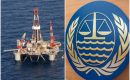

Argentina asks the law of the sea tribunal to halt Sea Lion and bar new oil permits
 The measures are sought pending the constitution of the arbitral tribunal under Annex VII of the Convention, proceedings Argentina launched with a notification to the United Kingdom on September 28
Argentina has asked the International Tribunal for the Law of the Sea to order the United Kingdom to prevent the development of the Sea Lion oil project north of the Falklands and to refrain from granting new permits to exploit the resources of the disputed continental shelf, according to a statement published by the Hamburg-based tribunal. The hearing will be set “at the earliest possible date”.
The request, submitted on October 13 under Article 290(5) of the United Nations Convention on the Law of the Sea, lists four provisional measures: that the United Kingdom prevent “the commencement or continuation” of hydrocarbon exploitation through Sea Lion; that it refrain from using information obtained from exploring the disputed areas “to the detriment of the rights” of Argentina; that it stop preventing Argentina from complying with its obligation to protect the marine environment of those areas; and that it refrain from any measure that might aggravate the dispute, “in particular the granting of new permits”.
The measures are sought pending the constitution of the arbitral tribunal under Annex VII of the Convention, proceedings Argentina launched with a notification to the United Kingdom on September 28. Before that tribunal, Argentina asks for a declaration that the United Kingdom, by unilaterally authorising the exploration and exploitation of resources in the waters around the South Atlantic archipelagos, is in breach of its obligation to respect Argentina’s “sovereignty and sovereign rights” over those maritime areas; of the obligation to refrain from unilateral measures in areas subject to a dispute “within the framework of the decolonization process” of the UN; of the obligation to protect the marine environment; and of the obligation to settle disputes by peaceful means.
To prescribe provisional measures, the tribunal must consider that the arbitral tribunal would have prima facie jurisdiction and that the urgency of the situation so requires. In previous cases, such as Chagos in 2015 and Crimea in 2020, tribunals under the Convention have declined to rule on questions of territorial sovereignty.
The United Kingdom has said it will engage with the process and challenge any attempt to use it to settle sovereignty. Overseas Territories Minister Uma Kumaran said on Tuesday that London’s position is that provisional measures are binding on the parties. Sea Lion, operated by Navitas Petroleum with 65% and Rockhopper Exploration with 35%, expects first oil in 2028.

Top Comments
Disclaimer & comment rules-

-

-

Read all commentsDifficult to see how Narnia is going to make progress with this:
Oct 14th, 2026 - 08:03 am +1Jurisdiction under UNCLOS
The compulsory dispute settlement system of UNCLOS may only be invoked with respect to disputes “concerning the interpretation or application of this Convention” as per Article 288(1). Issues of territorial sovereignty, however, are not regulated by UNCLOS.
In the 320 articles and nine annexes of UNCLOS, not a single provision addresses the question of which State may hold sovereign title over a given land territory. The only explicit reference to such disputes is in Article 298(1)(a)(i), which simply allows States to exclude from compulsory conciliation those disputes that necessarily involve the concurrent consideration of sovereignty disputes. Indeed, many UNCLOS provisions proceed on the assumption that sovereignty issues have already been resolved. UNCLOS repeatedly refers to the “coastal State” as the entity from which maritime jurisdiction flows, without defining what constitutes a coastal State. As Beckman notes, “territorial sovereignty disputes are governed by rules of customary international law on the acquisition and loss of territory, not by UNCLOS...UNCLOS was never intended to resolve issues of sovereignty”.
Thus, UNCLOS does not, and cannot, determine whether Argentina or the UK is the “coastal State” in respect of the Islands. In the event Argentina claimed sovereignty over the Islands before the Annex VII tribunal, directly or indirectly (e.g., by asserting sovereign rights over the adjacent continental shelf), the claim would not concern the interpretation or application of UNCLOS and would fall outside the tribunal's subject-matter jurisdiction. Indeed, in every instance where a claim brought before Annex VII UNCLOS tribunals required them to decide a question of unresolved sovereignty over land territory, UNCLOS tribunals have declined to do so (see BIICL, Mixed Disputes). Abhijeet Shrivastava & Dr Constantinos Yiallourides, Brit Institute of Int law.
But it looks good to the Argentinian masses, as if something is actually happening to advance the cause, doesn’t really matter it was always going nowhere, for all the reasons you point out.
Oct 14th, 2026 - 02:01 pm +1The Argy Gov must know that as well.
This is all just for show.
They even wanted Interpol to arrest anyone involved with the Falklands oil development, it was quite rightly rejected, what a bizarre Argentine government,
Oct 14th, 2026 - 03:18 pm 0Commenting for this story is now closed.
If you have a Facebook account, become a fan and comment on our Facebook Page!