MercoPress. South Atlantic News Agency
Agriculture
-
Friday, July 31st 2020 - 10:10 UTC
Falklands government supports farmers by purchasing 50% of unsold wool
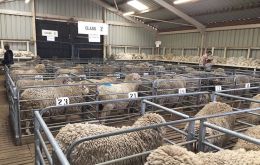
Sixty seven farms have taken up the offer from Falkland Islands government, FIG, to purchase their wool clip in relation to Covid-19 support for the Agricultural sector.
-
Thursday, July 30th 2020 - 09:30 UTC
Brazil optimistic about a Mercosur free trade accord with Canada
An estimate by Brazil´s Confederation of Agriculture and Livestock (CNA) points out that the conclusion of a free trade agreement between Mercosur and Canada has the potential to increase Brazilian export revenues of agricultural products by US$7.8 billion.
-
Thursday, July 30th 2020 - 07:38 UTC
South Africa and Saudi Arabia open their markets to Paraguayan beef
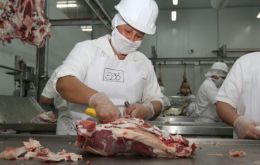
After a ten-year hiatus, the South African Department of Agriculture announced the opening of the market for Paraguayan abattoirs to export beef and meat products. According to the Paraguayan foreign ministry, the reopening of this market by the African country was possible through joint work with the Animal Health and Quality Service (Senacsa).
-
Wednesday, July 29th 2020 - 08:21 UTC
Declination of wild bees threatens pollination and farm productivity

Wild bees are worth some US$ 1.5 billion to key fruit and vegetable crops in North America, according to new research that warned declines in these pollinators threatens the productivity of economically important agriculture.
-
Wednesday, July 29th 2020 - 07:44 UTC
Covid-19 in Argentine grains terminals and processing plants affecting operations

Argentina has reported its first cases of Covid-19 at port terminals that ship soy meal and oil to the world in a fresh blow to the global commodities trade already disrupted by the pandemic.
-
Monday, July 27th 2020 - 09:13 UTC
Brazil soy bean exports to China soar to a record high in June: 10.1 million tons
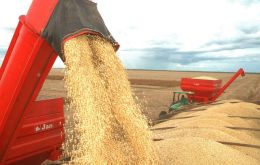
China's soya bean imports in June from top supplier Brazil soared to a record high, according to customs data released on Sunday, driven by growing demand for soya beans as China's pig herd recovers after deadly outbreaks of African swine fever.
-
Thursday, July 23rd 2020 - 07:47 UTC
Germany introduces strict measures in staff contracting for industrial abattoirs

Germany is introducing a new law compelling meatpackers to employ staff directly in industrial abattoirs rather than sub-contracting to avert further coronavirus outbreaks exacerbated by poor working conditions, a draft law showed on Wednesday.
-
Wednesday, July 22nd 2020 - 08:00 UTC
Parana river insufficient water level benefitted exports from Brazilian ports

Due to the Paraná river drought, which affected Argentina’s soy oil-exporting capacity, Cattalini Terminais Marítimos, which handles almost 70% of Brazil’s soy oil exports through its facilities in the port of Paranaguá, predicts a 25% increase in shipments this year.
-
Tuesday, July 21st 2020 - 08:50 UTC
A fifth of Brazilian soy exports to EU may have come from illegally deforested land
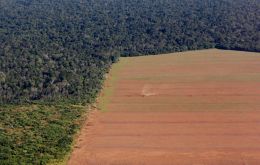
A study published by Science magazine on July 16 indicated that a fifth of Brazilian soy imports received by the European Union may come from land that has been illegally deforested.
-
Monday, July 20th 2020 - 09:25 UTC
JBS installs “ultraviolet germicidal” ventilation to combat Covid-19 in slaughterhouses

One of the world's largest meatpackers said they have installed ultraviolet air cleaning equipment in some US plants, as pressure mounts on food companies to protect workers amid growing concerns about airborne transmission of the coronavirus.
