MercoPress. South Atlantic News Agency
Argentina
-
Tuesday, June 12th 2012 - 09:04 UTC
UK reply to Argentina on Falklands/Buenos Aires flights and fisheries next week
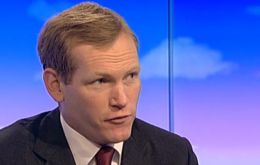
Foreign Office minister for Latin American affairs Jeremy Browne anticipated that next week there will be a “substantial reply” to Argentina’s proposal for three monthly flights between Buenos Aires and the Falklands and the resumption of negotiations over fisheries conservation in the South Atlantic, but in noy way linked to any sovereignty discussions.
-
Tuesday, June 12th 2012 - 08:53 UTC
A museum paying homage to those who fought on both sides
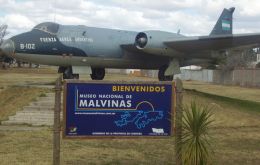
Over the last thirty years the National Malvinas War museum of Argentina in the city of Oliva in the province of Cordoba, has become the country’s largest and most important of its sort
-
Tuesday, June 12th 2012 - 08:46 UTC
Argentine May inflation 1.71% and 23.85% in twelve months, according to private estimates
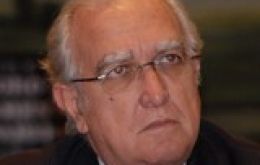
Argentine opposition lawmakers unveiled on Monday the inflation index based on the analysis of nine private agencies, which in May reached 1.71%. The unofficial consumer price index has accumulated 23.85% in the last twelve months, twice the volume registered by the Indec national statistics bureau.
-
Tuesday, June 12th 2012 - 08:41 UTC
Maximo, probably the most influential advisor of Cristina Fernandez, but king of the lows profile

Maximo Kirchner, 36, since the death of his father Nestor Kirchner in October 2010 in the main support of his mother both affectionately and politically, although his political aspirations are not well known because of his very low profile.
-
Tuesday, June 12th 2012 - 08:25 UTC
Argentine president son recovering from knee surgery; mother next to him
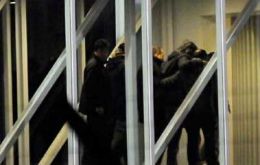
Máximo Kirchner, 36, son of the President Cristina Fernández de Kirchner, is recovering from cleansing minor surgery for a septic arthritis of his right knee after he was hospitalized in the early hours of Monday at the Austral Hospital in the Greater Buenos Aires.
-
Tuesday, June 12th 2012 - 08:19 UTC
“The more restrictions on the US dollar, the more people distrust the Argentine peso”
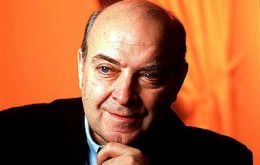
Argentine former economy minister Domingo Cavallo assured that had the restrictions to buy US currency not been applied by the local Government “people would be flocking to buy dollars.”
-
Monday, June 11th 2012 - 05:47 UTC
Opinion poll shows support for Cristina Fernandez sliding significantly
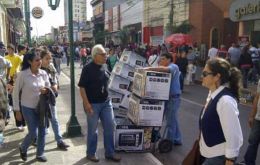
The image of Argentine president Cristina Fernandez and the approval of her government have fallen significantly in June compared to last October when she was re-elected for a second four year mandate.
-
Monday, June 11th 2012 - 03:28 UTC
Argentina claims Falklands and slams UK for ‘illegal exploitation of natural resources’
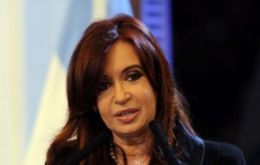
Ahead of a week of intense diplomatic exchanges and on the Day of the Affirmation of the Argentine Rights Over the Malvinas, Islands and Antarctic Sector, the Argentine Government once again ratified its claim over the Islands’ sovereignty and questioned the UK over the “illegal exploitation of their natural resources” and the “increased militarization of the South Atlantic region.”
-
Saturday, June 9th 2012 - 05:13 UTC
Middle class Argentines protest with pots and pans against corruption, crime, inflation and the dollar clamp
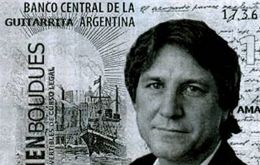
For the third night in ten days angry Argentines took to the streets of Buenos Aires and other major cities banging pots and pans to protest corruption, rampant crime and insecurity, inflation and the dollar clamp in the midst of an economy that is showing clear signals of exhaustion and growing questions on the current course of affairs.
-
Saturday, June 9th 2012 - 05:05 UTC
Argentine industrial activity falls 3% in April, but up 1.1% in first four months
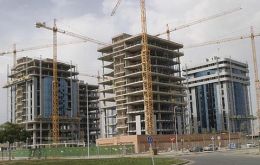
Industrial activity in Argentina dropped 3% in April compared to the same month a year ago, with the first four months closing with 1.1% growth, although with a declining tendency according to the latest data from the Argentine Industrial Union, UIA.