MercoPress. South Atlantic News Agency
Argentina
-
Tuesday, April 26th 2011 - 00:52 UTC
Argentine jigger fleet discouraged, but statistics show 50% increase in squid catches

This year’s squid (Illex argentinus) season took off January first with encouraging catches in Argentina but then went sour with steady declines in volume according to the industry. However official figures show that total registered catches were up over 50%.
-
Monday, April 25th 2011 - 07:51 UTC
G20 to address commodity prices “volatility” in special meeting in Argentina

G-20 Economy ministers will be meeting May 18/19 in Argentina to address commodity prices’ variations, according to Argentine sources. The meeting was agreed during the recent IMF/World Bank spring assemblies in Washington, following on Argentina’s deep concern about the “volatility” of commodity prices.
-
Friday, April 22nd 2011 - 05:15 UTC
Argentine lawmakers bring up ‘Malvinas issue’ at Inter-Parliamentary Union

Argentine and British lawmakers held a bilateral meeting in the framework of the Inter Parliamentary Union 124th meeting which took place in Panama, according to Argentine sources.
-
Friday, April 22nd 2011 - 05:10 UTC
EU increases Argentine prime beef Hilton quota by 1.500 tons
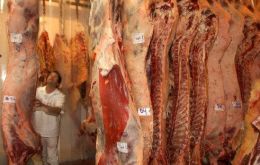
The European Union and Argentina agreed to increase Argentina's lucrative Hilton Quota of high-end beef exports by 1,500 metric tons annually, according to a release in Buenos Aires from the Foreign Ministry late Wednesday.
-
Friday, April 22nd 2011 - 04:48 UTC
Car companies comply with Argentina’s import/export balance policy

Argentina reached an agreement with the French conglomerate Peugeot-Citroen and the importers of Italy’s Alfa Romeo, to balance imports-exports value, following on Argentina’s latest regulations for the country’s auto industry.
-
Thursday, April 21st 2011 - 06:50 UTC
Argentina industrial production up 8.8% in March over a year ago, says Indec

Argentina's industrial production expanded strongly in March over a year ago, 8.8%, as the consumer boom continues to fuel demand for everything from cars to home appliances. However monthly output slowed to a standstill and was unchanged from February, according to the national statistics institute, Indec release on Wednesday.
-
Thursday, April 21st 2011 - 06:35 UTC
Argentine official statistics show poverty is down 9.9% in second half of 2010
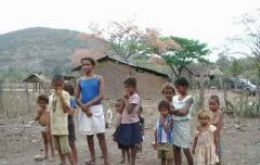
Argentina’s National Statistics Agency, Indec, announced Wednesday that poverty levels lowered in the second half of 2010, with 527,000 households below the poverty line (6.8%), which include a total of 2,475,000 people (9,9%).
-
Thursday, April 21st 2011 - 06:28 UTC
Chile and Argentina working to complement their power grids

Chile is studying supplying neighbouring Argentina with electricity during the southern hemisphere's summer, when demand spikes, daily newspaper La Tercera reported Wednesday.
-
Tuesday, April 19th 2011 - 21:55 UTC
Falklands’ war book reveals Israel’s arms and equipment support for Argentina

Israel’s role during the 1982 Falkland Islands conflict as a willing supplier of arms, equipment and other materials to Argentina has been revealed in a book titled “Operation Israel: the rearming of Argentina during the dictatorship (1976/1983)” written by Hernan Dobry, with an advance published over the weekend in Buenos Aires daily La Nacion.
-
Tuesday, April 19th 2011 - 13:53 UTC
Argentina joins manufacturing of Brazil’s KC 390 jet powered military transport

Brazil and Argentina aircraft industries have signed a partnership contract for the manufacturing of the Embraer KC 390, a medium sized twin engine jet powered military transport aircraft with a 23 tons capacity.

