MercoPress. South Atlantic News Agency
Argentina
-
Wednesday, October 2nd 2019 - 09:08 UTC
INIDEP launches “Marine and Fisheries Sciences” publication in English and Spanish

The Argentine Fisheries Research and Development Institute, INIDEP, based in Mar del Plata has re-launched a historic scientific magazine, now re-baptized “Marine and Fisheries Sciences” with the purpose of circulating the work and papers from the institute.
-
Tuesday, October 1st 2019 - 09:59 UTC
Some 15.8 million Argentines living in poverty according to the latest data
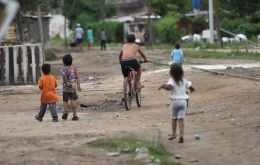
Poverty in Argentina rose to 35.4% of the population in the first half of the year, the highest officially recorded level since 2001, the INDEC national statistics bureau reported today. This means that some 15.8 million Argentines are now considered poor, INDEC's data indicates. At the end of 2018, 32% of Argentines were said to be living in poverty.
-
Tuesday, October 1st 2019 - 09:55 UTC
Argentina's recurring nightmare

By Andrés Bello (*) - Argentine President Mauricio Macri seems almost certain to lose his country’s presidential election next month, after committing the same kinds of economic policy mistakes that so many of his Peronist predecessors made. It is a tragic and catastrophically disappointing denouement.
-
Monday, September 30th 2019 - 08:49 UTC
Macri launches his presidential campaign convinced “Yes, I can win”

Argentina’s embattled President Mauricio Macri took to the streets on Saturday with a defiant message: “Yes we can,” he told crowds of supporters in Buenos Aires as he looks to launch an unlikely comeback ahead of general elections next month.
-
Monday, September 30th 2019 - 08:30 UTC
Dry weather threatens 20% of Argentine winter and summer crops
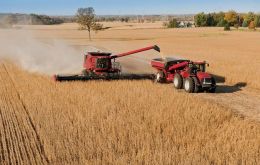
Dry weather in Argentina is hitting the outlooks for wheat and corn crops, local climate experts said, while low-cost soy is being supported by growers looking to hedge their bets with political uncertainty rising ahead of October's presidential vote.
-
Monday, September 30th 2019 - 07:08 UTC
Malvinas carved plaque inaugurated at Casa Rosada

The Argentine government honoured Malvinas war Veterans with a ceremony at Government House, Casa Rosada, where a plaque with the Falkland Islands contour was unveiled together with an inscription underlining the valor of the combatants in their determination to recover the South Atlantic Islands.
-
Monday, September 30th 2019 - 06:52 UTC
Malvinas Veterans Office created by the Macri administration

Argentina has created a Coordination Office for Malvinas War Veterans, the first such office since the end of the 1982 conflict, when Argentine forces invaded the Falkland Islands and were defeated 74 days later.
-
Monday, September 30th 2019 - 06:41 UTC
Argentine ruling coalition wins election in Mendoza, but keeps Macri well away
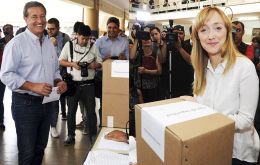
The province of Mendoza has delivered to the Argentine ruling coalition of president Mauricio Macri a much needed great stimulus with its landslide governorship victory.
-
Monday, September 30th 2019 - 06:31 UTC
Falklands' Humanitarian Plan to identify Argentine soldiers remains extended
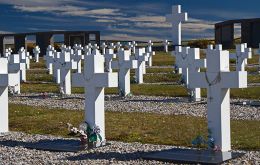
Argentina, United Kingdom and the Red Cross International Committee with the consent of the Falklands Islands have agreed to extend the Humanitarian Plan of identifying remains buried at the Argentine military cemetery close Darwin.
-
Saturday, September 28th 2019 - 09:59 UTC
Opposition candidate wants to re-profile Argentine sovereign debt following on Uruguay's case in 2003

Argentine presidential candidate Alberto Fernandez indicated he would tackle the country's debt problem by adopting a strategy similar to that of Uruguay, which successfully extended its bond maturities in 2003.