MercoPress. South Atlantic News Agency
Argentina
-
Friday, September 13th 2019 - 12:38 UTC
August inflation in Argentina reverses tendency and again shoots up: 4%

Prices in Argentina shot up last month after a shocking primary vote plunged the peso, reversing four months of declines.
-
Friday, September 13th 2019 - 11:51 UTC
Argentine budget forecasts a 2.6% contraction this year, and 1% growth in 2020
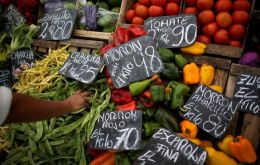
Argentina's inflation rate is expected at 53% in December 2019, but will fall back to 34% the following year, according to projections in the forthcoming 2020 budget, treasury officials said this week.
-
Friday, September 13th 2019 - 11:47 UTC
IMF remains strongly engaged with Argentina; meeting with officials scheduled for later this month
The International Monetary Fund is continuing talks with Argentina as authorities there try to stem spiraling economic problems in Latin America’s third-largest economy, IMF spokesman Gerry Rice told reporters on Thursday.
-
Thursday, September 12th 2019 - 15:46 UTC
Thousands camping in downtown Buenos Aires waiting for Congress to pass the food emergency bill
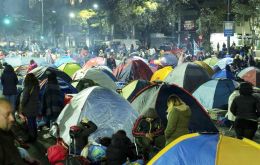
Thousands of protesters camped on Wednesday in downtown Buenos Aires to demand that Argentina declare a food emergency as the economic crisis deepened just weeks ahead of the presidential election.
-
Thursday, September 12th 2019 - 09:55 UTC
Questions on the role of the IMF in the Argentine financial situation

Despite a history of many IMF rescue programs, Argentina once again faces a deepening financial crisis, raising questions about whether the Washington-based lender made a mistake in its dealings with Latin America's third largest economy.
-
Wednesday, September 11th 2019 - 09:57 UTC
The balancing act of Alberto Fernandez between populism and free market reforms

Argentina's presidential front-runner Alberto Fernandez is on a tightrope between the interventionist policies of his better-known running mate Cristina Fernandez de Kirchner and the stumbling free-market reforms of incumbent Mauricio Macri.
-
Wednesday, September 11th 2019 - 09:35 UTC
China agrees to open its soymeal livestock feed market to Argentina; pact will be signed Wednesday
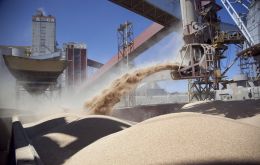
China will allow the import of soymeal livestock feed from Argentina for the first time under a deal announced by Buenos Aires on Tuesday, an agreement that will link the world's top exporter of the feed with the top global consumer.
-
Tuesday, September 10th 2019 - 10:40 UTC
The Argentine Navy September 1941 “sudden strike” plan to invade and occupy the Falklands

It was 26 September 1941 when an Argentine navy captain presented to the Naval War School a plan to invade, capture and retain the Falkland Islands. Circumstances were different to those nowadays or in 1982, world war and events made Argentina fear the transfer of the Islands to some other country, be it of South or North America and thus she must prepare secretly before they change owner, creating a favorable situation for its interests.
-
Tuesday, September 10th 2019 - 09:54 UTC
Argentine gross public debt stands at US$ 337.367 million; 2020 repayments sum US$ 44.232 million
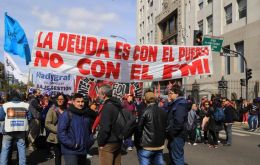
Argentine gross public debt climbed 3% at the end of the second quarter of the year and has reached US$ 337.367 million compared to US$ 327.166 million in the same period last year, according to the Financial Secretariat.
-
Monday, September 9th 2019 - 09:58 UTC
Argentine presidential candidate proposes “a national unity government”: 'option can't be bad or worse'
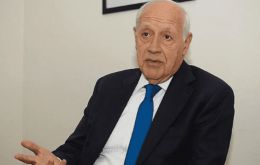
Argentine presidential candidate and ex Economy minister Roberto Lavagna said that the country needs “a national unity government” to overcome the current situation and it's no option having to choose between “bad and worse”.

