MercoPress. South Atlantic News Agency
Argentina
-
Thursday, September 19th 2019 - 11:49 UTC
Argentine firefighter hospitalised in Bolivia for smoke poisoning
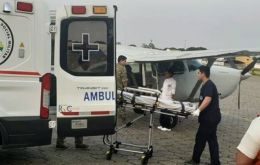
Argentine forest firefighter Jhonatan Villalva had to be ferried Wednesday to a medical facility after suffering from poisoning by smoke as a result of his deployment to the fire-plagued Chiquitanía area in Bolivia.
-
Thursday, September 19th 2019 - 11:24 UTC
Senate passes emergency food bill in Argentina
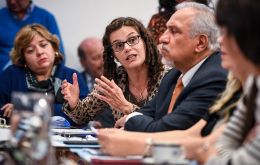
Argentina's Senate Wednesday passed the food emergency bill submitted by the opposition parties as protests mount against the inflationary policies carried out by the administration of President Mauricio Macri, who is yet to sign the draft into law and has hinted he would do so without exerting his veto powers.
-
Thursday, September 19th 2019 - 10:43 UTC
Argentine veteran decries planned Cordoba-Mt Pleasant flight

Former Argentine Army conscript Edgardo Esteban Wednesday claimed LATAM Brasil's planned Sao Paulo-Mount Pleasant passenger flight with a stop in the Argentine city of Córdoba serves only the interests of the Falkland islanders.
-
Thursday, September 19th 2019 - 10:32 UTC
Argentina defreezes fuel price meaning 4% increase at pumps
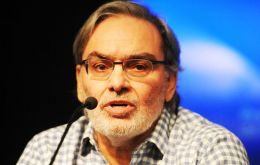
Effective this Thursday, the government of Argentina agreed to defreeze the price of fuel and thus authorize a 4 percent increase after yielding to pressure from province governors and oil companies as the barrel of crude also goes up globally.
-
Tuesday, September 17th 2019 - 09:55 UTC
Image of Virgin of Lujan taken to Falklands during the war to be returned at ceremony blessed by the Pope
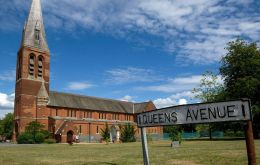
An image of Argentina's saint patron, the Virgin of Lujan, which was carried to the Falklands during the 1982 conflict, and remained unaccounted for during years, will be returned by the United Kingdom. In retribution, the Argentine military bishop will hand a replica of the image to the head of British military chaplains in a ceremony to take place next month in the Vatican with Pope Francis blessing the images.
-
Monday, September 16th 2019 - 09:47 UTC
IMF choice: to unlock or not to unlock the last tranche of funds for Argentina
The International Monetary Fund has a tough choice to make in Argentina: unlock US$5.4 billion in funds under the country’s loan deal as the government strains to stave off default, or hold the money back and risk sparking more market panic.
-
Monday, September 16th 2019 - 09:05 UTC
Gas well catches fire at Argentina's Vaca Muerta shale formation
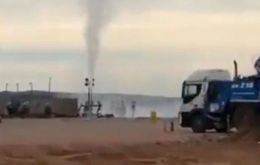
Argentina’s state-controlled oil company YPF said a gas well caught fire at its vast shale oil and gas formation of Vaca Muerta early on Sunday following a gas leak on the previous day.
-
Monday, September 16th 2019 - 06:43 UTC
Spain wins basketball World Cup crushing Argentina 95/75

Three-time All-Star Marc Gasol became only the second man to win an NBA crown and the World Cup in the same year after Spain brushed aside Argentina 95-75 on Sunday.
-
Saturday, September 14th 2019 - 10:39 UTC
Argentina/Spain, Sunday's basketball World Cup final in China

Power forward Luis Scola scored a game-high 28 points and grabbed 13 rebounds as Argentina breezed past France 80-66 to book their place in Sunday's basketball World Cup final against Spain.
-
Friday, September 13th 2019 - 19:20 UTC
Argentine Lower House unanimously approves draft emergency food law
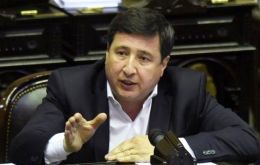
Argentine lawmakers on Thursday unanimously approved a draft emergency food law to free up resources for social programs amid a worsening economic crisis. The bill, yet to be approved by the Senate, would provide a 50 percent increase in food assistance programs to growing numbers of poor.

