MercoPress. South Atlantic News Agency
Argentina
-
Tuesday, September 24th 2019 - 09:53 UTC
Argentine biggest bondholders to meet with Treasury Secretary Lacunza
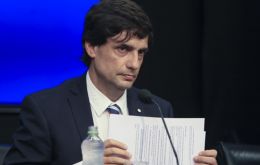
A group of Argentina’s biggest bondholders will meet with the country’s treasury minister in New York this Monday to hear how Latin America’s third-largest economy plans to dig itself out of its latest debt crisis.
-
Tuesday, September 24th 2019 - 09:26 UTC
Argentina Needs Intensive Care

By Anne Krueger (*) - Argentina's President Mauricio Macri knew that he had inherited a sick economy when he took office in 2015, but failed to take his medicine. As a result, the country now has no choice but to face up to a period of painful structural adjustment.
-
Tuesday, September 24th 2019 - 09:08 UTC
Argentine private sector workers given extra payment to compensate for inflation
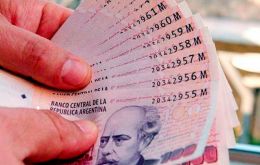
Argentina's private-sector workers will see their wages topped off by 5,000 pesos (US$ 88) in a one-time non-taxable payment aimed at boosting their buying power amid surging inflation, the Production Ministry said on Monday.
-
Monday, September 23rd 2019 - 10:56 UTC
Argentine president's wife trip to Spain viewed as preparation for future exile

Argentina's political future seems to be no mystery regarding the upcoming October 27 presidential elections. So much so that First Lady Juliana Awada's snap trip Sunday to Madrid citing entertainment and social engagements was announced by the media as a preparation for a post December 10 exile that looks inevitable after the outcome of the August 11 primaries.
-
Saturday, September 21st 2019 - 13:58 UTC
Four Russian fugitives in Argentina await extradition
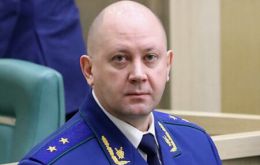
The Russian government has filed a formal request to Argentina for the extradition of four of their nationals who are charged with economic crimes, Deputy Prosecutor General Alexei Zakharov, in Buenos Aires for the 24th conference of the International Association of Prosecutors, said Friday.
-
Saturday, September 21st 2019 - 12:41 UTC
Alberto Fernández on tour, meets with Evo in Bolivia
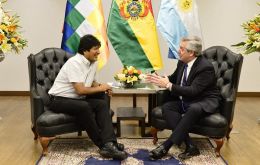
Bolivia's President Evo Morales and Argentina's presidential frontrunner Alberto Fernández met Thursday evening in Santa Cruz de la Sierra to discuss Latin American region and possible future joint actions.
-
Friday, September 20th 2019 - 22:27 UTC
Judge wants former Argentine president arrested yet again

Buenos Aires Federal Judge Claudio Bonadio has again asked the Upper House to strip Senator Cristina Fernández de Kirchner off her parliamentary immunity so that she can be placed under pretrial detention for her alleged involvement as gang leader in the so-called “notebooks corruption scandal.”
-
Friday, September 20th 2019 - 16:44 UTC
Unemployment on the rise in Macri's Argentina

Unemployment in Argentina reached 10.6% in the second quarter of 2019, the highest ever since President Mauricio Macri took office in December, 2015, according to data released Thursday by the National Institute of Statistics and Census (INDEC).
-
Friday, September 20th 2019 - 10:30 UTC
Prosecution opens extortion case against Argentine President Macri

Argentine Federal Prosecutor Guillermo Marijuan was appointed Thursday to lead an investigation against President Mauricio Macri for allegedly extorting a media businessman to relinquish spectrum frequencies which the government was interested in passing on to a rival group.
-
Friday, September 20th 2019 - 10:22 UTC
Argentine Central Bank will produce more Pesos: higher inflation is expected
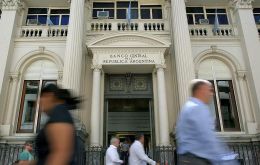
According to estimates among analysts, the Argentine Peso's production will be around $ 300,000 million for the remainder of the year, estimating inflation for 2020 even higher than this year. 80% of that issuance corresponds to the last month of the year, breaking the objective that the Central Bank of Argentina (BCRA) of “zero-emission” had set and jeopardized the exchange control as it works since August.