MercoPress. South Atlantic News Agency
Argentina
-
Friday, August 21st 2026 - 22:41 UTC
Uruguay's president meets Kicillof and agrees to cooperate on food and scientific research

Uruguayan President Yamandú Orsi on Friday received the governor of Argentina's Buenos Aires province, Axel Kicillof, at the Torre Ejecutiva in Montevideo, where the two signed two cooperation agreements covering agrifood and scientific matters.
-
Friday, August 21st 2026 - 21:52 UTC
FIFA sanctions Argentina over the final's brawl and the Falklands banner

FIFA's Disciplinary Committee on Friday imposed financial and sporting sanctions on the Argentine Football Association and four members of its national squad over the confrontations at the end of the 2026 World Cup final and over breaches committed throughout the tournament, among them the display of a banner asserting a sovereignty claim over the Falklands.
-
Friday, August 21st 2026 - 10:10 UTC
Bolivian prosecutors open a second case against the consultant who advised Milei and Paz

Prosecutors in La Paz have opened an investigation on their own initiative into alleged illicit enrichment by Argentine political consultant Fernando Cerimedo, who was charged this week in Santa Cruz with attempted femicide following the shooting of his former partner, lawyer Nadia Beller.
-
Friday, August 21st 2026 - 08:59 UTC
The prosecutor in the Maradona case says a crime occurred and the trial will not collapse

Deputy chief prosecutor for San Isidro Patricio Ferrari said on Thursday that the delivery of medical records belonging to Diego Armando Maradona's father, rather than the footballer's own, may constitute a criminal offence, and ruled out that the discovery will halt the trial over the star's death in November 2020.
-
Thursday, August 20th 2026 - 08:13 UTC
A judge demands urgent reports from Argentina's government on the fate of road funds
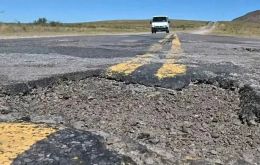
Federal judge Ernesto Kreplak, sitting in La Plata, this week admitted a class action and requested urgent reports from the Ministry of Economy, the National Roads Directorate and Banco Nación on the use of resources from the Integrated Road System (SisVial), a trust fund financed by the tax on liquid fuels whose legal purpose is the construction and maintenance of national highways.
-
Wednesday, August 19th 2026 - 21:50 UTC
A critical report says Argentina's investment regime concentrated capital in mining and oil
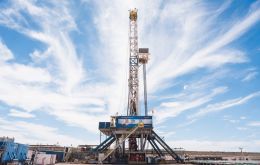
Argentina's Large Investment Incentive Regime (RIGI), created in 2024, “consolidated a strongly extractive profile and did not stimulate new sectors,” according to a report released on Wednesday by the RIGI Observatory, a coalition of civil society organisations and academic centres that examines the scheme from a critical standpoint.
-
Wednesday, August 19th 2026 - 09:52 UTC
An Argentine consultant who advised Milei's campaign detained in Bolivia after a shooting

Bolivian police detained Argentine political consultant Fernando Cerimedo in the early hours of Tuesday at Viru Viru international airport in Santa Cruz de la Sierra, hours after his former partner, Bolivian lawyer Nadia Beller, was shot three times outside a hotel in the city. Cerimedo has not been formally charged and his involvement in the attack, which remains under investigation, has not been established.
-
Tuesday, August 18th 2026 - 06:52 UTC
Argentina's vice-president says she is “extremely worried” about those who cannot make ends meet

Argentina's vice-president, Victoria Villarruel, has again distanced herself from Javier Milei's government, voicing concern over unemployment and the financial difficulties facing households. “I am extremely worried about Argentines who today have no work or who cannot make ends meet,” she said at the opening of Expo Venado 2026, an agricultural fair in Venado Tuerto, Santa Fe province.
-
Monday, August 17th 2026 - 23:48 UTC
A Chelsea fan displays a Falklands flag as Enzo Fernández comes on

A Chelsea supporter held up a Falkland Islands flag at Stamford Bridge on Saturday as Argentine midfielder Enzo Fernández came onto the pitch during the club's final pre-season friendly, a 3-1 win over Real Sociedad.
-
Sunday, August 16th 2026 - 07:46 UTC
Argentine household arrears reach 17.5% and the government rules out intervening
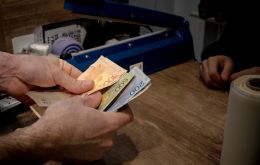
Arrears on credit to individuals in Argentina reached 17.5% of total lending in June, according to a study by Universidad Austral and the consultancy Eco Go based on central bank data. Javier Milei's government has ruled out intervening and maintains the solution must come from the market.

