MercoPress. South Atlantic News Agency
Argentina
-
Monday, October 19th 2026 - 19:50 UTC
US calls at the UN for an end to the Decolonisation Committee, key to Argentina’s claim
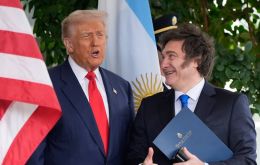
The United States has called at the UN for an end to the mandate of the Special Committee on Decolonisation, the body before which Argentina presents its sovereignty claim over the Falklands every year, and described some of its activities as “a waste of resources”, according to the official summary of the General Assembly Fourth Committee session held on October 15.
-
Monday, October 19th 2026 - 19:46 UTC
Argentina spent US$445 million on weapons and military equipment under Milei

Argentina’s government spent some US$445 million on weapons, military and security equipment from when Javier Milei took office in December 2023 to August 2026, according to an analysis by the newspaper Infobae based on the state’s official procurement system and agreements signed with other countries. The figure already exceeds what was invested during the full terms of Alberto Fernández and Mauricio Macri.
-
Sunday, October 18th 2026 - 21:56 UTC
US fears Falklands-related sanctions could hit American companies
The US government has conveyed to Javier Milei’s administration its concern that the National Sovereignty Defence bill, which toughens sanctions against those involved in exploiting resources in the Falklands, could reach American companies, the Argentine newspaper Clarín reported, citing unnamed officials in Washington.
-
Friday, October 16th 2026 - 10:07 UTC
The Falklands dispute threatens Argentina’s bid to join the trans-Pacific trade pact
The escalating dispute between Argentina and the United Kingdom over the Sea Lion oil project north of the Falklands has spilled into trade: London, a member of the Comprehensive and Progressive Agreement for Trans-Pacific Partnership, has not ruled out using its position to stall Argentina’s bid to join the pact, which requires the consensus of all its members. The British government says Buenos Aires’s conduct raises “very serious questions about its reliability as a partner”.
-
Friday, October 16th 2026 - 09:40 UTC
Argentina abstains on a Russian UN resolution on colonialism and draws criticism
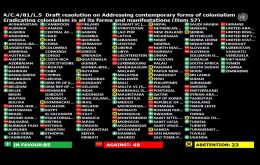
Argentina abstained on Thursday in a vote by the UN General Assembly’s Fourth Committee on a Russian-sponsored draft on “contemporary forms of colonialism”, a decision that Buenos Aires province’s government minister, opposition figure Carlos Bianco, linked to President Javier Milei’s alignment with the United States and to Argentina’s strategy over the Falklands.
-
Thursday, October 15th 2026 - 20:59 UTC
Argentina’s bill toughening sanctions over Sea Lion stalls in Congress
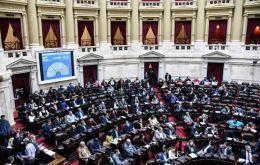
The National Sovereignty Defence bill, with which Javier Milei’s government seeks to toughen sanctions against those involved in exploiting resources in the Falklands, failed to secure committee approval in the Chamber of Deputies and will not reach the special session planned for October 21, according to the Argentine press. The opposition is demanding that the text, which besides sanctions reforms security, defence and intelligence, be split.
-
Wednesday, October 14th 2026 - 21:45 UTC
What are the red notices Argentina has sought from Interpol over Sea Lion

Argentina has requested Interpol red notices against individuals linked to the Sea Lion oil project north of the Falklands, and the United Kingdom has asked the organisation to reject them as “politically motivated”, according to the British newspaper The Guardian. Interpol responded by reaffirming Article 3 of its constitution, which prohibits any intervention or activity of a political character.
-
Tuesday, October 13th 2026 - 23:03 UTC
Argentina asks the law of the sea tribunal to halt Sea Lion and bar new oil permits
Argentina has asked the International Tribunal for the Law of the Sea to order the United Kingdom to prevent the development of the Sea Lion oil project north of the Falklands and to refrain from granting new permits to exploit the resources of the disputed continental shelf, according to a statement published by the Hamburg-based tribunal. The hearing will be set “at the earliest possible date”.
-
Tuesday, October 13th 2026 - 19:03 UTC
Miliband: Falklands residents have the right to develop their resources “as they see fit”
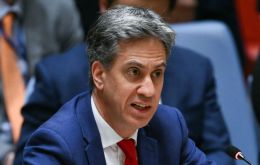
British Foreign Secretary Ed Miliband said on Tuesday that the people of the Falkland Islands “have a right to develop their natural resources as they see fit”, as he announced on X the British government’s measures to protect companies and individuals from Argentine sanctions.
-
Tuesday, October 13th 2026 - 18:45 UTC
London says it will abide by any law of the sea provisional measures as it moves to shield its companies
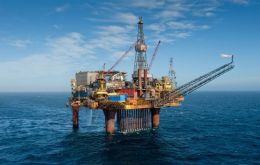
The British government said on Tuesday that any provisional measures ordered by the International Tribunal for the Law of the Sea are binding and that the United Kingdom complies with its international obligations, on the same day Argentina asked that tribunal to halt the Sea Lion oil project in Falklands waters. In parallel, London announced it will use its protection of trading interests legislation to shield British companies from Argentine sanctions.