MercoPress. South Atlantic News Agency
Argentina
-
Thursday, October 29th 2026 - 01:30 UTC
Bolsonaro’s exit via Argentina further strains relations between Milei and Lula
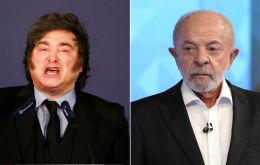
Brazilian Senator Flávio Bolsonaro’s transit through Argentina, after he left Brazil despite a court ban and flew to Miami from Puerto Iguazú following his election defeat, has opened a new front in the strained relationship between the governments of Javier Milei and Luiz Inácio Lula da Silva, while the Casa Rosada maintains its refusal to congratulate the Brazilian president on his re-election.
-
Wednesday, October 28th 2026 - 14:50 UTC
Argentina confirms Bolsonaro crossed via Iguazú before flying to Miami
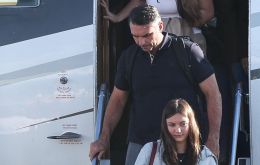
Argentina’s government confirmed that Brazilian Senator Flávio Bolsonaro, defeated in Sunday’s presidential runoff and barred by a court from leaving Brazil, entered Argentina at Puerto Iguazú with his family before flying to the United States on a private plane. Bolsonaro landed on Wednesday morning at Opa-locka Executive Airport in Miami.
-
Wednesday, October 28th 2026 - 03:20 UTC
Argentina: opposition asks Milei to clarify whether Bolsonaro left Brazil through the country

Argentine opposition lawmakers on Tuesday demanded that Javier Milei’s government report whether Brazilian Senator Flávio Bolsonaro, who left Brazil despite a court ban and travelled to the United States after his election defeat, crossed through Argentine territory. The National Migration Directorate said it has no record of the senator entering the country.
-
Tuesday, October 27th 2026 - 16:32 UTC
Brazil investigates whether Flávio Bolsonaro left the country via Argentina after his defeat

Brazil’s Federal Police are checking with Argentine authorities whether Senator Flávio Bolsonaro, defeated by Luiz Inácio Lula da Silva in Sunday’s presidential runoff, left the country across the Argentine border, after he failed to hand over his passports within the deadline set by the Supreme Federal Court. His campaign and the Argentine government deny that he has left Brazil.
-
Monday, October 26th 2026 - 13:05 UTC
Milei stays silent on Lula’s victory as Kast and Peña congratulate him
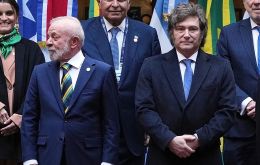
Argentine President Javier Milei had not congratulated Luiz Inácio Lula da Silva on his re-election in Brazil by Monday, unlike other right-wing South American leaders such as Chile’s José Antonio Kast, Paraguay’s Santiago Peña and Bolivia’s Rodrigo Paz. Milei, who publicly backed Senator Flávio Bolsonaro during the campaign, met his cabinet at the Casa Rosada first thing in the morning.
-
Sunday, October 25th 2026 - 09:34 UTC
Trump’s favorite president and Argentina’s Economic Chainsaw Massacre

By Jeremy Adelman
Argentine President Javier Milei may currently be a lynchpin in US President Donald Trump’s geo-economic vision for Latin America; but he could soon become its weak link. With elections coming next year, he has achieved an economic recovery and relative price stability by driving millions of his people into destitution. -
Saturday, October 24th 2026 - 08:32 UTC
Burnham tells Trump of the “economic consequences” of Argentina’s Falklands measures
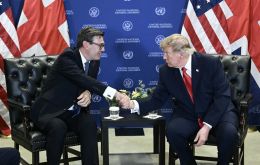
British Prime Minister Andy Burnham set out to US President Donald Trump on Friday “the economic consequences that Argentina’s coercive measures have for the United Kingdom and the United States”, in a phone call focused on the Sea Lion oil project north of the Falklands, according to a Downing Street statement quoted by the EFE news agency. Burnham reiterated the islanders’ right to develop their natural resources.
-
Saturday, October 24th 2026 - 02:00 UTC
Eight in ten Argentines barely make it or fall short by the end of the month, survey finds

Some 45% of Argentines just about reach the end of the month and 34% fail to cover their expenses, according to a survey by consultancy Brain Network carried out in September, which describes a picture of financial stress, rising debt and little capacity to save. Among those who had trouble paying, 40% use their credit card to cover shortfalls.
-
Friday, October 23rd 2026 - 18:19 UTC
The Pope cancels a visit to Assisi as a medical precaution, two weeks before his South American tour
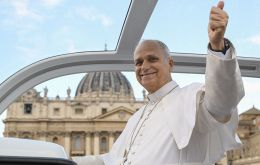
Pope Leo XIV has cancelled a visit planned for Tuesday, October 27, to Assisi, in central Italy, after his doctors advised against helicopter travel so soon after the lung surgery he underwent on October 13. It is the first engagement on his schedule to be called off since the operation, two weeks before the start of his tour of Uruguay, Argentina and Peru.
-
Friday, October 23rd 2026 - 10:25 UTC
US confirms concern over the impact of Argentina’s Falklands bill on its companies
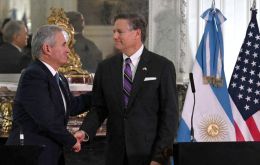
US Deputy Secretary of State Christopher Landau acknowledged in Buenos Aires on Thursday that Washington is closely watching the impact that Argentina’s National Sovereignty Defence bill, which toughens sanctions against those involved in hydrocarbon exploitation in the Falklands, could have on its companies. Argentine Foreign Minister Pablo Quirno defended the initiative.