MercoPress. South Atlantic News Agency
Brazil
-
Wednesday, July 22nd 2020 - 08:08 UTC
Chinese made vaccine against coronavirus begins testing in Brazil, with first doses in volunteers

A Chinese-made vaccine against the new COVID-19 entered the final stage of testing on Tuesday in Brazil, where volunteers received the first doses of what officials hope will be a game-changer in the pandemic.
-
Wednesday, July 22nd 2020 - 08:05 UTC
Bolsonaro waiting results from another Covid-19 test

Brazilian President Jair Bolsonaro said on Tuesday he took another COVID-19 test and the results were expected on Wednesday as he hopes for a negative result two weeks since falling ill.
-
Wednesday, July 22nd 2020 - 08:00 UTC
Parana river insufficient water level benefitted exports from Brazilian ports
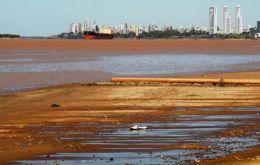
Due to the Paraná river drought, which affected Argentina’s soy oil-exporting capacity, Cattalini Terminais Marítimos, which handles almost 70% of Brazil’s soy oil exports through its facilities in the port of Paranaguá, predicts a 25% increase in shipments this year.
-
Tuesday, July 21st 2020 - 08:50 UTC
A fifth of Brazilian soy exports to EU may have come from illegally deforested land
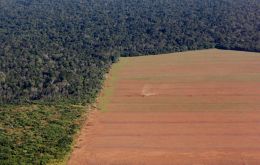
A study published by Science magazine on July 16 indicated that a fifth of Brazilian soy imports received by the European Union may come from land that has been illegally deforested.
-
Tuesday, July 21st 2020 - 08:46 UTC
Brazil death toll surpasses 80,000; WHO says outbreak has reached a plateau

Brazil's coronavirus death toll surpassed 80,000 on Monday, according to health ministry figures, as the country hit second-hardest in the world continued struggling to control the pandemic.
-
Tuesday, July 21st 2020 - 08:43 UTC
Two Brazilian ministers join Bolsonaro in testing positive for Covid-19

Two more Brazilian government ministers said on Monday they had tested positive for the novel coronavirus, underscoring a struggle to limit the world's second-worst outbreak even among the political elite.
-
Monday, July 20th 2020 - 09:45 UTC
Bolsonaro insists that the virus lockdown measures “kill” and have “suffocated” the economy

Brazilian President Jair Bolsonaro said that lockdown measures used to curb the spread of the novel coronavirus “kill” and have “suffocated” the country's economy.
-
Monday, July 20th 2020 - 09:40 UTC
Virus moving south: Brazilian state of Santa Catarina reimposes strict confinement measures

The southern state of Santa Catarina, which borders with the Argentine province of Misiones decreed on Saturday strict confinement measures following a record death toll from the coronavirus pandemic.
-
Monday, July 20th 2020 - 09:30 UTC
Wind power in Brazil represents 9% of the energy matrix
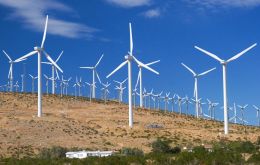
Wind energy is advancing in Brazil and now represents 9% of the energy matrix the state of Ceará, northeast, ended 2018 with 2,050.5 MW of installed wind power capacity, in 80 wind farms.
-
Monday, July 20th 2020 - 09:29 UTC
Brazilian oil industry showing resilience to coronavirus pandemic despite fall in investment
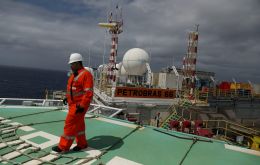
By Matthew Smith for Oilprice.com – Before the outbreak of COVID-19 and the oil price war between Saudi Arabia and Russia, an oil boom of monumental proportions was underway in Brazil, Latin America’s largest economy. Economists and industry analysts as far back as 2018 were speculating that it would be the largest in Latin America’s history. There were even signs that Brazil’s burgeoning oil production could challenge OPEC’s wanning supremacy.