MercoPress. South Atlantic News Agency
Economy
-
Tuesday, March 16th 2010 - 04:58 UTC
Rio Tinto/Alcan presents project for 2.5bn aluminium smelter in Paraguay

Rio Tinto Alcan, a unit of global mining giant Rio Tinto formally presented on Monday plans to invest 2.5 billion US dollars in an aluminium smelter in Paraguay, according to corporation and Asuncion sources.
-
Tuesday, March 16th 2010 - 04:57 UTC
British Airways announces strike contingency plan for 60% of its customers

British Airways says 60% of its customers will be able to keep their travel plans during planned strikes by cabin crew. Industrial action is set to begin with a three-day walkout from Saturday March 20, followed by a four-day stoppage from Saturday March 27.
-
Monday, March 15th 2010 - 19:56 UTC
Unemployment fears threaten UK recovery says Bank of England

Unemployment threatens to hamper the UK economic recovery as worried households cut back on spending, the Bank of England has warned. The latest quarterly bulletin said there was a risk of rising dole queues if “the recovery in demand proves more sluggish than businesses have expected”.
-
Saturday, March 13th 2010 - 02:32 UTC
Lehman Brothers had been using “accounting gimmicks” for years

Former bosses at Lehman Brothers have been accused of using an “accounting gimmick” to hide billions in losses which helped bring about its collapse. The technique, called “Repo 105”, was used to temporarily remove 50 billion US dollars of assets from the US investment bank's balance sheet in 2008, according to a one-year investigation.
-
Saturday, March 13th 2010 - 02:23 UTC
China calls on US not to make the Yuan de facto dollar peg “a political issue”

The United States should not make a political issue out of the Yuan, a Chinese central banker said as the long running friction between the world’s two leading economies approaches a critical deadline.
-
Saturday, March 13th 2010 - 01:02 UTC
Falklands’ economy poised to expand 5.3% following a contraction in 2009
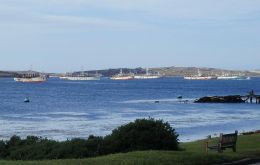
The Falkland Islands economy is expected to expand by 5.3% in real terms during 2010, following a period of contraction in 2009, which was caused primarily by a poor fish harvest rather than the immediate effects of the global recession, according to the Economic Briefing & Forecast released by the Falklands’ government.
-
Saturday, March 13th 2010 - 00:45 UTC
China with 54 billionaires, only second to the US, says Forbes

India and China may still be considered developing countries, but that has not stopped them from producing some of the world's richest people.
-
Friday, March 12th 2010 - 01:14 UTC
Brazilian economy contracted 0.2% last year but is poised to expand 5.7% in 2010

The Brazilian economy contracted for the first time in 17 years in 2009, falling by 0.2% the Brazilian Institute of Geography and Statistics (IBGE) said Thursday. It was the first annual contraction of GDP since 1992. IBGE said the industrial and agricultural sectors were hit hardest but the services sector gained in 2009
-
Friday, March 12th 2010 - 01:03 UTC
Forbes list includes 36 Latinamericans with fortunes above a billion dollars

A total of 36 Latinamericans figure in the Forbes list of men with fortunes greater than a billion dollars, like the Mexican Carlos Slim, the new Chilean President Sebastián Piñera, and the Brazilian Eike Batista, as well as drug lord Joaquín Guzmán Loera, “El Chapo,” informed Forbes magazine.
-
Friday, March 12th 2010 - 00:08 UTC
“God is Bolivarian” and will bring rain to Venezuela’s power stations, says Chavez
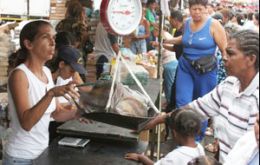
Venezuelan president Hugo Chavez faces a major power shortage that could severely damage the country’s economy and plunge his popularity, but he is confident sufficient rainfall is on the way to fill the lake of a crucial dam because “God is Bolivarian”.

