MercoPress. South Atlantic News Agency
Economy
-
Monday, February 8th 2010 - 02:04 UTC
Brazil’s middle class is half the population, but destitute remain at 40%

The Brazilian middle class has grown sustainedly since 2003, when President Lula da Silva first took office and now represents almost half of the country’s population according to a report from the Getulio Vargas foundation released over the weekend.
-
Monday, February 8th 2010 - 02:00 UTC
Former IMF economist has UK in the same bag as Greece, Portugal and Spain
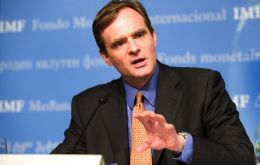
Britain should be seen in the same category of countries as Greece, Portugal and Spain, who are facing severe debt problems, a leading economist has said. Ex-IMF chief economist Simon Johnson, also described the G7 group of leading economies as “fundamentally useless”.
-
Monday, February 8th 2010 - 01:58 UTC
Bank of England to continue buying corporate bonds but with Treasury bills
The Bank of England will continue to buy up corporate bonds despite calling a halt to its Quantitative Easing programme, it has emerged. George Trefgarne from the Centre for Policy Studies highlighted the development in an interview with Sky's Jeff Randall Live programme.
-
Monday, February 8th 2010 - 01:56 UTC
US jobless rate down to 9.7% in January, five month low

The jobless rate in the US has dropped to 9.7%, marking a five-month low. The new figures suggest the labour market is improving, despite employers unexpectedly cutting 20,000 jobs in January.
-
Saturday, February 6th 2010 - 03:51 UTC
Argentina/Brazil set to grow 5%, helping to ease bilateral “trade relations”
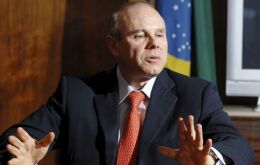
Argentina and Brazil closed Friday in Buenos Aires two days of high level negotiations which should help ease bilateral trade relations tension particularly since both countries economies are forecasted to grow at 5% during 2010.
-
Saturday, February 6th 2010 - 01:58 UTC
Falklands say oil development is to ensure sustainable economic future
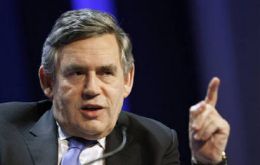
The Falkland Islands government said that hydrocarbons exploration is an important element to achieve a sustainable economic future for the Islands and quoted from British PM Gordon Brown New Year message when he said that there are “no doubts about UK sovereignty over the Falklands ” and the principle of self determination.
-
Saturday, February 6th 2010 - 01:54 UTC
Recession plunges record number of people into insolvency in 2009

Britain's longest- and deepest-ever recession plunged a record number of people into insolvency last year, new figures show. A total of 134,142 people went bankrupt or took out an Individual Voluntary Arrangement (IVA) or Debt Relief Order during the year, according to the Insolvency Service.
-
Saturday, February 6th 2010 - 01:45 UTC
Spain’s economy contacted 3.6% in 2009, the most in decades

First the bad news: Spain's economy contracted by 3.6% in 2009, the most in decades, as domestic demand plummeted according to a Bank of Spain estimate that was in line with government forecasts.
-
Friday, February 5th 2010 - 03:19 UTC
IMF says monetary policy needs of “independent central banks”
The International Monetary Fund, IMF, made a public veiled reference to Argentina’s Central bank institutional crisis underlining the importance of having independent central banks for monetary policy all over the world.
-
Friday, February 5th 2010 - 02:57 UTC
Brazil’s dilemma: how to contain growth (inflation) in an electoral year
Brazil's Central Bank Monetary Policy Committee, Copom, expressed concern about inflation and advanced it was prepared to respond “promptly” according to the minutes from its meeting last week when it decided to maintain the basic interest rate at 8.75%.